The Cut That Became a Lesson
An unexpected accident revealed the kind of leader he wanted becoming.
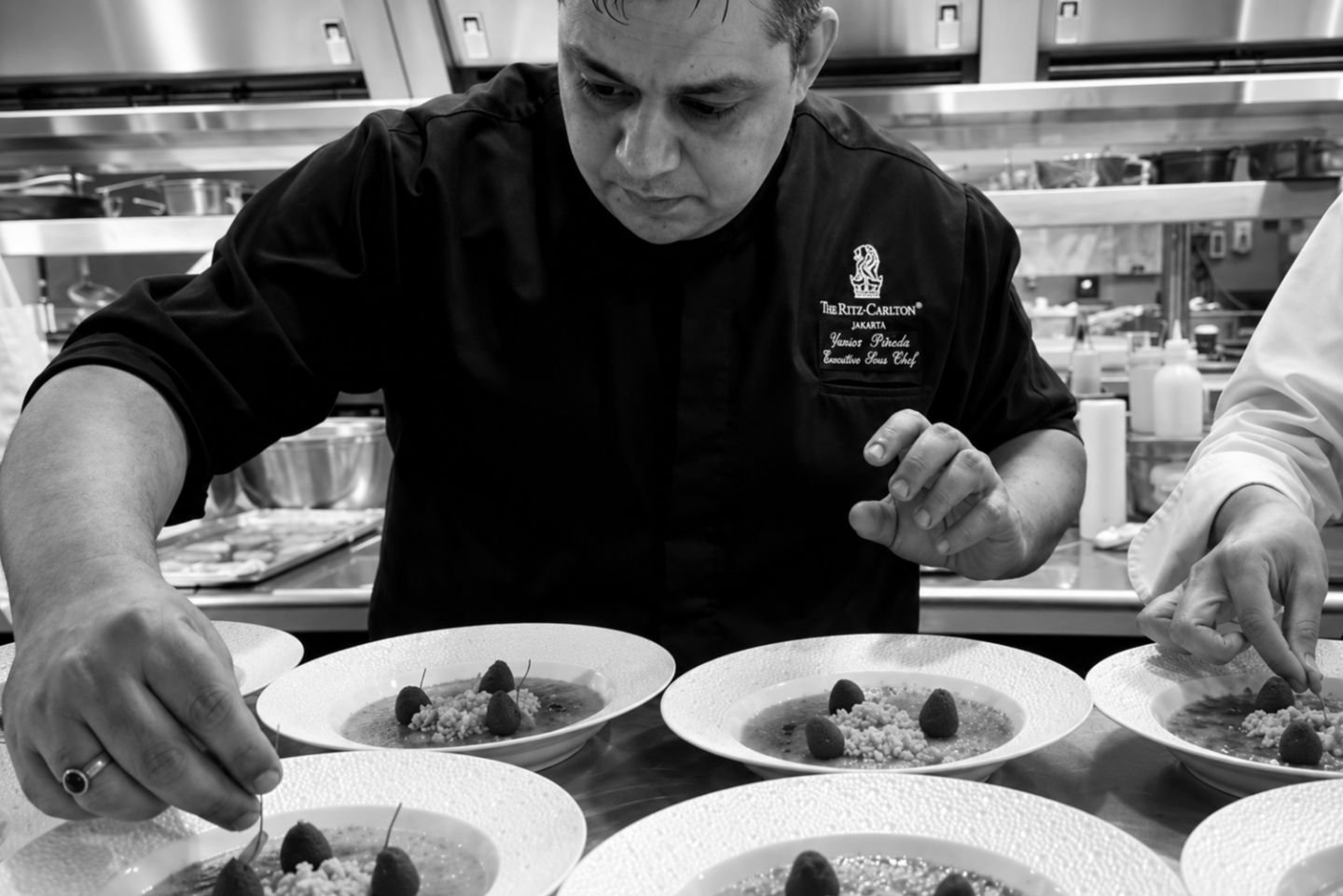
Vineet Pathak
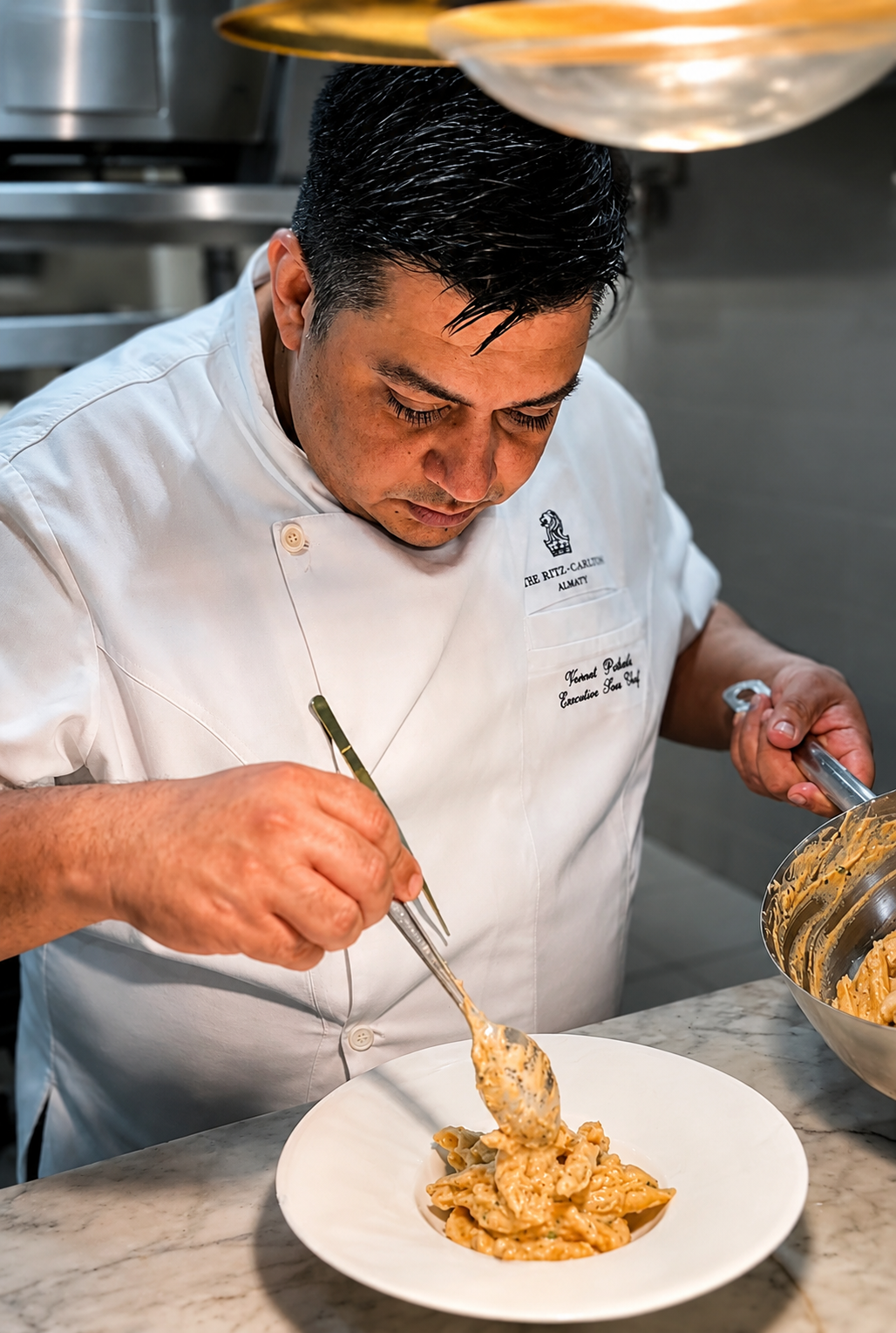
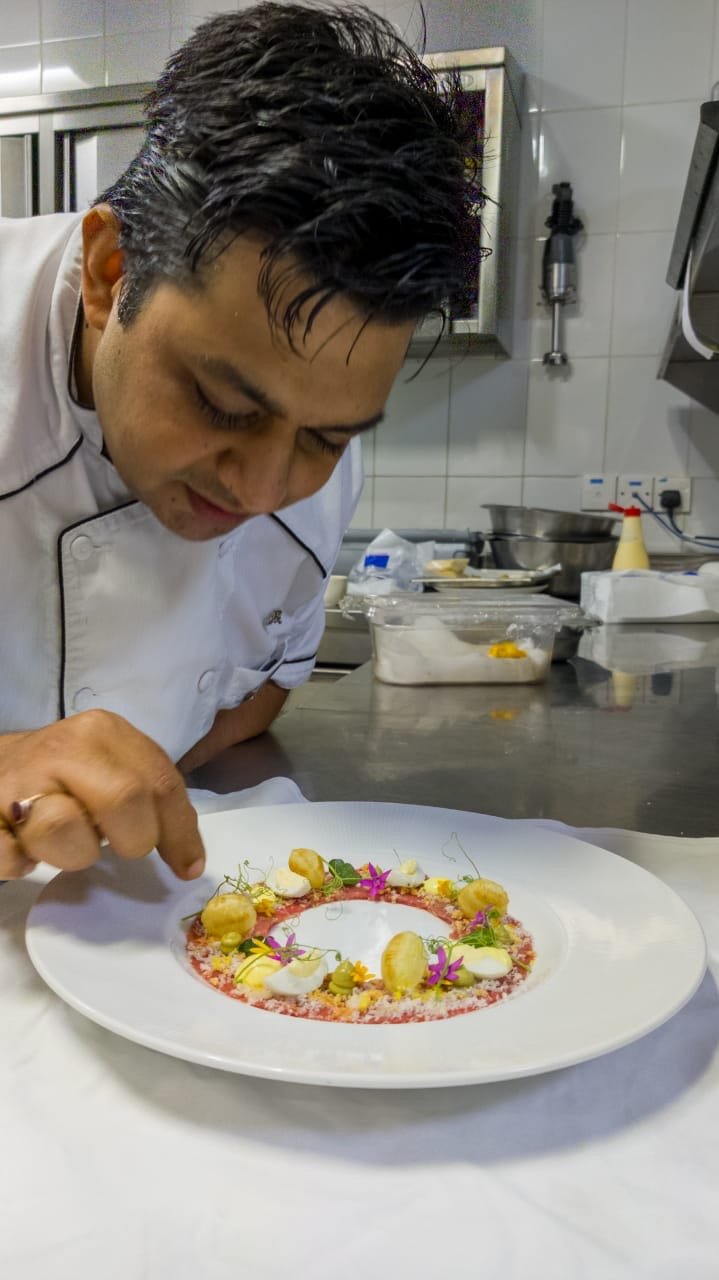
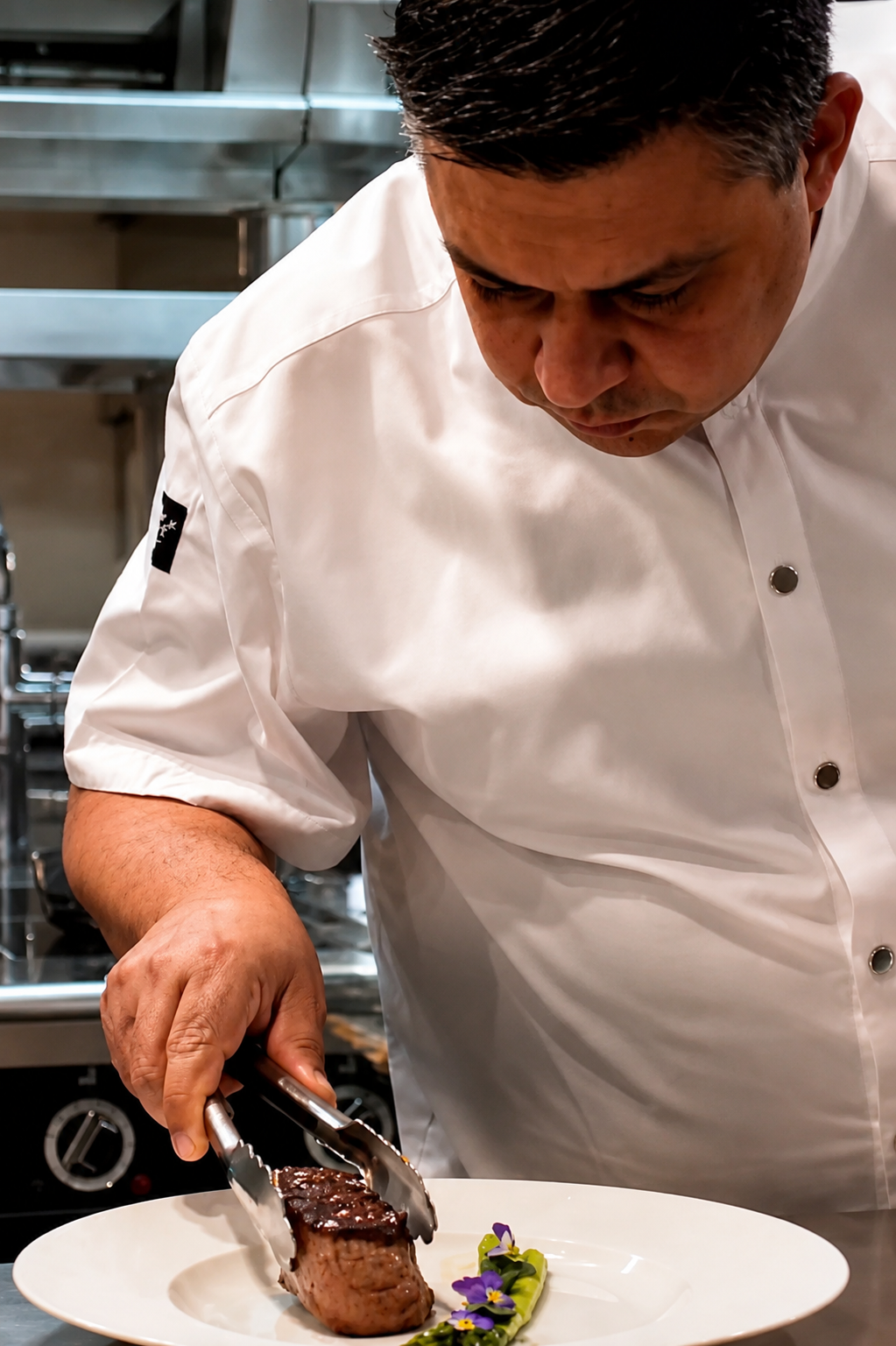
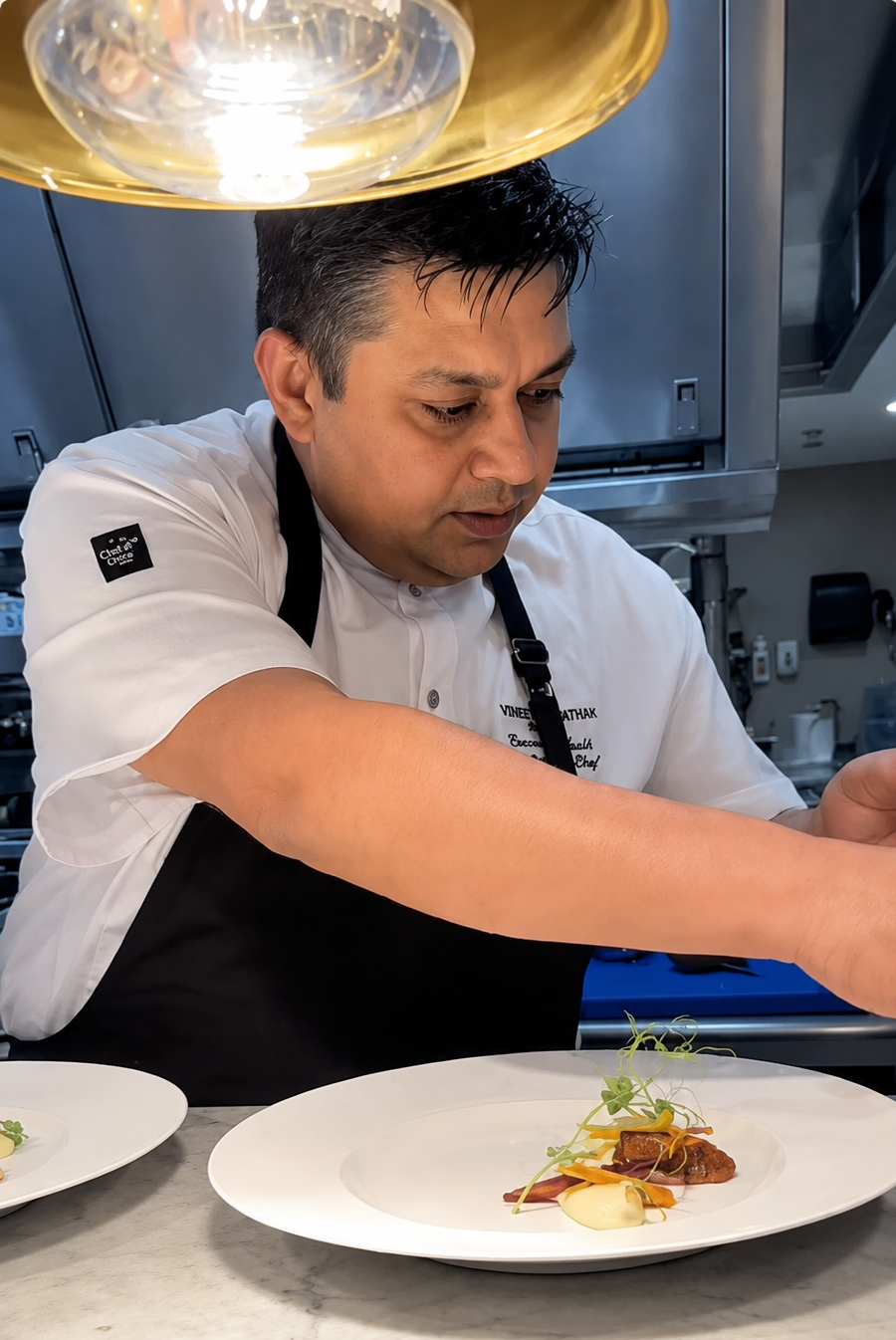
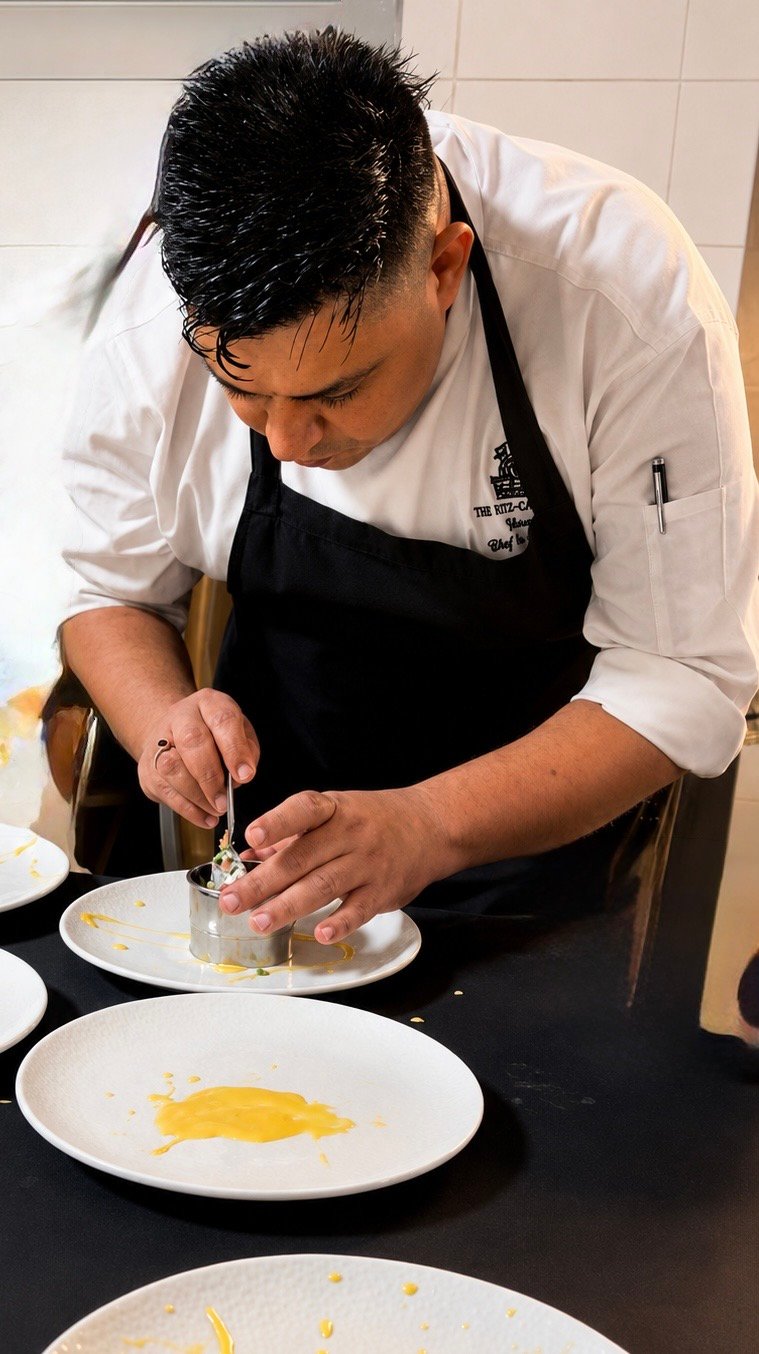
For Chef Vineet Pathak, food has always been about more than what’s on the plate. Growing up, he watched his mother bring family and friends together through cooking, discovering early on the power food has to create connection, joy, and lasting memories.
His journey into hospitality began on the service side of the industry, working as a server and barista before finding his place in the kitchen. From those early experiences to earning degrees in hotel and hospitality management, Vineet steadily built a career grounded in discipline, continuous learning, and respect for the craft.
Over the years, he has worked his way from hotel kitchen trainee to leadership roles within luxury hospitality environments, carrying with him lessons in teamwork, resilience, and mentorship. Along the way, he learned that great kitchens are built not only on skill and precision, but also on trust, support, and the people who stand beside you during the most demanding moments.
In this conversation, he reflects on mentorship, leadership, kitchen culture, and the values that continue to guide his journey, both as a chef and as a person.
Share Your Journey
- Looking back at your childhood, was there a specific moment or memory that sparked your interest in food or cooking?
Food was always at the heart of our family gatherings when I was a kid. I still remember the way my mom worked in the kitchen during festivals and special occasions. There was something about that environment that always pulled me in. I’d watch her cook while talking and laughing with family members, and it amazed me how a few basic ingredients could turn into dishes packed with flavor and joy.
I started out doing the little jobs—washing vegetables, mixing spices, or sneaking tastes when nobody was looking. The best part was seeing everyone’s faces light up as they enjoyed what she had made. That feeling stayed with me. Cooking isn’t just about food; it’s about sharing, bringing people together, and creating moments that people never forget.
- Did you have another career or job before becoming a chef? How did those experiences influence your decision to pursue cooking?
I started my career as a server at Café Coffee Day, where I learned the fundamentals of customer service, communication, and how a busy food and beverage environment operates. Later, I moved into the role of a barista, which helped me develop more hands-on skills such as understanding flavors, coffee preparation, consistency, and attention to detail.
Even though I gained valuable experience in those roles, I always felt a strong pull toward cooking and food itself. Being around customers and beverages made me realize that my true passion was creating dishes, experimenting with ingredients, and being directly involved in the kitchen. That passion never left me, and it eventually encouraged me to pursue cooking as a serious career path rather than simply a job.
- Did you formally study culinary arts, or are you self-taught? How has your learning journey shaped your approach to cooking?
Yes, I pursued a bachelor’s degree in the hospitality field. I completed my hotel management studies, followed by a bachelor’s degree, and later went on to earn an MBA in Hospitality Management. This structured education gave me a strong foundation in culinary basics, kitchen operations, food safety, and overall hospitality management.
Alongside academics, I learned discipline, leadership, and how professional kitchens and hotels operate at a higher level. The MBA especially helped me understand the business side of hospitality, including cost control, team management, and guest experience.
This combination of formal education and practical exposure shaped my approach to cooking. It made me more organized and detail-oriented while still allowing me to stay creative and passionate about food.
- When did you first step into a restaurant kitchen? What was that experience like, and how did it shape your journey as a chef?
My first real step into a professional restaurant kitchen was during my early training period in hotel management, when I was assigned a kitchen rotation as part of my internship. Walking into a busy kitchen for the first time was overwhelming—the heat, the noise, the speed, and the precision required were all completely new to me.
At first, I mainly assisted with basic prep work such as chopping, cleaning, and organizing ingredients. I made mistakes, but I learned quickly by observing senior chefs and adapting to their discipline and workflow. Over time, I began to understand the importance of timing, teamwork, and consistency.
That experience shaped my journey deeply. It taught me that cooking is not only about creativity but also about discipline, structure, and respect for the kitchen environment. It strengthened my determination to grow as a chef and encouraged me to take every opportunity to learn and improve.
- What were some of the early challenges or obstacles you faced when you started in the kitchen, and how did you overcome them?
Choosing a career in the kitchen was not an easy path for me. I come from a background where most people focused on traditional professions such as medicine and engineering, so hospitality was not widely understood or encouraged. In those early days, there was also limited awareness of hotel management and professional kitchen careers, which made it harder for people to take the profession seriously.
Because of this, I faced many doubts and questions about my decision. However, I stayed focused on my interest in food and hospitality. I continued learning through my hotel management studies and practical kitchen experience, which gradually built my confidence.
Over time, I proved to myself and others that this field also requires skill, discipline, and dedication. That journey made me more determined and helped me stay committed to building a career as a chef.
- What keeps you inspired, and how has that inspiration driven you throughout your professional journey, especially during tough times in the kitchen?
Seeing a guest enjoy a dish I’ve prepared or receiving appreciation from my team has always been a strong source of motivation. Food, for me, is not just a career; it is a way of expressing creativity and creating happiness.
During tough times in the kitchen, especially under pressure or during long working hours, I remind myself why I started this journey. I think about how far I have come and the skills I have built through experience and continuous learning. Challenges push me to improve rather than give up.
This inspiration has driven me to stay consistent, keep learning, and remain dedicated even when the environment is stressful. It has shaped me into a more resilient and focused professional chef.
- Can you recall a moment in the kitchen that marked you forever?
One moment that truly marked me forever was when I was working as a trainee chef and was responsible for the overnight shift preparing the breakfast buffet. During the preparation, I accidentally suffered a deep cut on my right palm while cutting tender coconut for fresh coconut water. I was in shock and pain, and I worried about how the service would continue.
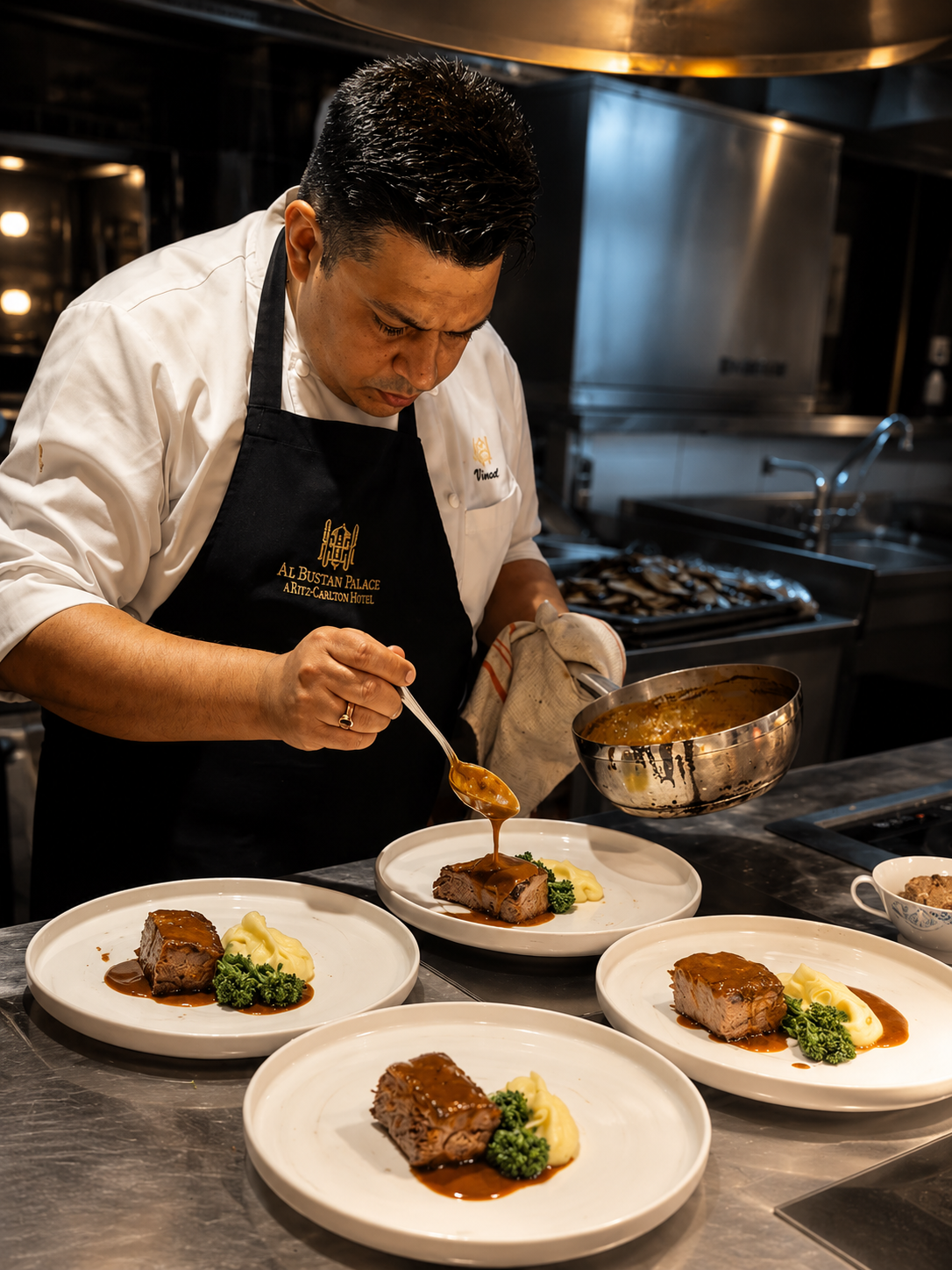
What stayed with me most was how my senior chef handled the situation. Without shouting or becoming upset, he immediately took over my responsibilities along with his own hot buffet duties. He calmly ensured everything was completed on time while also taking care of me.
That moment showed me what true leadership looks like. It taught me that a great chef is not only skilled in cooking but also calm, responsible, and supportive during difficult situations. It shaped how I treat my own team today with patience, care, and responsibility.
- As a chef, how would you describe your philosophy in the kitchen, and how does it guide your approach to cooking and leadership?
To keep things simple, my philosophy is built on discipline and respect, both for the ingredients and for the people I work with. I believe good cooking starts with understanding the basics, maintaining consistency, and paying attention to the small details that make a big difference on the plate.
A key part of that philosophy is respecting nature: respecting ingredients, their origin, their seasonality, and the effort it takes to bring them into the kitchen. I believe that when ingredients are treated with care and not wasted, food naturally tastes better and feels more meaningful.
In terms of leadership, I focus on leading by example rather than simply giving instructions. I stay calm under pressure, support my team during busy services, and create an environment where everyone can learn and improve without fear of making mistakes.
This philosophy guides my cooking by keeping me focused on quality over shortcuts, and it guides my leadership by reminding me that a strong kitchen is built on teamwork, respect, and continuous learning.
- Can you share a time when cooking or the camaraderie in the kitchen helped you through a tough period in your life? What made that experience meaningful?
There was a time during my early kitchen journey when I was adjusting from service roles to the pressure of a professional kitchen while also dealing with personal stress outside of work. I often felt overwhelmed and unsure if I truly belonged in that environment.
What helped me through that period was the camaraderie in the kitchen. In many ways, the kitchen became like a second family. We spent more hours together than with our own families, and that naturally created a strong bond. During busy services, when tickets were piling up and the pressure was high, my teammates would step in without being asked—helping with plating, covering my section, or simply staying calm so the whole team could stay balanced.
That experience was meaningful because it taught me that a kitchen is not just about cooking food; it’s about people standing together under pressure. The support, trust, and quiet understanding of my team helped me rebuild my confidence and made me feel like I truly belonged.
- Reflecting on your career, what achievements or milestones are you most proud of, and what do they mean to you?
Reflecting on my career, one of my proudest milestones is the journey itself: From starting in a small town, stepping into a standalone hotel kitchen, and gradually growing into roles within 5-star luxury hotel chains. Moving through different environments taught me adaptability, discipline, and respect for every level of the kitchen hierarchy. Each stage shaped my foundation as a chef in a very real and practical way.
Another achievement I value deeply is progressing from learning the basics on the line to eventually leading teams in high-end luxury properties, including international assignments. Leading a team in a high-pressure fine dining or luxury hotel setting required not only technical skill but also calm leadership, communication, and consistency. It was rewarding to see the team perform well under my guidance while maintaining high standards during service.
I am also proud to have been part of award-winning restaurant openings and to have contributed to some of the best brunch and dining experiences in the city. Being involved in launches where everything had to be built from scratch: Menu execution, systems, and teamwork, was both challenging and fulfilling.
These milestones mean a great deal to me because they represent steady growth from humble beginnings to global exposure. More than titles or locations, they reflect resilience, continuous learning, and the ability to evolve while staying grounded in the craft of cooking.
- What aspects of restaurant culture do you love, and what parts do you find frustrating or problematic? Are there any changes you’re actively working toward or things you hope will change in the industry?
What I love most about restaurant culture is the energy, discipline, and sense of teamwork that comes alive during service. A kitchen operates like a second family where everyone depends on each other to deliver the same goal. I value the camaraderie deeply—during peak hours, no one thinks individually; people step in, support each other, and keep the flow moving without needing to be asked. That shared rhythm, pressure, and satisfaction after a successful service is something unique to this industry. I also enjoy the constant learning that comes with it: Every shift teaches something new about timing, precision, leadership, and consistency.
At the same time, I find certain parts of restaurant culture challenging. The high-pressure environment, if not managed well, can sometimes turn into stress, miscommunication, or burnout. Long working hours can affect work-life balance and creativity. I also feel that in some places, recognition is not always fairly distributed, and the effort of support teams can go unnoticed even though they are essential to success.
- What are your hopes for the future of the restaurant and food and beverage industry? What changes would you like to see, and how are you contributing to that change?
My hope for the future of the restaurant and food and beverage industry is that it continues to evolve into a profession that values both excellence and well-being. I would like to see healthier work environments, better work-life balance, stronger mentorship programs, and more recognition for the people behind the scenes who contribute to a restaurant’s success.
I also hope to see more focus on sustainability, responsible sourcing, and reducing food waste, while continuing to elevate the standards of hospitality and guest experience.
I contribute to that change by promoting respectful leadership, encouraging teamwork, supporting continuous learning, and helping create kitchen environments where people feel motivated to grow. I believe that when chefs are supported and valued, they perform at their best and help create a stronger future for the industry.
- If there’s anything we didn’t ask or if you feel we’re missing something about your personal and kitchen story, please share it here.
It is important to mention that mentorship has played a major role in my growth. The guidance of senior chefs during high-pressure moments, especially when I was still finding my footing, helped shape my leadership style. It taught me to stay calm, support my team, and lead with clarity rather than pressure.
If there is one thing I would like to emphasize, it is my philosophy: respect for ingredients, respect for people, and respect for nature. For me, a successful kitchen is not measured only by awards or the volume of service, but by how well the team works together and grows together over time.
My goal has always been to build, and be part of, kitchens where discipline and humanity coexist, and where people feel proud to belong.
Secret Sauce
- What’s the most unexpected ingredient you’ve ever worked with, and how did it change your perspective on cooking?
One of the most unexpected ingredients I have worked with was truffle. Before working in luxury kitchens, I knew it was valuable, but I did not fully understand its impact until I used fresh truffle in a dish. I realized that even a small amount could completely transform a dish’s flavor and aroma.
That experience taught me that great cooking is not about complexity, but about balance, restraint, and respecting ingredients. It changed my approach to luxury dining and helped me focus more on quality, simplicity, and allowing ingredients to shine naturally.
- What’s your “guilty pleasure” meal?
Rice and lentils with spicy pickle.
- A food trend that you hate and why?
Instagram-driven food styling, where dishes are designed primarily for photos rather than flavor. While presentation is important in fine dining, it can sometimes become overly focused on height, colors, and dramatic plating, even when it compromises balance or the overall dining experience.
Food should always begin with flavor, comfort, and purpose.
- What’s the craziest shift you’ve ever worked in the kitchen?
A marathon shift: An afternoon shift followed by the night shift and then straight into the morning shift.
5. What happened, and how did you manage to get through it?
After completing my regular morning shift, I was supposed to head home, but the night-shift chef called out unexpectedly and there was no backup available. As a result, I had to continue straight into the night shift without any break.
Just when I thought the day was finally ending, the morning-shift chef also called out, extending my duty even further. I was completely exhausted, but I had no choice except to keep going.
When I finally finished, I took a bus back to my accommodation. I was so tired that I fell asleep during the ride and missed my stop, ending up several stops past where I needed to get off.
- What tips would you give to other cooks and chefs to help them navigate their culinary careers and find peace amid the chaos of the kitchen?
Stick to the basics and build strong fundamentals.
- What’s an underrated ingredient and why?
Salt. It’s often the most underrated ingredient, yet it is the foundation of every dish. When used correctly, it doesn’t simply make food salty—it enhances natural flavors, balances taste, and brings depth and harmony to a dish.
Mastering the use of salt is often what separates good cooking from great cooking.
8. What’s a must-try dish from your kitchen or the one you’re proudest to have prepared?
A must-try dish that I’m particularly proud of is garlic bread. It may sound simple, but when done correctly, it demonstrates how technique, balance, and attention to detail can elevate even the most basic ingredients into something memorable.
About Your City!
Arizona, USA
- If Anthony Bourdain or a chef came to your city, what would be the perfect tour itinerary from breakfast to dinner?
I would start the day at a local breakfast spot for authentic comfort food and coffee, followed by a visit to food markets and street food vendors to experience the city’s true flavors. Lunch would be at a popular local restaurant known for its regional cuisine.
In the evening, I would take him to a fine dining or award-winning restaurant, and then end the day at a relaxed local bar or lounge to experience the city’s culture, hospitality, and nightlife.

Support our project by buying our merch!

86 HOTK Unisex t-shirt
$30.00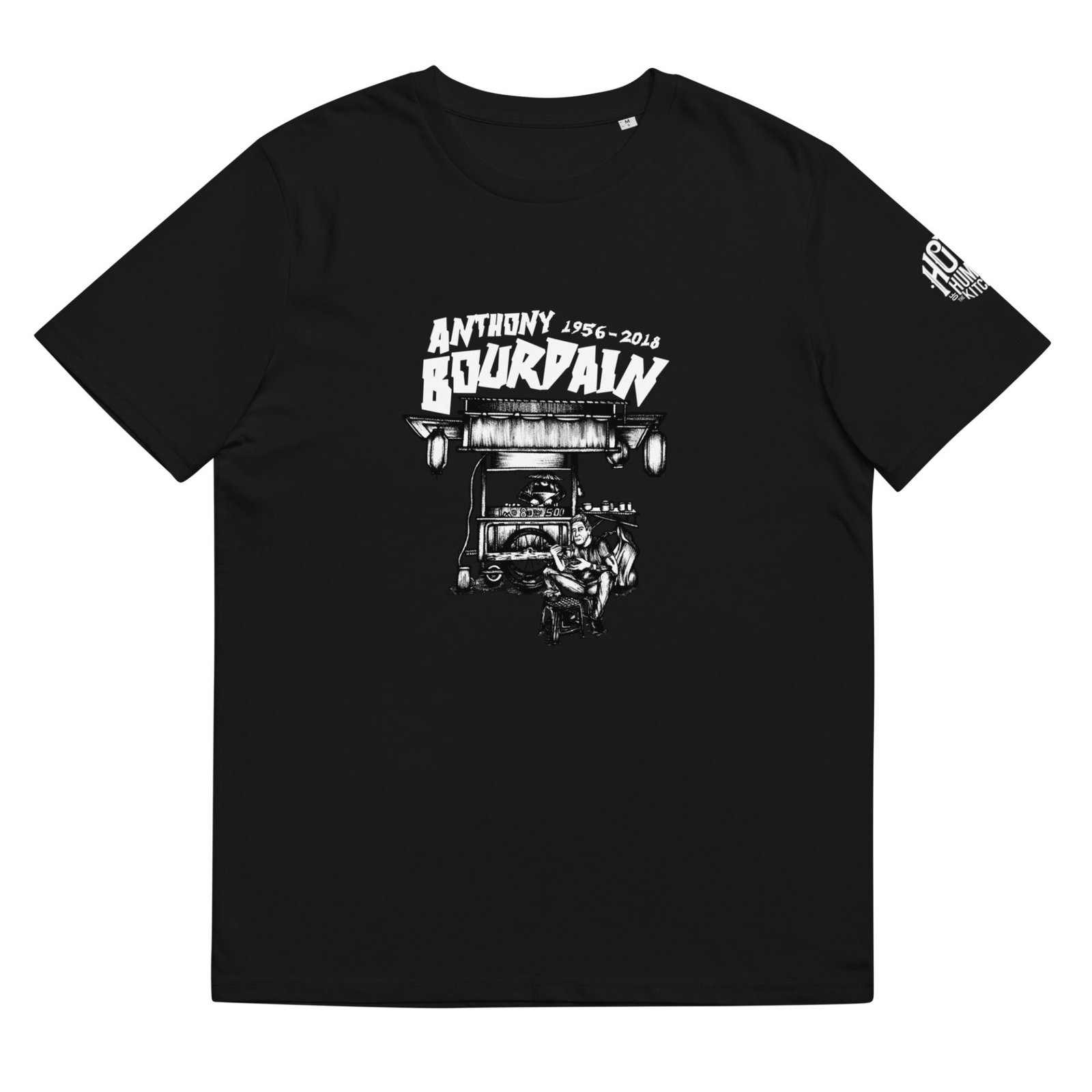
Anthony Bourdain T-Shirt
$35.00
Mise HOTK Unisex t-shirt
$30.00