Printing a different future for food
Technology and creativity came together to give overlooked restaurant ingredients an entirely new purpose.
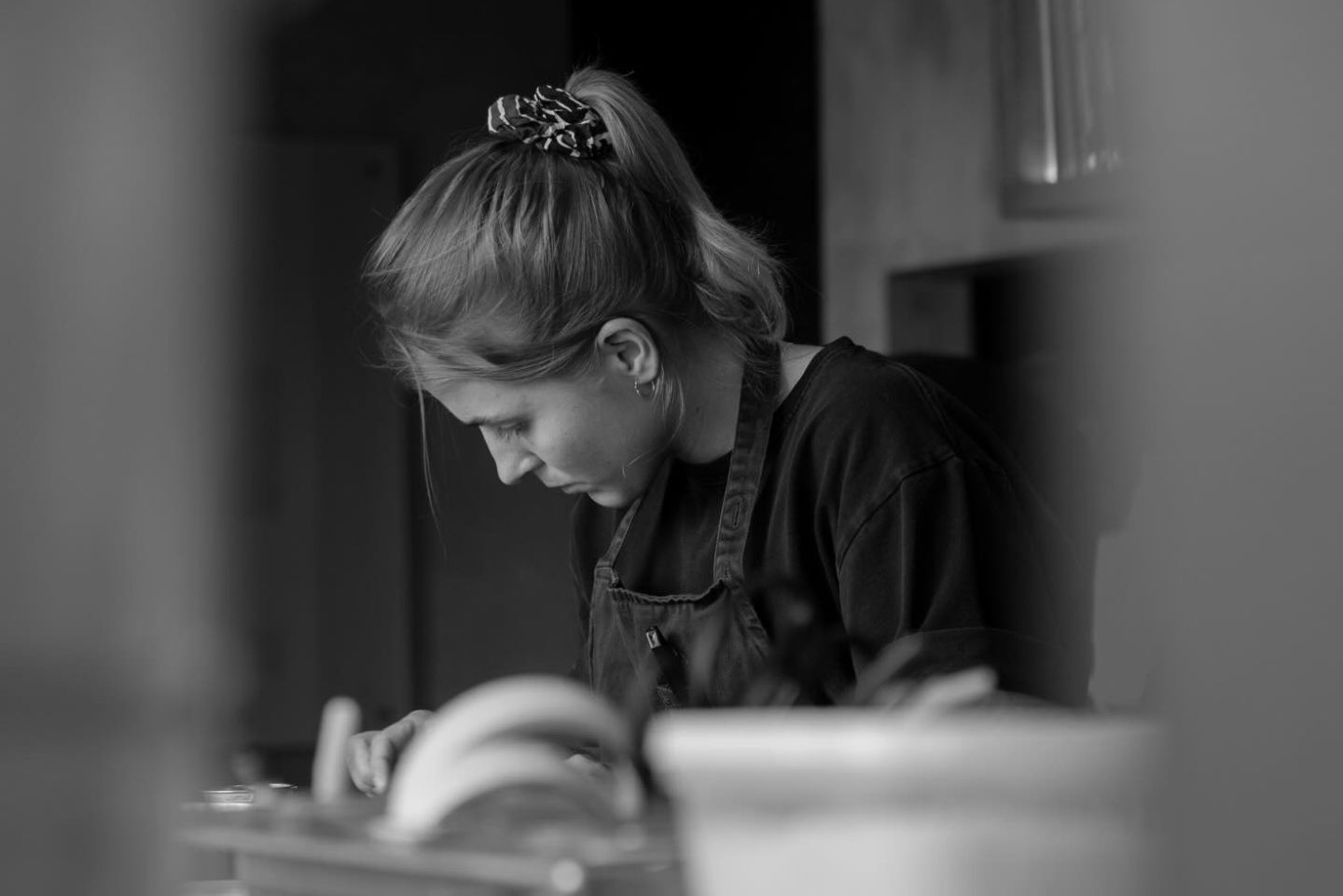
Elzelinde van Doleweerd
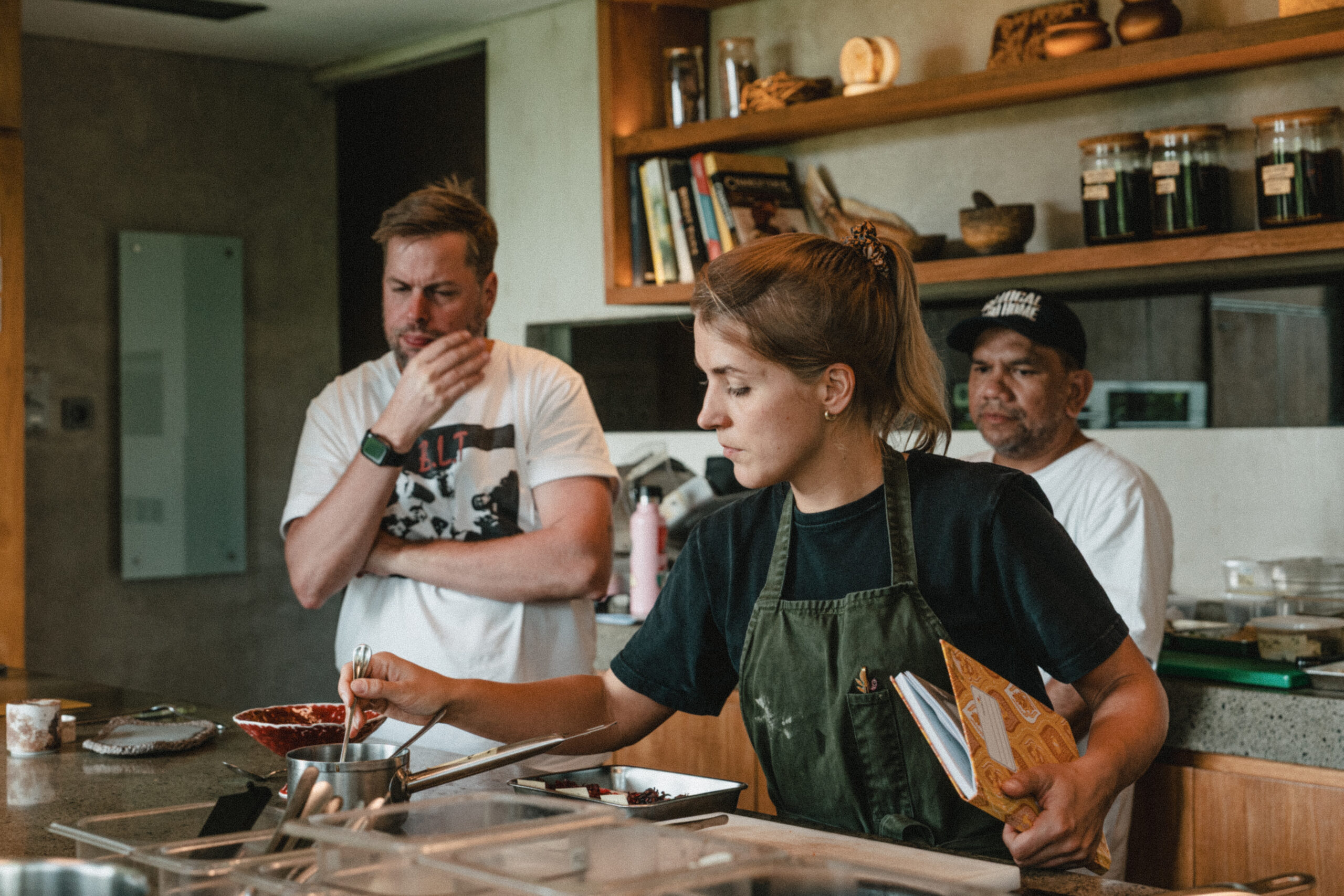
Elzelinde van Doleweerd’s journey into the world of food began around a family table, helping her father in the kitchen and discovering from an early age how food could bring people together. But her path to the restaurant world was not a traditional one. With a background in Industrial Design and Food Technology, she found her way into gastronomy through research, experimentation, and an early fascination with what could be created from ingredients often considered waste.
Her work sits at the intersection of design, science, creativity, and sustainability. From developing 3D-printed food from restaurant waste streams to working in the R&D kitchen at Locavore NXT, Elzelinde has built a career around questioning what ingredients can become. For her, cooking is not only about creating something delicious, but about understanding, experimenting, learning, and finding new possibilities.
At the heart of her approach is an open-minded philosophy: everyone has something to teach us. Whether working with chefs, interns, or collaborators from different backgrounds, she believes that creativity grows when people work together and remain curious. Through R&D, fermentation, plant-based cooking, and circular approaches to waste, she is helping demonstrate how restaurants can become places for both culinary innovation and more sustainable ways of working.
In this conversation with Humans of the Kitchen, Elzelinde reflects on her journey, her approach to R&D, sustainability, and the importance of staying curious.
Share your Journey
- Looking back at your childhood, was there a specific moment or memory that sparked your interest in food or cooking?
It started in my childhood. Food has always been important in my family. The food my dad cooked was always tasty, and we ate all together around a big table. I started helping my dad in the kitchen from a young age and enjoyed that a lot.
- Did you have another career or job before becoming a chef? How did those experiences influence your decision to pursue cooking?
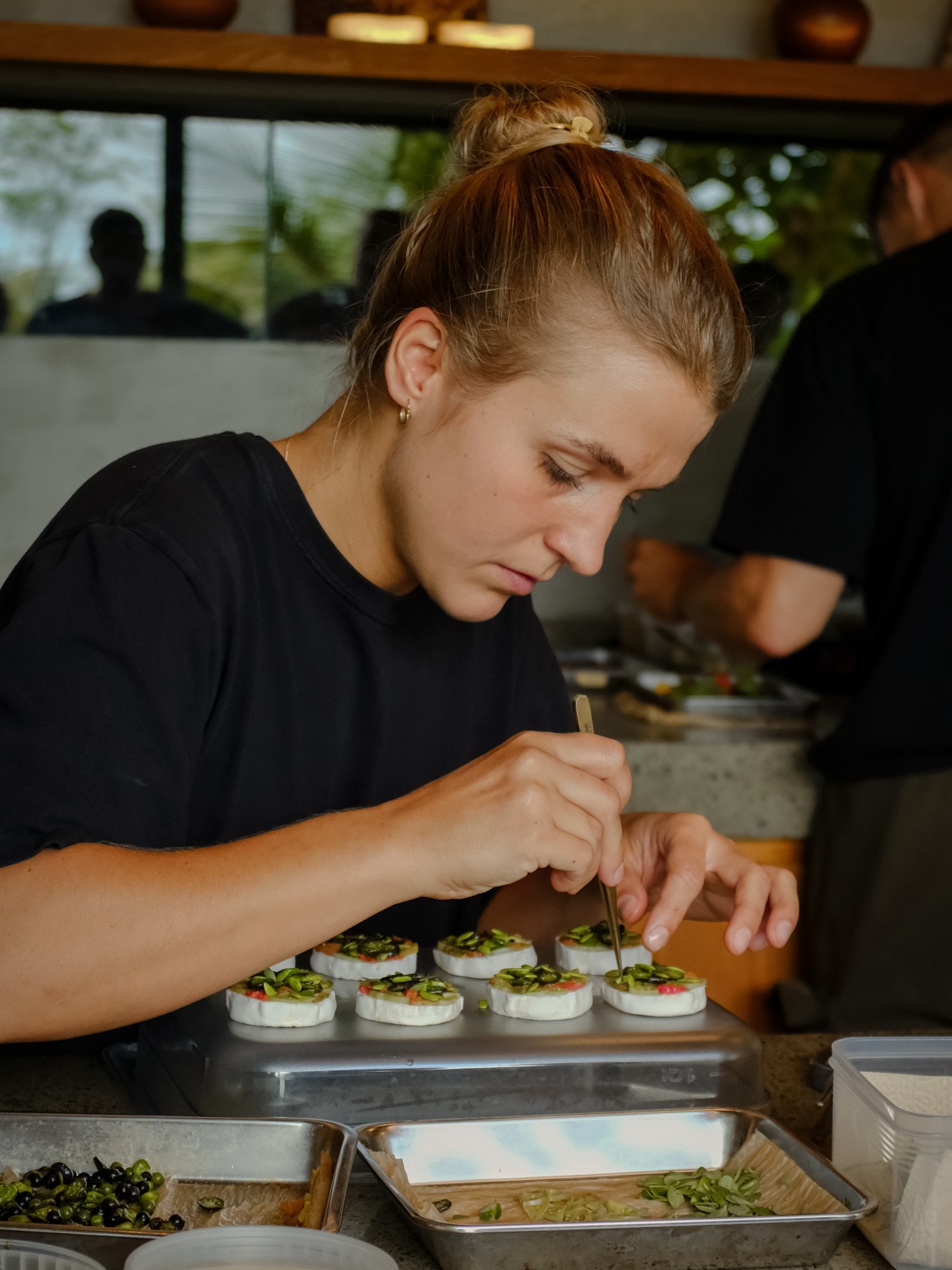
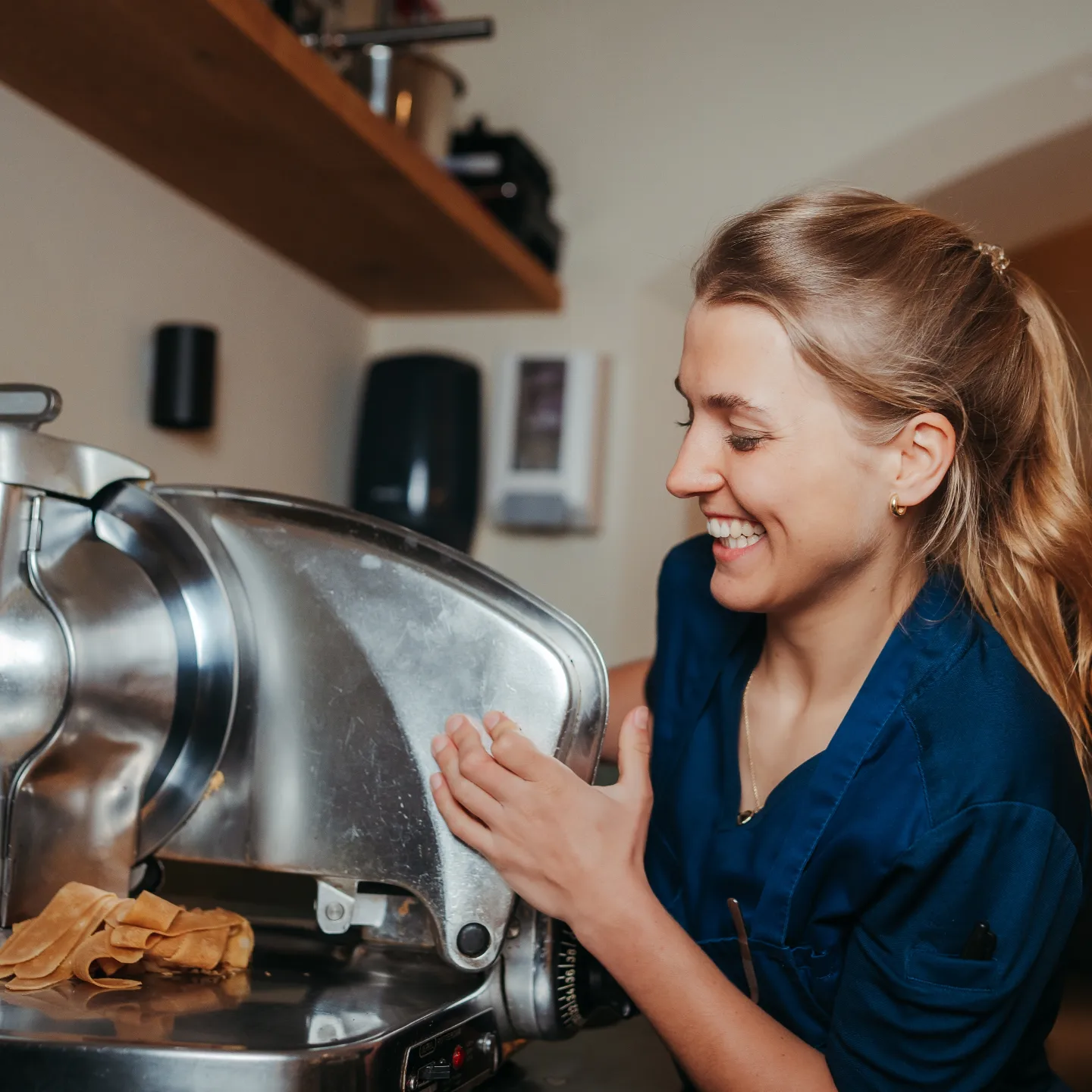
I had a start-up focused on 3D printing food from waste. I collaborated with restaurants to develop recipes from their waste streams and 3D-print them in designs suitable for their menus. After printing, they were baked and dried, resulting in long-lasting cracker- or cookie-like textures. Mostly, here I realized that what I actually enjoyed was talking with chefs and thinking with them about how to make interesting recipes and dishes.
- Did you formally study culinary arts, or are you self-taught? How has your learning journey shaped your approach to cooking?
I studied Industrial Design at the Technical University, where I pursued a bachelor’s and master’s degree. I combined my bachelor’s with Food Technology and continued my master’s, focusing on my own start-up and collaborating with restaurants. I finalized my master’s within the R&D department of restaurant Alchemist in Copenhagen.
My background in Industrial Design shaped my way of thinking about developing new dishes. It enables me to think outside the box, understand how to set up research to explore the potential of new ingredients, and develop new techniques.
- When did you first step into a restaurant kitchen? What was that experience like, and how did it shape your journey as a chef?
This was during my studies. I started working in a restaurant on campus. The chef asked me to develop the vegetarian dishes and put some trust in me from the first moment. It was fun, I really enjoyed it, and it motivated me to continue this journey within the restaurant industry.
- What were some of the early challenges or obstacles you faced when you started in the kitchen, and how did you overcome them?
I am quite a small person, and people had some prejudices. I learned that often I just had to get started and show my work to prove myself and gain respect. Also, my mum always told me, “Treat people the way you like to be treated,” which helped me a lot to feel grounded in high-end kitchens.
- What keeps you inspired and how has that inspiration driven you throughout your professional journey? Especially during tough times in the kitchen?
Eating, reading, cooking. My drive is to keep on learning. It motivates me to search for new ingredients, taste new flavors, learn about new techniques, and develop new textures. I want to understand what I am doing, to be able to apply my knowledge in a new context, to thoughtfully play around with ingredients and recipes. I love to get inspired when dining out. It does not have to be fancy; sometimes the most traditional kitchens surprise me even more with their cooking techniques and local ingredients.
- Can you recall a moment in the kitchen that marked you forever? Maybe it was an interaction with a mentor, a fellow cook, someone you fed, or a situation that challenged you in a way that shaped who you are today?
Not in the kitchen, but already before. My mentor in Industrial Design always challenged me to take an extra step. I was happy with the result, already being a perfectionist, and put in a lot of effort, but he always challenged me to do something even better, to put more effort into my work, improve it, or do something else. He was right; it was better in the end, and I learned more.
Sometimes with R&D, I do many tests for one simple component, and even then, although the result is acceptable, I learned to be critical and see what can still be improved to make it even better.
- As a chef, how would you describe your philosophy in the kitchen, and how does it guide your approach to cooking and leadership?
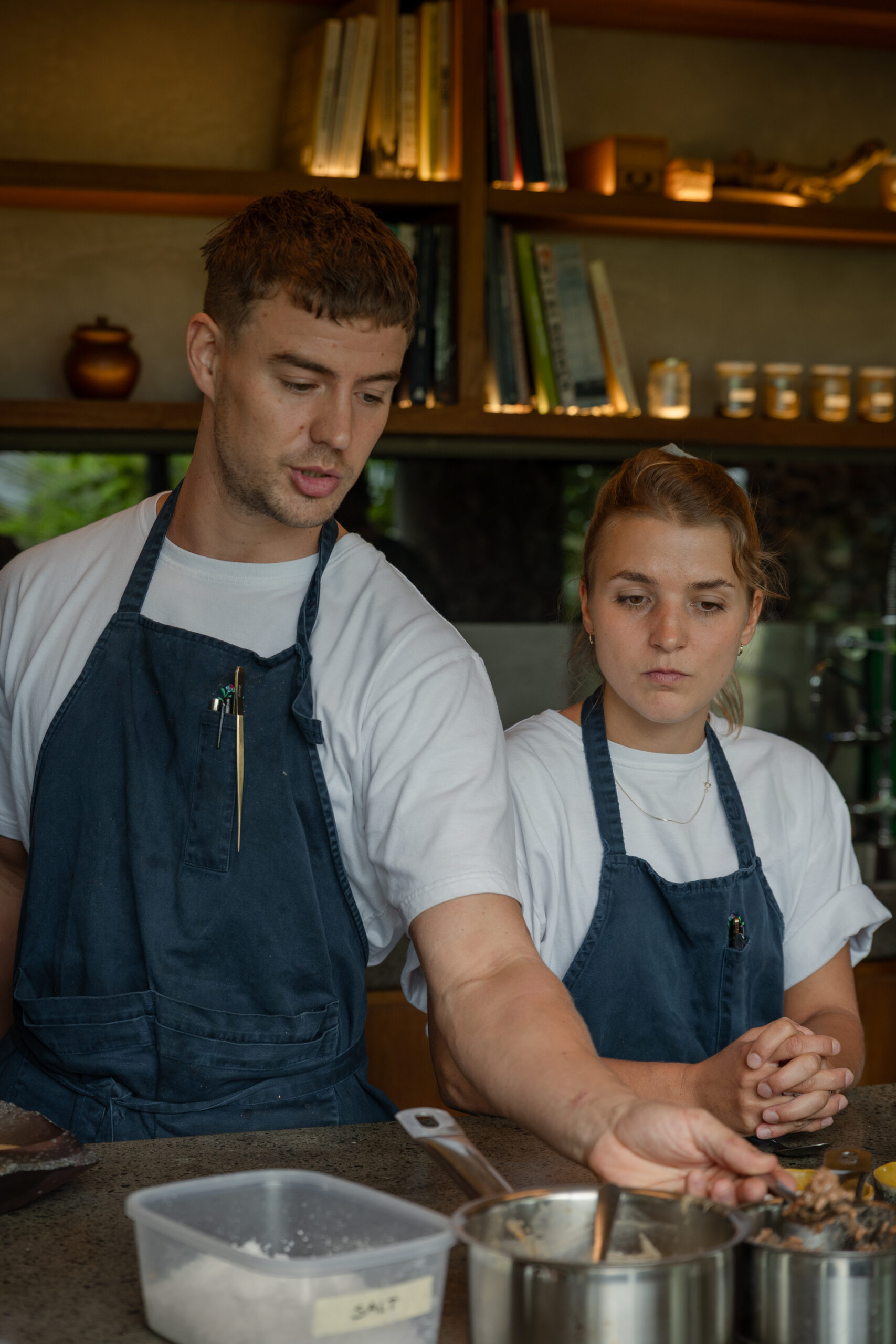
My philosophy is to keep on learning and be open-minded. We can all help each other to grow and learn. I can learn a lot from an intern with a different background, growing up in a different country and sharing the food he or she used to eat at home. Being open-minded and realizing this helps me a lot in my work.
Right now at Locavore NXT, we launched the new program to rotate all the CDPs in the lab. Everyone joins for two weeks, and we work on one or two dishes together for the next menu. It is great to work together like this, so they all can contribute to the creative process.
- Can you share a time when cooking or the camaraderie in the kitchen helped you through a tough period in your life? What made that experience meaningful?
In the restaurant, we work a lot, and so we spend a lot of time together. I have had many good colleagues and friends with whom I still love to catch up because we got to know each other very well. I learned that it is good to be open with colleagues and to ask your colleagues about their wellbeing. I worked in places where we could talk openly and help each other when needed.
- Reflecting on your career, what achievements or milestones are you most proud of, and what do they mean to you?
I am proud to help restaurants understand more about the R&D process, how to set up testing, build their own database of recipes, understand proper fermentation practices, and value waste streams by transforming them into something tasty.
Mostly, it helps restaurants to think outside the box and become more creative with ingredients they do not value in the first place, which can result in less waste and more vegetables and fruit on the menu.
- What aspects of restaurant culture do you love, and what parts do you find frustrating or problematic? Are there any changes you’re actively working toward or things you hope they change in the industry? Share the reasons behind them and how they align with your vision for a better culinary world?
I love the way we physically work together. Together we can get things done, which is great to see! There are no options to change deadlines; guests are coming anyway.
Also, we spend so much time together that it feels like a family. We eat together: breakfast, dinner, and often see each other outside work as well.
I think physical work for too many hours a day can be exhausting, even more so in the long term. This is something I hope is going to change. Longer weekends to recover, four-day work weeks, and fewer hours a day.
- What are your hopes for the future of the restaurant and food and beverage industry? What changes would you like to see, and how are you contributing to that change?
Beyond the changes in workload for chefs, I think our industry can play a big role in showcasing how to make more sustainable choices for our planet. For example, by cooking more vegetarian dishes and reducing our reliance on animal protein, making full use of the ingredients we work with, and being creative with waste streams by transforming them into something valuable. We can also take greater responsibility for sorting waste and working with partners who can reuse or recycle it. In this way, the hospitality industry can not only reduce its own environmental impact, but also inspire guests and other businesses to make more sustainable choices.
I believe NXT is a great showcase of how these ideas can be put into practice and demonstrate what is possible when sustainability becomes an integral part of the way we work.
- If there’s anything we didn’t ask or if you feel we’re missing something about your personal and kitchen story, please share it here.
I am leading the R&D kitchen, where I am responsible for developing our new menus and testing new techniques, ferments, ingredients, and ideas. At NXT, we change the entire tasting menu every six months, which gives us the opportunity to continuously research and experiment. We have a dedicated lab for this, as well as a separate fermentation lab, which I am also in charge of.
Sustainability is already deeply integrated into the way we work. We only use local ingredients, no dairy or gluten, and a minimal amount of animal protein. We also have our own circular waste center, which I think is an amazing example and source of inspiration for the industry. We separate our waste streams, look for ways to reuse and recycle wherever possible, and transform our food waste into compost for the garden.
Photo credits:
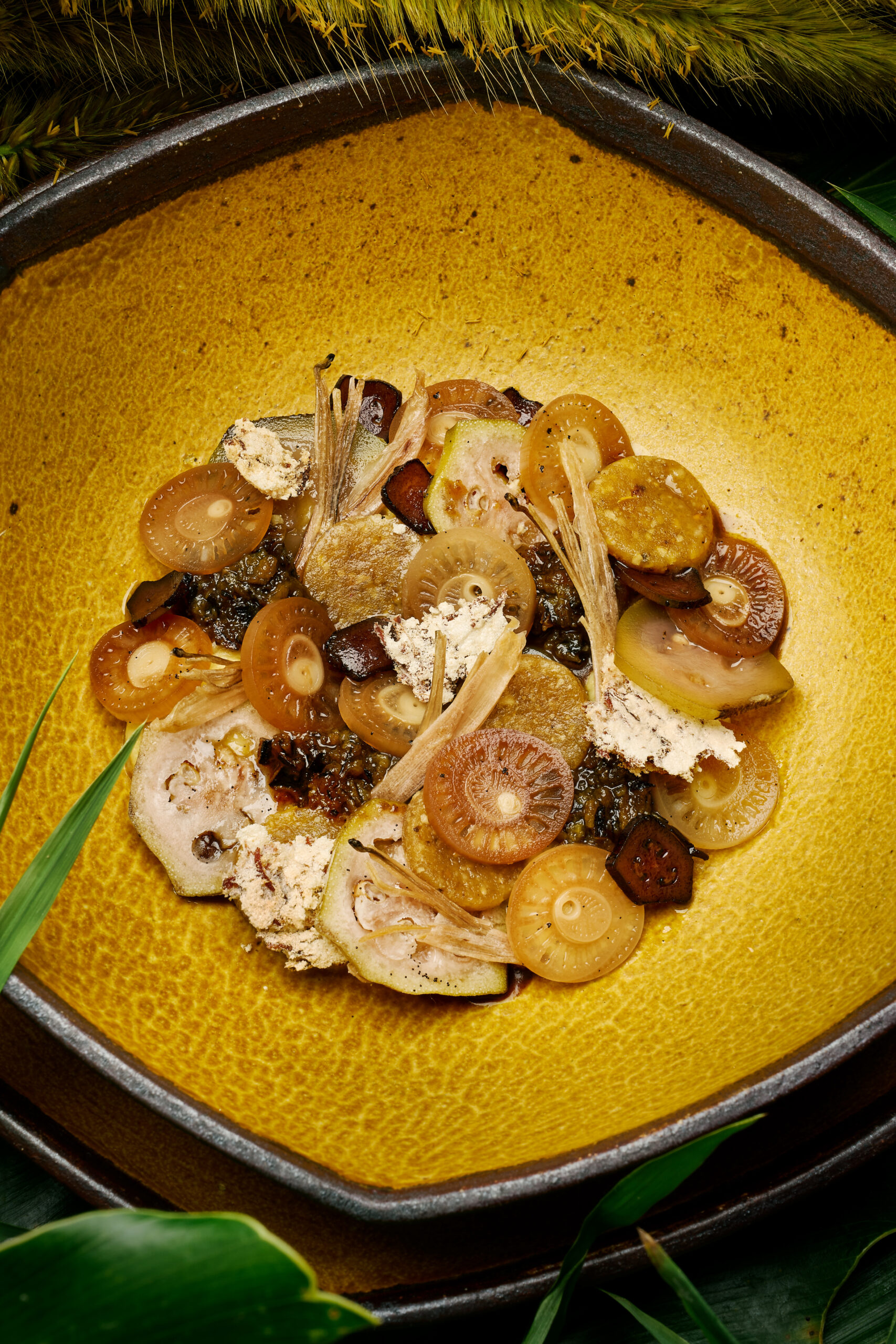
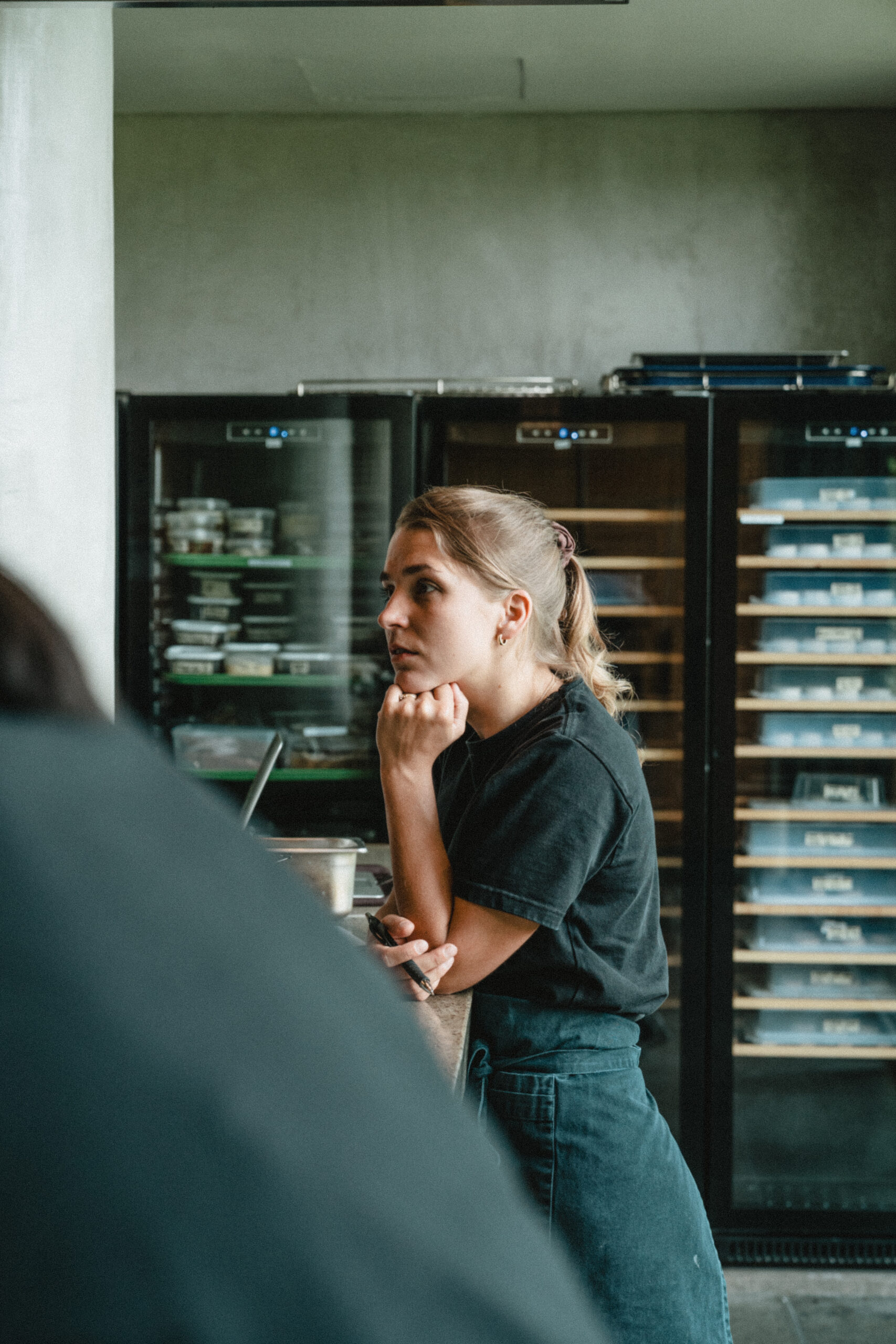
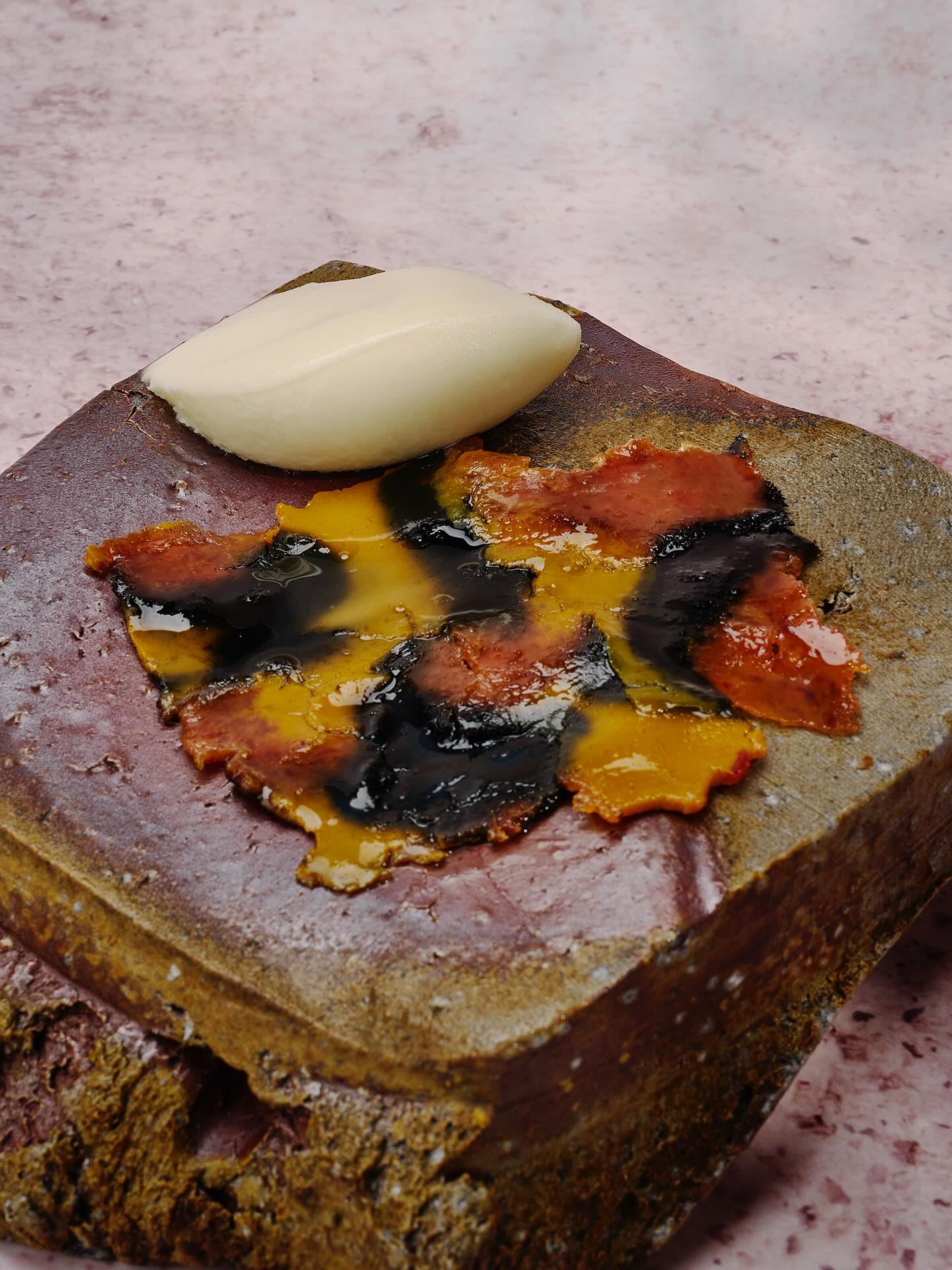
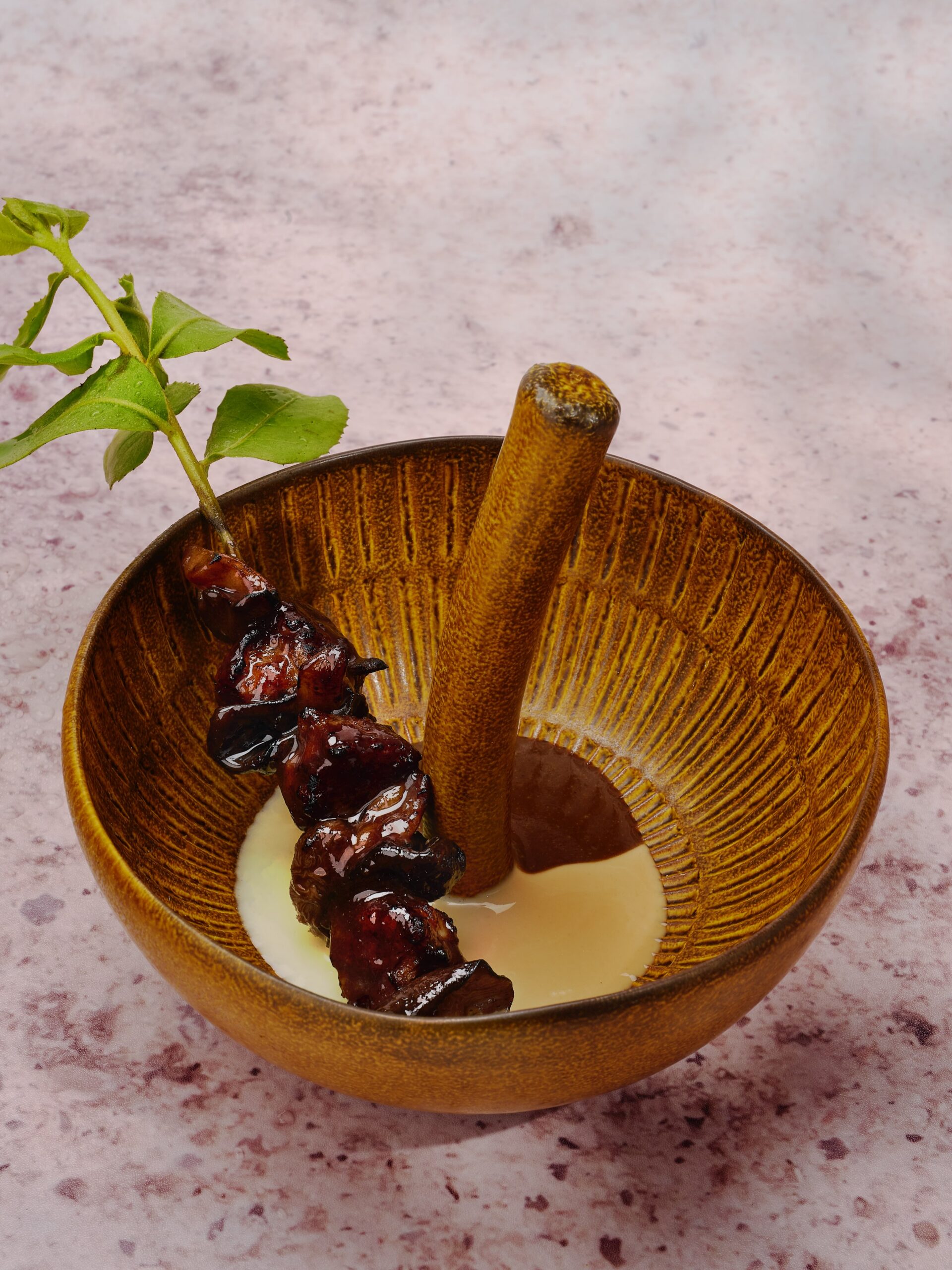
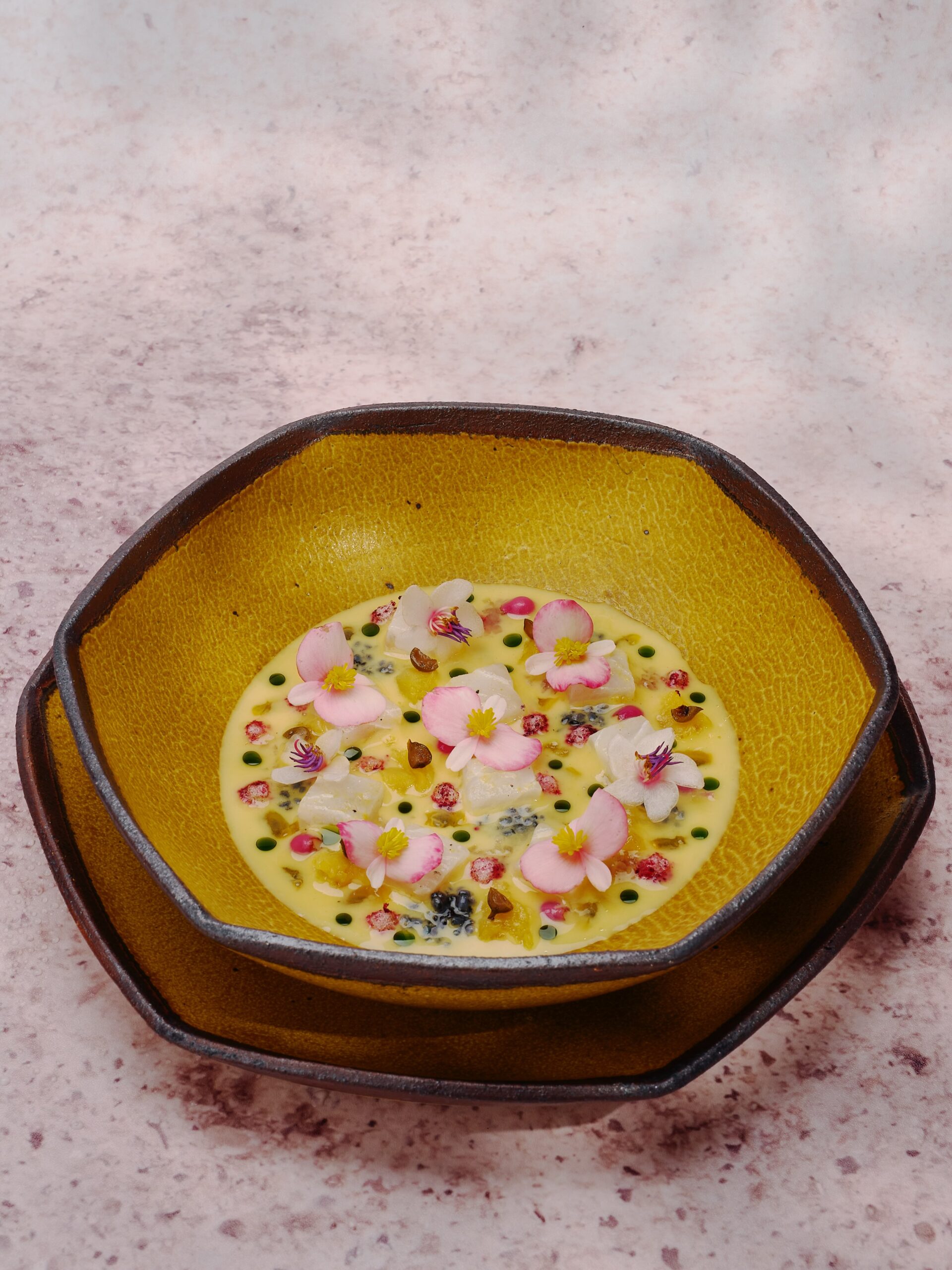
Food: @ron_greve | Portrait: @adiwiradharma
Secret Sauce
- What’s the most unexpected ingredient you’ve ever worked with, and how did it change your perspective on cooking?
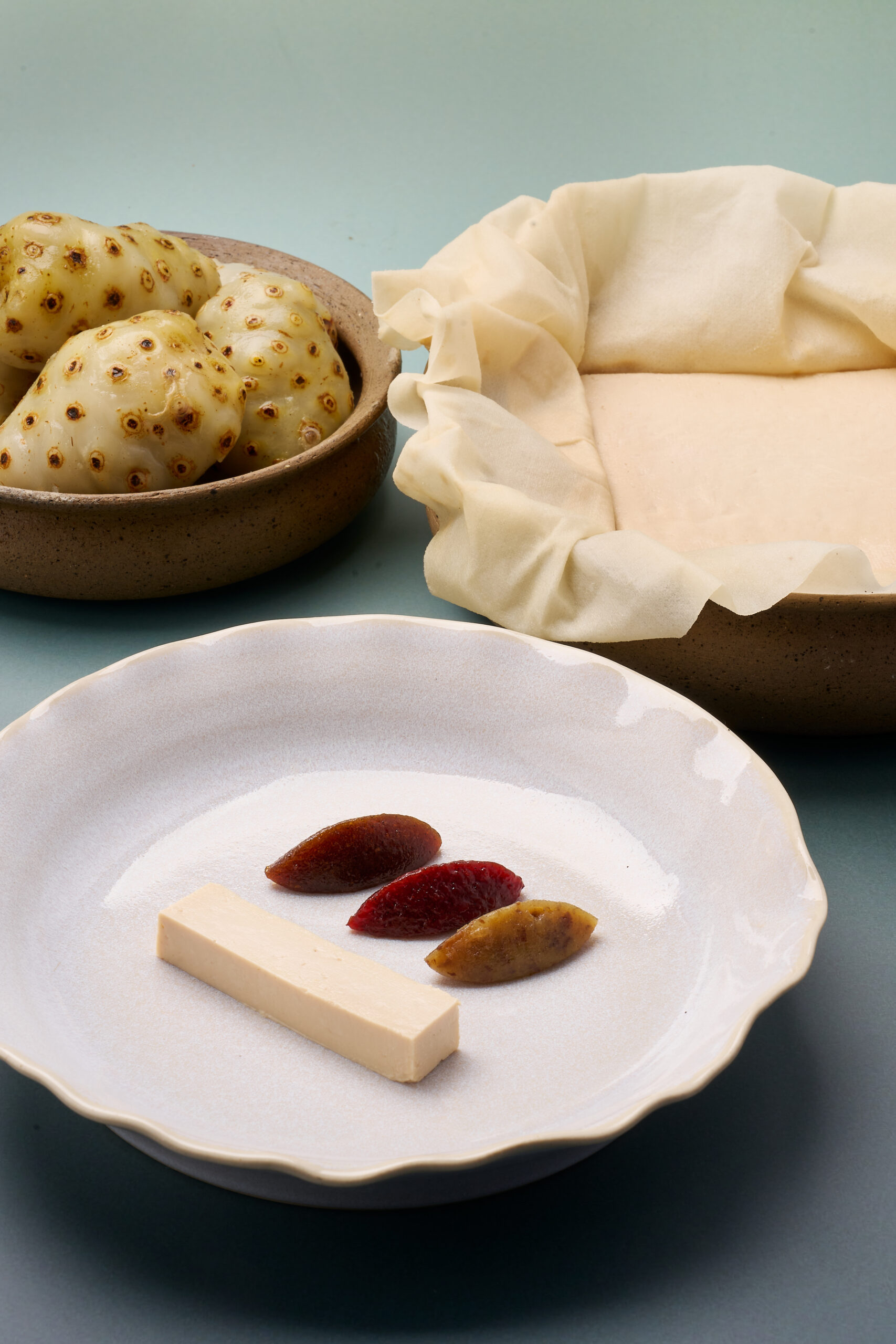
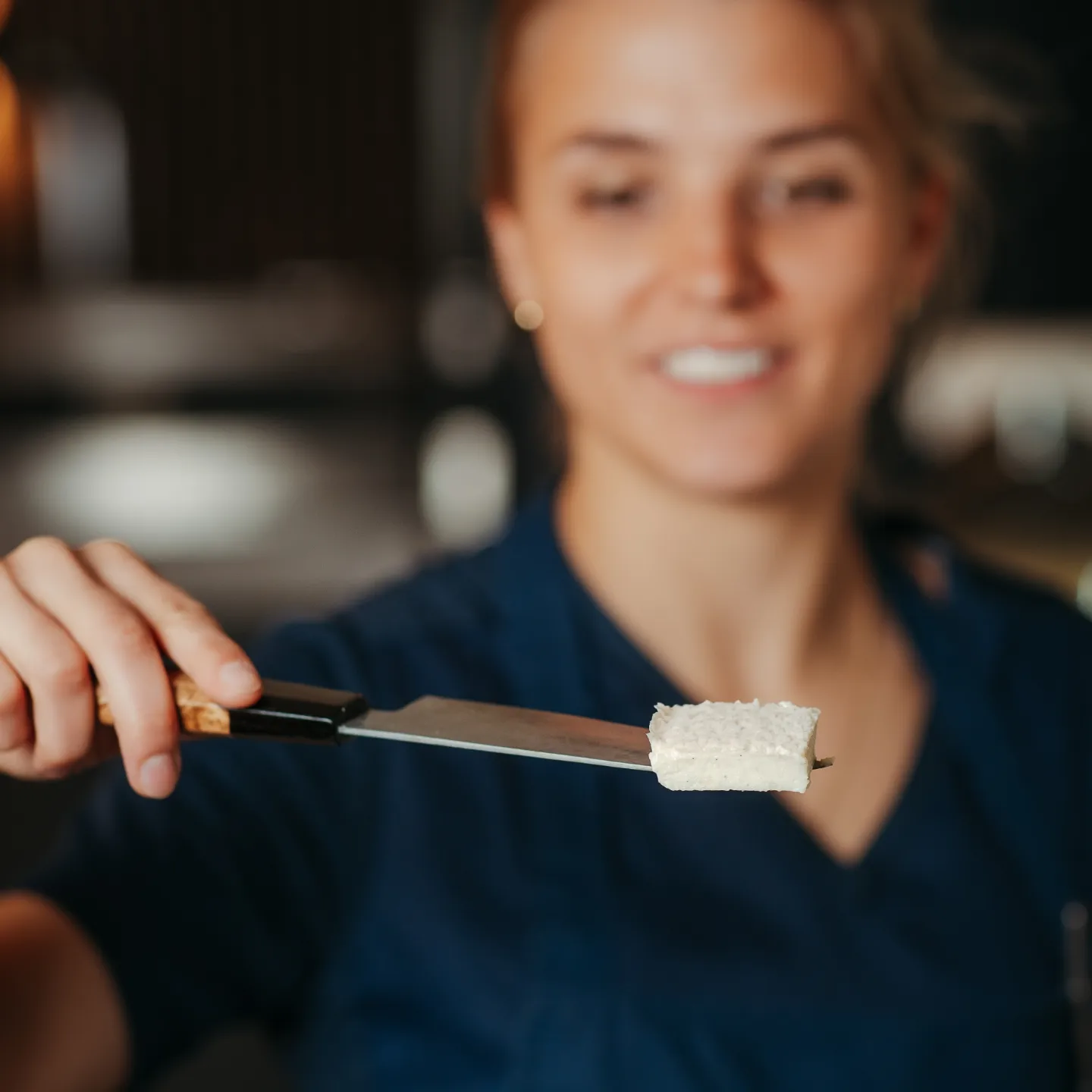
Maybe noni! Crazy blue cheese smell from a fruit! It inspired me to think about how we can actually make something like plant-based cheese without imitating traditional cheese processes. I think we did a great job with the tofu cheese, which is currently on our menu.
- What’s your “guilty pleasure” meal?
Hmm, desserts! Chocolate, cheesecake, ice cream, etc… Is this a meal?
- A food trend that you hate and why?
I don’t really follow food trends, but I hate the marketing of unhealthy artificial food, with lots of flavor enhancers and “unnatural” ingredients. No real cooking involved…
- What tips would you give to other cooks and chefs to help them navigate their culinary careers and find peace amid the chaos of the kitchen?
Always plan your way forward. What do you want to learn? Where can you learn this? For me, a plan helps to shape my path, take the right directions at the right moment, and make me prepared when getting in contact with the right people who can help me along the way.
5. What’s an underrated ingredient and why?
Soybeans, super versatile! Amazing for making homemade soy milk, tofu, miso, tempeh, soy sauce, emulsions, etc .
- What’s a must-try dish from your kitchen or the one you’re proudest to have prepared?
Noni cheese! Please try it. I think it is a new, interesting approach to plant-based cheese—actually healthy, very natural: hard-pressed tofu, good fresh miso, and noni.
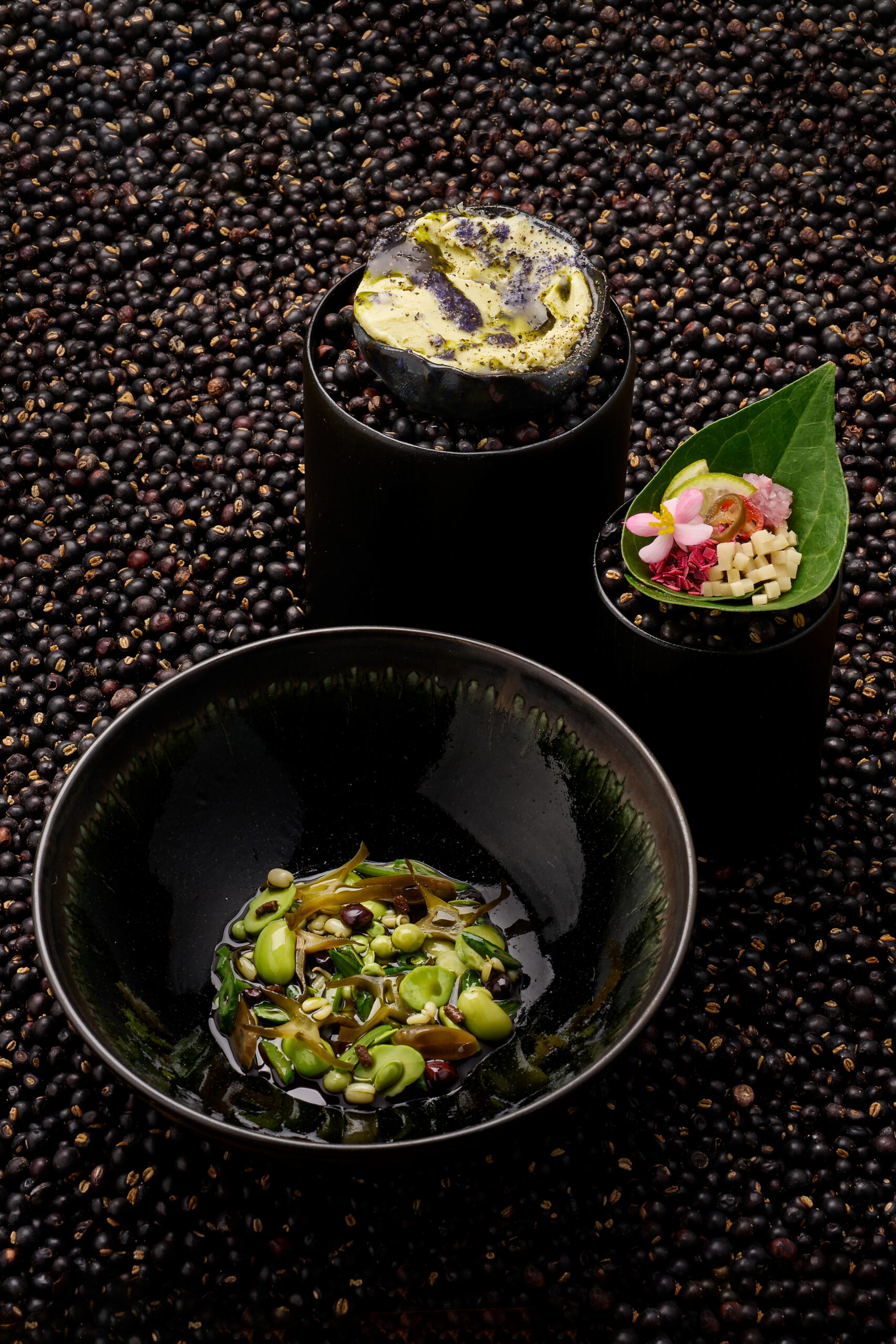
Also, I love our new bean dish: fresh beans with stinky bean miso, served with a pea-pod ice cream and a betel leaf with bean XO.
About Your City!
Bali, Indonesia
- If Anthony Bourdain or a chef came to your city, what would be the perfect tour itinerary from breakfast to dinner?
In the morning, go to the Sayan Market. It is the same place as the Sayan Night Market (also nice to go!), but in the morning they sell ingredients. Buy fresh fruit, vegetables, tempeh, etc. Good for ingredients to cook at home. On the right side, they sell some snacks as well. Try some of the sweet ones wrapped in banana leaves. I love the sumping waluh (with pumpkin and coconut).
For a good coffee, go to Rusters, a Danish spot with a great Danish breakfast and perfect pour-over (V60) coffee. Try the Balinese or Javanese coffee beans. If you want a more authentic breakfast, check along the road for the bubur ayam, a very nice rice porridge with chicken stock, peanuts, and some toppings. Mostly, you only find this in the morning at small stalls along the road.
For lunch, try Warung Betawi Emak Yayah in the center. Best gado-gado, ketoprak, lontong sayur, and soto ayam (try all!).
For dinner, obviously go to Locavore NXT! Enjoy the dining experience, book the Woodrooms, stay overnight, enjoy the Indonesian breakfast the next day, and plan the foraging trip. During the trip, you will learn a lot about the wild ingredients we use on the menu. Maybe skip lunch that day, so you have enough space for a fulfilling dinner at Nusantara—amazing Indonesian food from all over the island. Try the coconut soup with the beluntas leaves. I can eat that every day!
Night Rooster is a great place to enjoy afterward. Get a special cocktail in a unique atmosphere.
Next to that:
Ubud is a great place if you love ceramics. Mateh, Gaya, and Rusters all make and sell beautiful bowls, plates, and cups, and most of them also offer pottery classes.

Support our project by buying our merch!

86 HOTK Unisex t-shirt
$30.00
Anthony Bourdain T-Shirt
$35.00
Mise HOTK Unisex t-shirt
$30.00