Elizabeth Norris
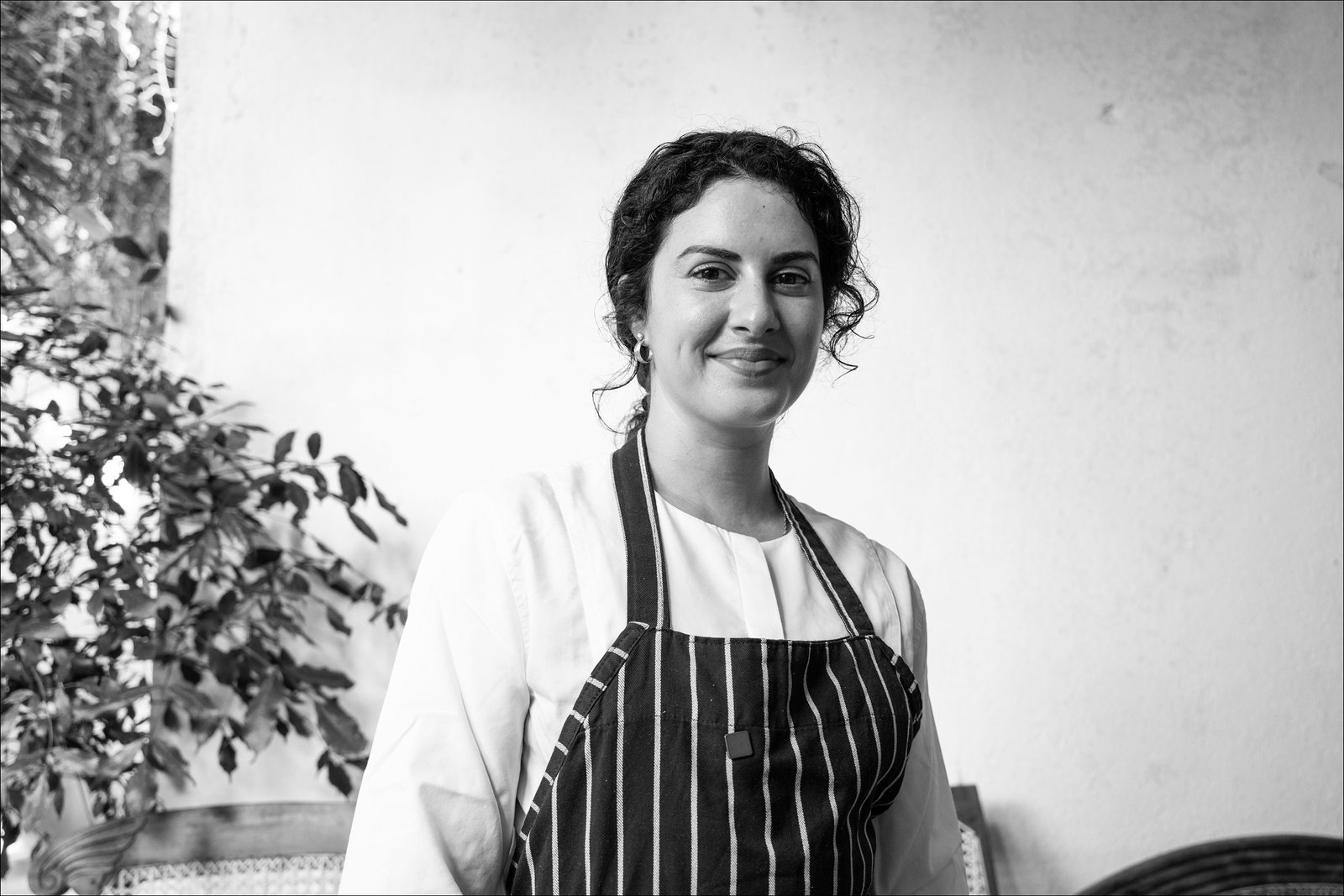
Interview and photography by Marla Tomorug
Explore more of her work on Instagram @marlatomorug
THE BEGINNINGS
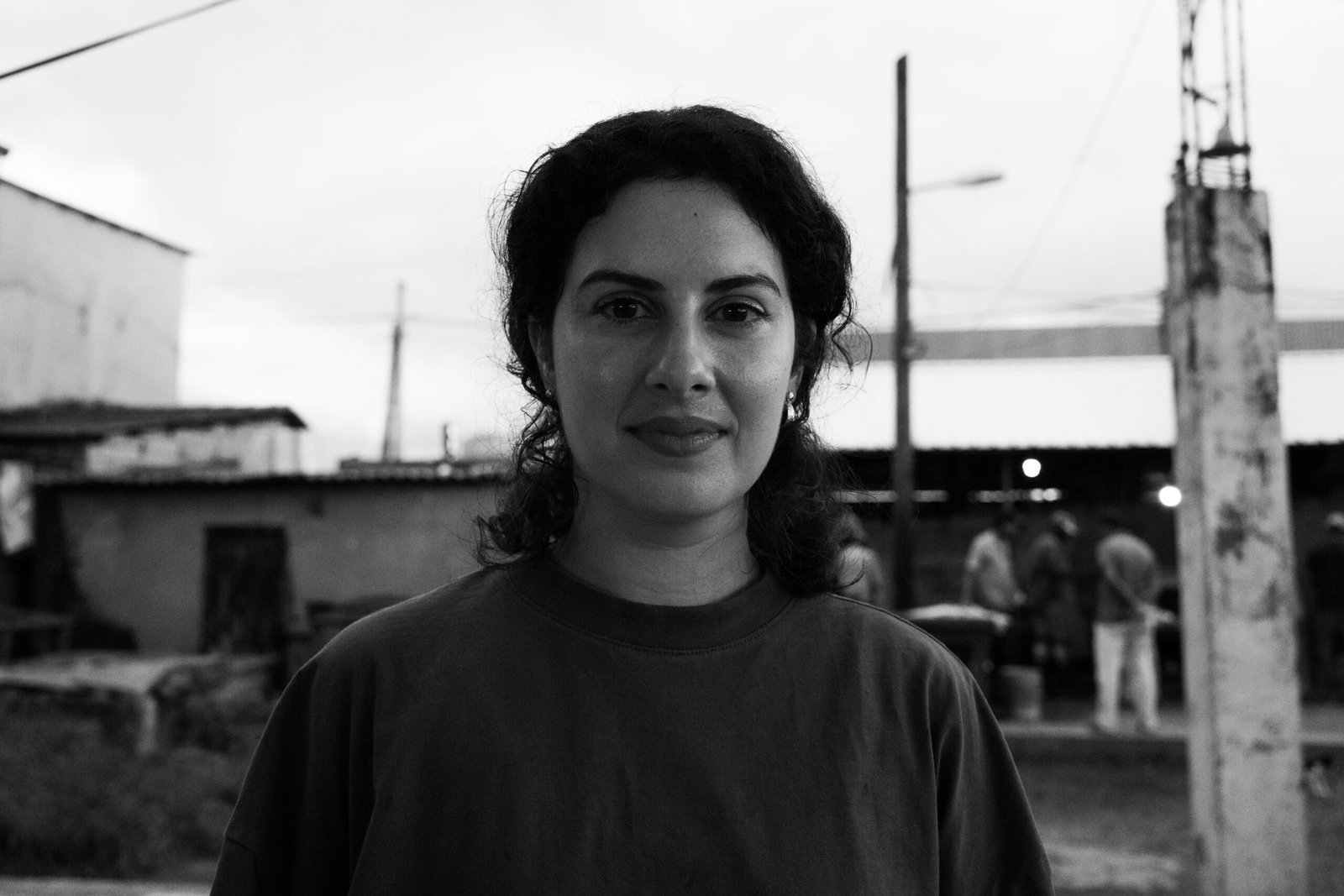
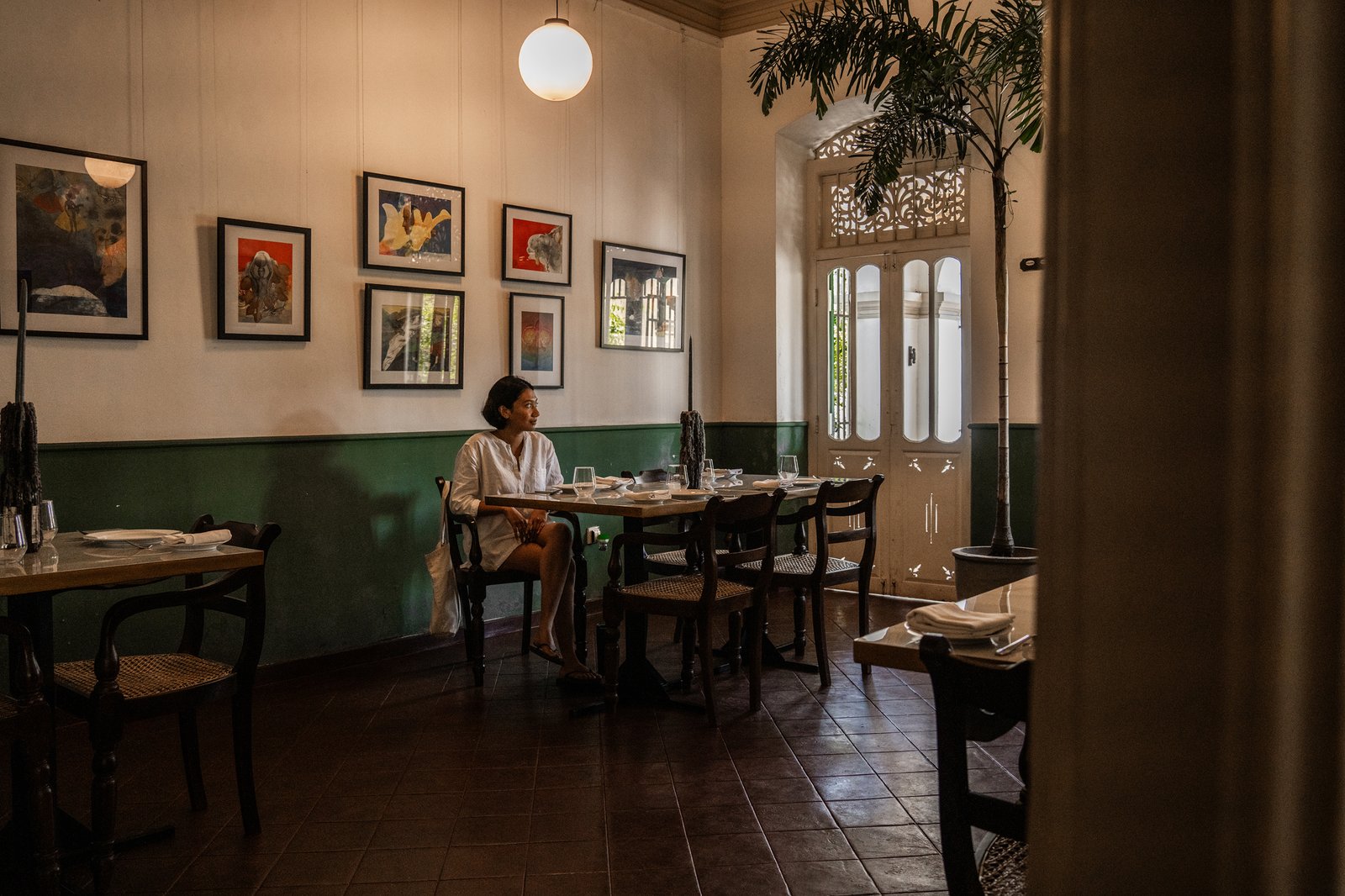
I was born and raised in London to a Sri Lankan mother and English father. And I immigrated to Sri Lanka about six years ago, where I am the current chef and owner at Club Ceylon in Negumbo.
There have been quite a few food memories that stand out from my childhood that have inspired my passion for food. A lot of my Sri Lankan family moved to England during the difficult times back home, and when I’d visit my mum’s side of the family on weekends in London, there would always be a feast — nine curries, all the aunties, all the families together. Just endless food, so many people, and you didn’t always know what you were eating, but it was delicious.
When I was about sixteen, we were in Spain, and I had this Galician-style octopus — thinly sliced over a bed of potatoes, drizzled with olive oil, sprinkled with paprika and salt. That dish never left me. I remember thinking, I have to have this again — I can’t go on without it.
About a year later, I went to the supermarket, bought an octopus, and tried to recreate it. I had absolutely no idea what I was doing. The whole house stank, it took hours, and it definitely didn’t taste like the one I’d had in Spain. But that was really the start of it — my fascination with food, with flavor, and with trying to recreate something that moved me.
Tasting that fresh seafood in Spain was such a contrast to what I was eating in London at the time. It opened up a whole new world for me.
When we visited our grandparents on weekends, the food was always mind-blowing. But as we got into our mid-twenties, the same people who had filled those tables when we were younger weren’t around anymore — and I noticed flavours starting to disappear from the table.
People would say, “That’s what great-grandma used to make — we’re not sure how she did it.”
So many of our family recipes were based on instinct — throwing in ingredients, tasting, adjusting. When one of my sisters was getting married, my grandparents came over from Sri Lanka. They hadn’t been in England for a while, and all these incredible curries had started to vanish. I thought, If I don’t learn this now, I’ll lose it forever.
So when they arrived, I told my grandma, “I’m going part-time at work so you can teach me.” I already wanted to become a chef, but it felt too late — most people start at nineteen, and I was in my mid-twenties.
I stayed with my grandma, who constantly called me a messy chef and said I didn’t know kitchen etiquette. Funny enough, I later realized she was running a professional kitchen in her own way — disciplined, efficient, everything ready at the right time and in the right order.
Some days we didn’t cook because she was tired. I stayed with her through it all — sleeping on the sofa, cooking as much as I could, learning everything possible. But what I made never tasted quite like hers. Even after she taught me, it still wasn’t the same. It’s practice — tasting, making mistakes, starting again. Eventually, you get there. I’m still getting there.
I’ve been chasing her flavor — that distinct family taste. I remember running around with measuring cups and she’d say, “What is all this nonsense?” She’d just throw curry powders in instinctively while I shouted, “Wait, we have to measure this!” And she’d laugh and say, “Cooking doesn’t work like that, darling. It’s about taste — it’s about feeling.”
That’s when I truly learned how much of cooking is about intuition and understanding your ingredients. After five months of learning with her, I realized I’d missed so much work already that I might as well dive in completely and see where it took me.
And that’s exactly what I did.
I’ll never forget my first experience in a commercial kitchen — it’s so funny looking back now. I’d called a few places mainly for interview practice, to be honest. I got an interview and thought, I’ll never get the job, but I’ll go anyway and just cook.
I showed up with all my own ingredients — and even my own pots and pans. Completely ridiculous, really, to turn up to someone else’s kitchen like that. I’d even cooked the dish beforehand so I could talk and cook at the same time, knowing it might go that way.
The chef laughed and said, “You know we do have a kitchen here — is there anything you didn’t bring?”
I cooked for him, then started packing up while he was tasting, trying to make a quick exit so I wouldn’t waste his time. But after tasting, he said, “Based on this, you’re hired.”
I told him, “I have to confess — I’ve never actually worked in a commercial kitchen before. I’ve flipped eggs and worked in hot dog carts during the summer, but not professionally like this. I don’t think I’d be a good hire.”
He said, “If you can cook like this, you’ll be fine. Give it a go.” So we agreed I’d start part-time to see if I could handle it. I quickly went full-time — and the rest is history. He really took a risk on me and gave me my first break.
Not long after, I realized how much of the kitchen etiquette my grandma had tried to teach me — the discipline I’d brushed off — was exactly what mattered most in professional kitchens.
When I left Kricket, I joined a seafood-focused restaurant called Westerns Laundry to work under James Mitchell.
I’ve always loved seafood, but training with James took that love to another level. His passion was contagious. He even visited Sri Lanka with his partner and stayed with my grandparents — an experience that reignited my awareness of how exceptional Sri Lanka’s marine produce is. Suddenly, all these connections to home began to fall into place.
With my family’s house and grandparents still in Sri Lanka, I’d always felt a deep connection to the country. After years of working as a chef, I started to feel the urge to do my own thing — and Sri Lanka seemed like the perfect place to do it.
The vision for Club Ceylon began with the idea of being close to where the fishing boats docked, so I could access the freshest seafood possible. I wanted to build my own network here, rooted in sustainability and great local produce.
Logistically, Sri Lanka is a different world from England. Back in London, seafood was sold before it even landed — big wholesalers would buy everything through online auctions. Here, it’s much more hands-on. You go to the market yourself, or you have someone go for you. And you can’t always get what you want — it depends entirely on what the fishermen catch that day.
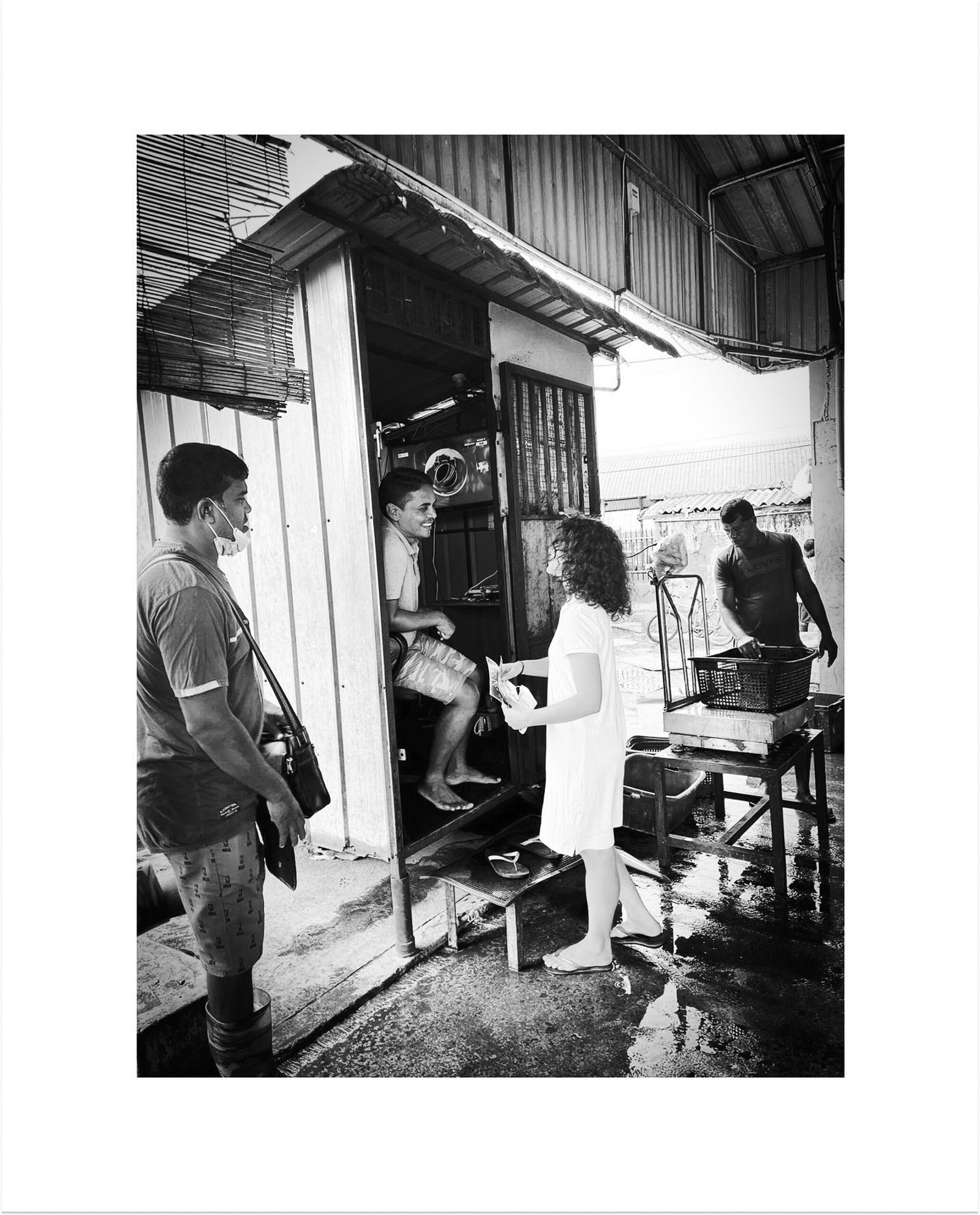
The goal was to create a direct connection with the fish market so our food could stay seasonal and our sourcing more transparent. We’re constantly visiting the markets, seeing what’s available and what’s priced well, and working with local fishermen who have an incredible, unwritten knowledge of the sea. Many of them have spent their entire lives in these markets — they understand the rhythms of the ocean and what’s coming next.
BUILDING A TEAM
The best method to building a good team is finding people who really want it — people who truly want to be chefs. It can’t just be about the money; it has to come from love. This isn’t an easy job, and it never has been. Nobody spends all day on their feet in a hot kitchen just for a paycheck. You need a connection with food to cook well — it’s such a sensory craft.
I tell my chefs all the time: “Here’s the recipe, but it won’t always work. You’re the one who makes it work. The limes this week won’t taste the same or have as much juice as the ones next week. You’ve got to taste, adjust, and really understand your ingredients.” This isn’t something you learn from a course or a textbook. It’s an experience-led job.
I like training people from the beginning so they don’t fall into bad habits and can see the full process — from purchasing and cleaning to cooking and serving. It’s important they understand the whole line: how the fish arrives, how it’s baked, plated, and served. That’s how you build real, practical knowledge.
I don’t have any formal cooking qualifications myself. My qualifications are the people I’ve worked for and learned from. When people see my CV, they see the kitchens I’ve trained in — and that speaks volumes about the kind of environments I can thrive in. It also helps me understand what kind of chefs come from those kitchens.
The culture here in Sri Lanka is very different from what I trained in — much more laid back, which can be lovely, but also a challenge. In a kitchen, you need that fifth gear. Sometimes there are only ten guests, but other nights fifty show up without warning, and everyone has to switch into high gear immediately.
Training is one thing, but they have to take that training on and own it. I have a “make it nice or make it twice” rule — it teaches discipline and the importance of retasting everything. Every guest is a VIP. You never know who’s at your table, so every dish must be perfect and consistent.
We’re not in a high-footfall area — we’re surrounded by a fishing village, offices, schools, and a church. There’s no real reason for anyone to come here unless they know us. It’s a destination restaurant, and people even drive an hour from Colombo to celebrate special occasions. That’s an incredible amount of trust and dedication, and we have to deliver every time.
It’s like being an Olympic athlete. No one sees the training — only the performance on race day. The same goes for the kitchen. People don’t see the prep, the early market trips, the sleepless nights after service, or the staff who call in sick last minute. They only see the final dish.
Just like an athlete on race day, we need to perform. Discipline, integrity, and reliability matter — showing up on time, communicating if you’re unwell, taking responsibility. Those small things make a big difference. That’s why I prefer to train in-house, to shape that mentality from the start rather than having to re-teach it later.
My hope is that when someone leaves here, other employers will see Club Ceylon on their CV and know they’re capable — that they’ve worked in a demanding, high-standard kitchen. That will be their qualification, just like mine was.
I always tell my team: “When you’re young, chase skill, not money.” We provide meals, insurance, and medical support, so I tell them, “Use this time to learn everything you can. You have European-style training right here — you don’t need to go abroad. Your skills are valuable here in Sri Lanka.”
Many chefs are leaving to work overseas right now, but I keep reminding my team — this is the moment to stay. Demand is high, and skilled chefs are in short supply. Stay, learn, and become one of those chefs who’s in demand not just for your cooking, but for your discipline, your attitude, and your ability to lead.
You can take shortcuts in many things, but that doesn’t mean you should — especially not in cooking. There are no shortcuts to becoming a good chef.
Being in a kitchen takes discipline, skill, and structure. You have to follow the rules because you’re working closely with others in a confined space — using the same tools, following the same systems, getting every order right. It’s regimented, but without that structure, there’s no creative freedom. You earn creativity by first mastering discipline. If your prep isn’t done properly, you’ll never have the time or clarity to create freely.
It goes back to the idea that no one sees what happens behind the scenes — only the final plate. You can make complex dishes, but only if you’ve done the prep. Prep time is everything when you’re growing as a chef. I remember struggling with it early on — those endless prep lists that felt impossible to finish. Every time I caught up, my head chef would add more dishes or more prep.
There was a guy named Chris Welch who came to interview at Western’s Laundry, where I was working. Before he arrived, we were writing his prep list for the next day. I looked at it and said to the sous chef, Jack Williams, “Could you even do this?” Jack said, “Yeah, I could — but nothing would be labeled.” I was off the day Chris came in, but the next morning I rushed in asking, “Did he do it?” And they said, “He did.” I couldn’t believe it. It was a level of capability I couldn’t yet imagine — but I wanted to reach it.
That’s what I think is missing in our cheffing culture here — that sense of aspiration and adrenaline. The feeling of, Did he do it? Can I do it? Will I be ready for service? What new thing will chef throw at me today? What will I learn next? Those questions drive you — they light that fire to become great.
I remember being in those kitchens with guys like Ado and feeling frustrated that he could handle those lists when I couldn’t. James used to tell me, “It takes time, Liz — there are no shortcuts.” He was right. You have to work hard and you get faster. One of the best tricks in the kitchen is timing yourself — how long it takes to cut 20 onions, or roll five kilos of pasta, and then how long it takes next week or next month. If your time doesn’t improve, you’re not pushing yourself.
It’s not just about speed, though — it’s about efficiency and organization. That’s what great cooking really comes down to.
And it’s not about how good you are, but how good you want to be. How much do you really want it? Are you willing to put in the time and effort?
I tell my team, “Other than the last few kitchens you’ve worked in, I don’t care about anything else. I don’t care if your parents divorced or how much money you have. What matters is whether you want to learn, whether you want to be here, and whether you truly want to become a chef. That’s all that matters.”
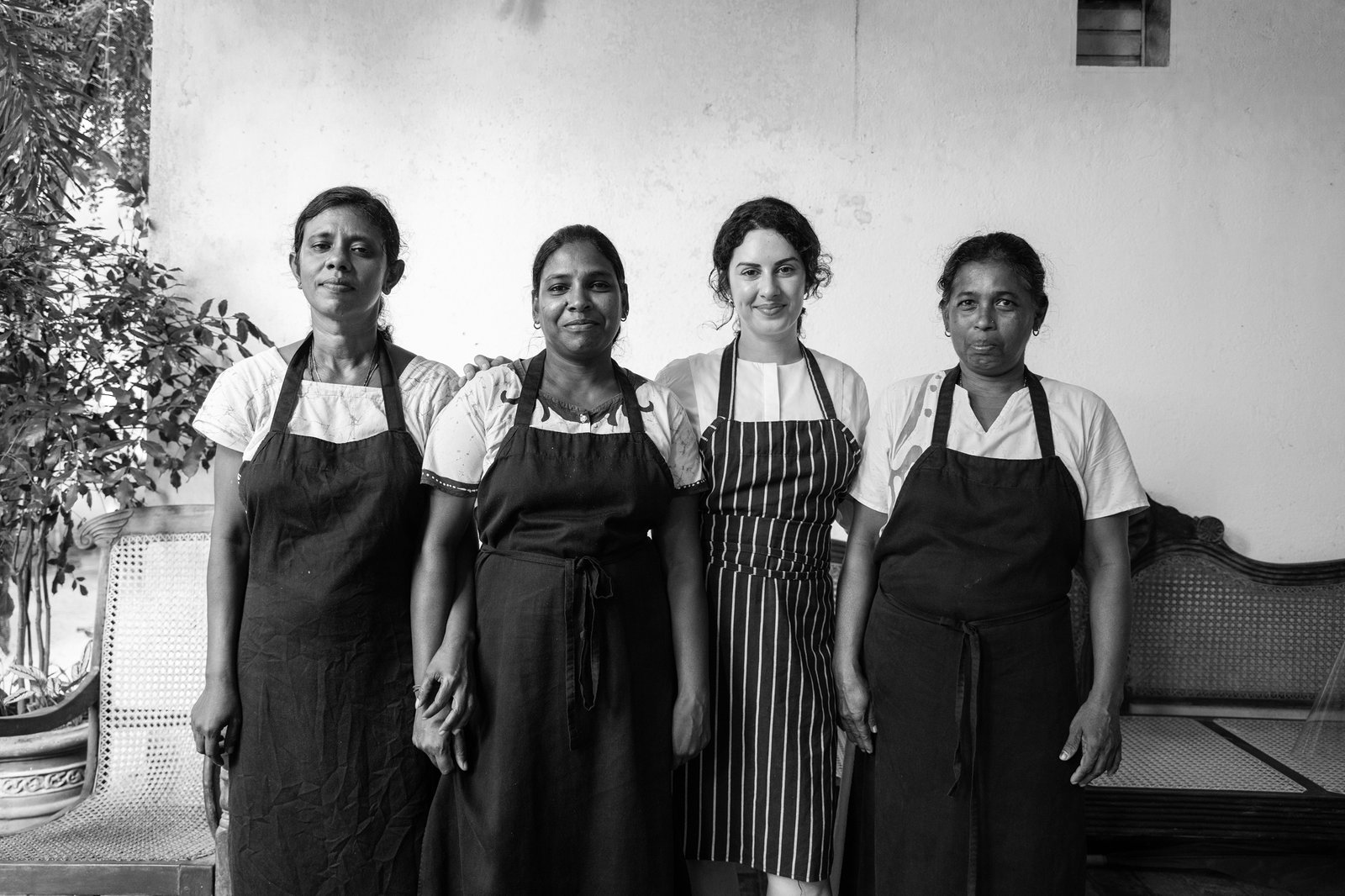
We’ve built a great team here — a mix of people from all kinds of backgrounds, but everyone shares one thing in common: dedication to the craft. And that’s what makes a powerful team. It’s not about where you come from, what school you went to, or what box society puts you in. None of that matters here.
Today’s media has definitely had an impact on the culinary world and I think that, because of it, we’ve lost some of the romanticism of restaurants. Sometimes I scroll through Instagram and feel like I’ve already been there — like I’ve eaten the dishes before even stepping inside. There aren’t many surprises anymore. People often message us asking, “What’s the menu today?” I get it — it’s nice to know what to expect. But sometimes it’s better to let the magic happen: to arrive, see what’s on, and have that spark of surprise — Oh wow, I didn’t know that was on today.
The same goes for being a chef. The job’s been so glamorized that I’m not sure it helps newcomers. People see the cookbooks, the TV spots, the spotless chef jackets. But they don’t see you at the 32°C fish market at dawn when you can barely keep your eyes open while you’re standing there amongst hundreds of people pushing their way through to get fish. Or the mornings when 20 kilos of fish arrive and someone’s called in sick, leaving one chef to clean it all.
That’s the reality — the pressure, the problem-solving, the teamwork. Those moments teach you your fifth gear. I can train technique, but that drive, that resilience, has to come from within.
You have to go through a lot to make it in this industry, and that’s not shown enough. When people kept asking me if The Bear was accurate, I finally had a moment to watch it — and yes, that’s exactly what it’s like. Things go wrong constantly, not everyone works at the same pace, and you just have to make it happen. It’s chaotic and exhausting, but it’s also exhilarating. I sometimes feel sad that many younger chefs might not experience that same adrenaline.
There’s a kind of pirate glamour in knowing you can survive it — being deep in the weeds and still coming out thinking, Yeah, I did that. That’s when you become a real chef — when you apply what you’ve learned, take initiative, and make sure every dish is ready, no matter what’s happening around you.
We’ve had times when the electric whisk broke and we hand-whisked the tart together, everyone taking turns. Those moments build teams. They remind you this job isn’t about glamour — it’s about grit.
That’s what I loved about The Bear: it celebrated that side of the job. Every aspiring chef should watch it and understand that there will be days when you think, I can’t do this, but you push through anyway. In a kitchen, there’s no hiding — everyone has to pull their weight.
The kitchen has always been my outlet. Even when life was hard, I could come in, focus, and perform. I had an interview once for a new job where I owned up to a mistake I’d stupidly made in the past, and they said, “We don’t care. Can you cook? Can you perform?” It was an eye-opener.
That’s the beauty of this industry — your background doesn’t matter. No one cares where you’re from, how much money you have, or what mistakes you’ve made. What matters is how you show up today. Are you the one who jumps in when the whisk breaks? Who gives up your 15-minute break to get things done? That’s what defines you.
In the kitchen, you get to reinvent yourself. And that’s what makes it so magical.
In a dream scenario, I’d love to help transform the industry here — for a true chef culture to exist in Sri Lanka.
I’ve mentioned the chefs who inspired me and shaped my path. I remember specific lessons from each of them, and I want my team to have that too. But it has to be more than just a job. That deep sense of craft and camaraderie that exists in kitchens overseas — I want that to take root here.
Even if it starts small — four people — that’s four more than before. And if each of them goes on to teach four or six more, that ripple effect grows. Maybe by the time I’m eighty, we’ll have really made a difference.
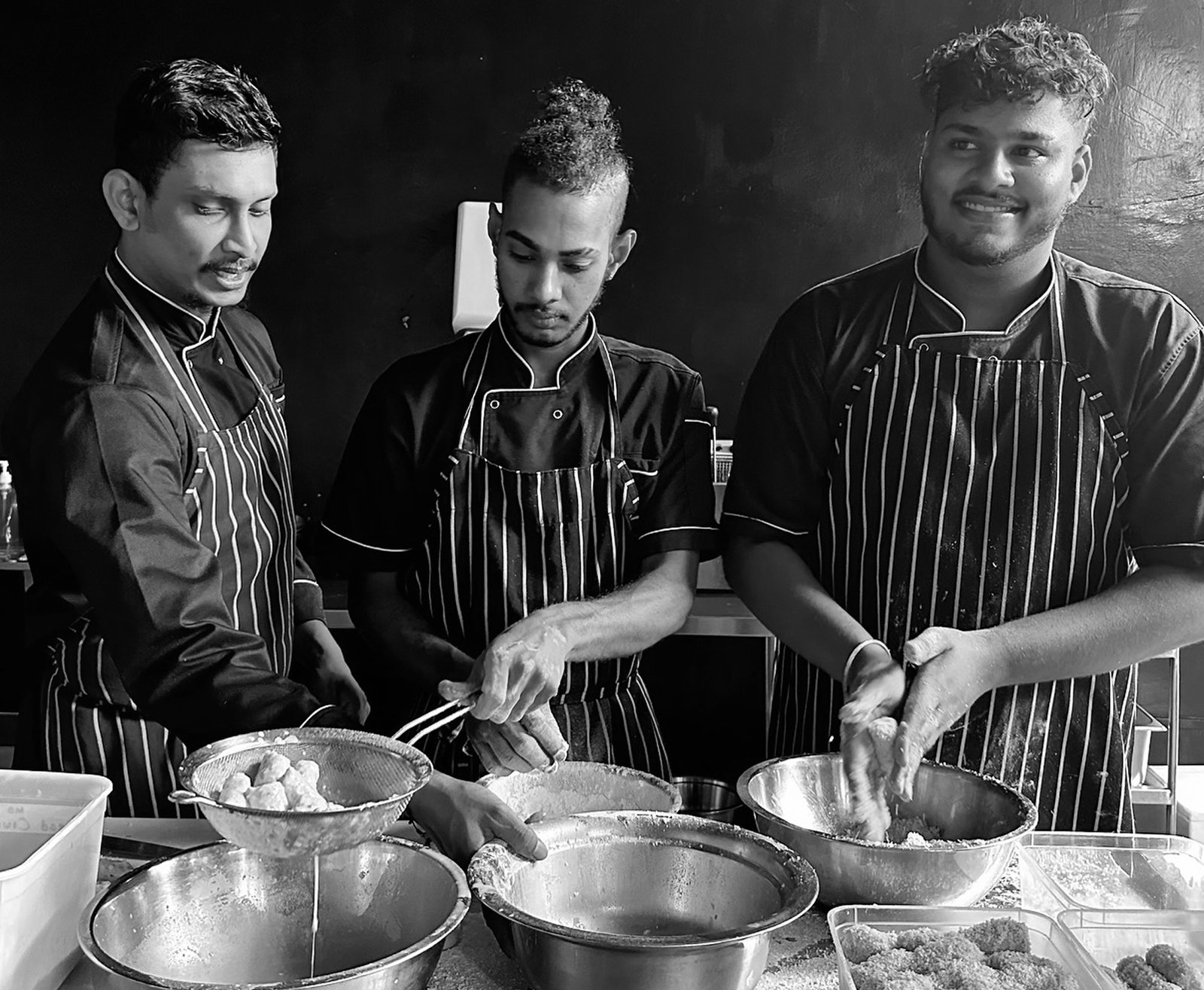
We often have guests ask, “How many chefs are in the kitchen?” and when I say three, they can’t believe it. They don’t think that’s possible for Sri Lanka. But it is. I’ll even ask guests to tell my team that, because I don’t think they realize how good they are — they have no benchmark to compare themselves against.
Recently, a hotel consultant visited and was stunned by what our small team could do. I had him explain to one of our waiters that this is how it works in Europe. It means a lot when that recognition comes from someone else, not just from me.
I’d love to see the industry evolve — to build a culture where chefs here create their own dishes and recipes, rather than copying others. But creativity costs time, money, and energy. We experiment constantly, and not everything works. The failed dishes still cost something — that’s part of the process.
What matters is curiosity — asking, What went wrong? How can we make it better? How do we take this to the next level? Those questions are what build great kitchens. It’s not about having a huge staff. It’s about skill, ownership, and the drive to understand your ingredients.
When I opened my own restaurant, one of my biggest fears was not having anyone to learn from. I’ve always thrived under great mentors — I soaked up everything I could from them. The idea of being without that scared me. But those years of learning gave me the confidence to pass it on.
I’m only able to do this because others before me did the same — they taught me, and now it’s my turn to continue that cycle. That’s how this industry grows: through real-world practice. At school you might clean two fish; in a kitchen, you handle them daily — all different sizes, species, and seasons. That’s how mastery happens.
And I’m still learning. One of my favorite things about going to the fish market is talking to the vendors — they’re experts. When I first started, there was a man named Keith who could tell the difference between fish caught three hours ago and fish caught five. I couldn’t see it at first. I’d ask, “What are you seeing that I’m not?” And he’d say, “It takes time. One day you’ll just know.”
A year later, I did. Suddenly, I could see it — the color, the texture, the subtle shift. But you can lose that sensitivity quickly if you’re not there every day. You have to stay close to it — to the work, to the craft, to the source.
CREATING SOMETHING SPECIAL
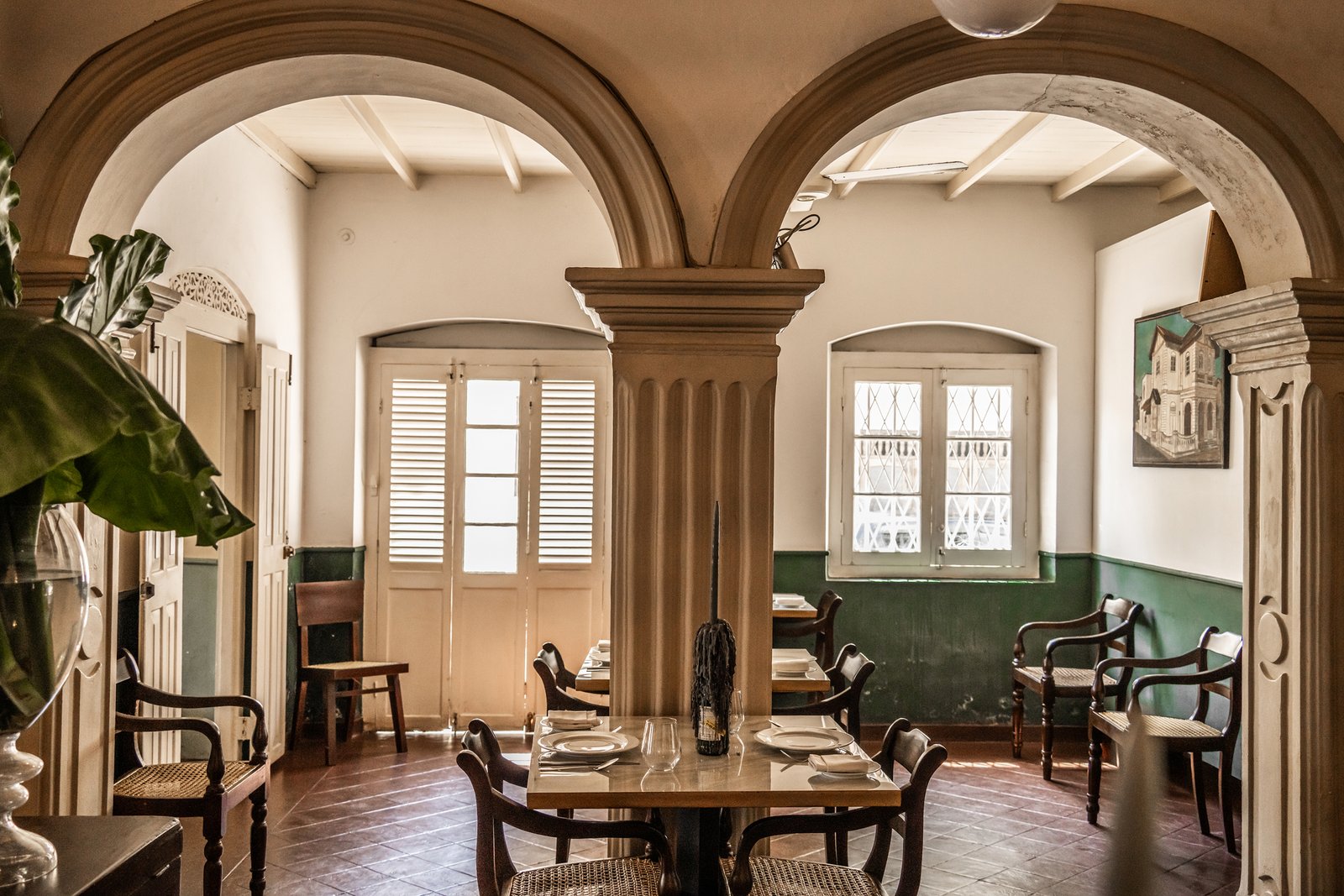
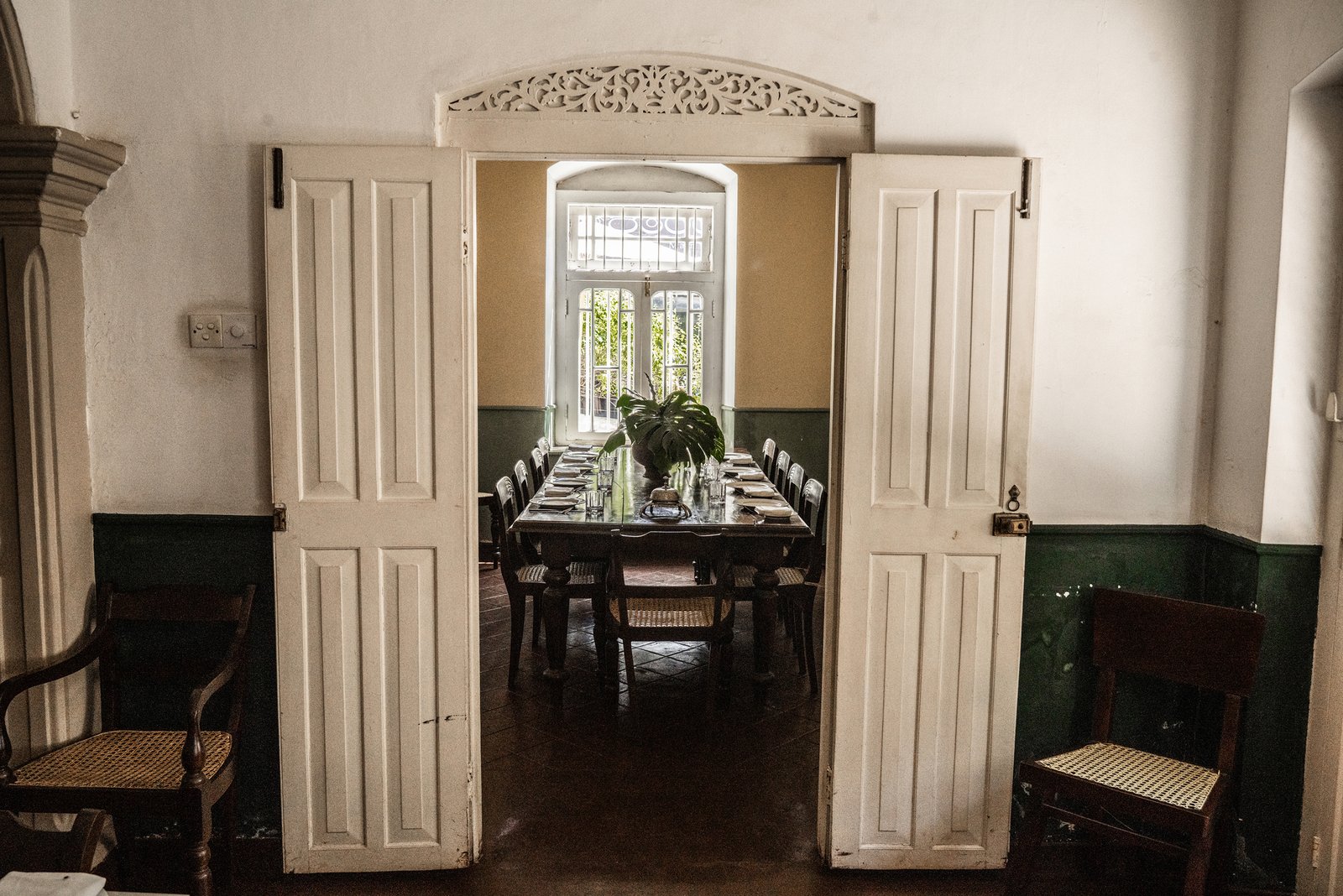
I’ve always loved a romantic restaurant — that feeling of timelessness. Being able to sit down, share a meal, and not feel like you’ll be kicked out in an hour and a half. Those dinners where you reunite with someone you haven’t seen in years, have real conversations, laugh, linger.
Long lunches and dinners like that are increasingly rare. Rent, staff, and food costs are so high that most restaurants have to turn tables to survive. But we’re not in Colombo — we’re in a fishing village, off the main beach road, far from the tourist spots. Rents are kinder here, though foot traffic is lower.
That trade-off has given us something special: the freedom to create one of those timeless restaurants where guests can truly relax. We can say, “Thank you for driving to get here — the table is yours for the evening.” And you can see it on their faces when we say that — the relief, the ease. They settle in, sip their wine slowly, graze on their food, and just be together. That’s the kind of experience I’ve always wanted to offer.
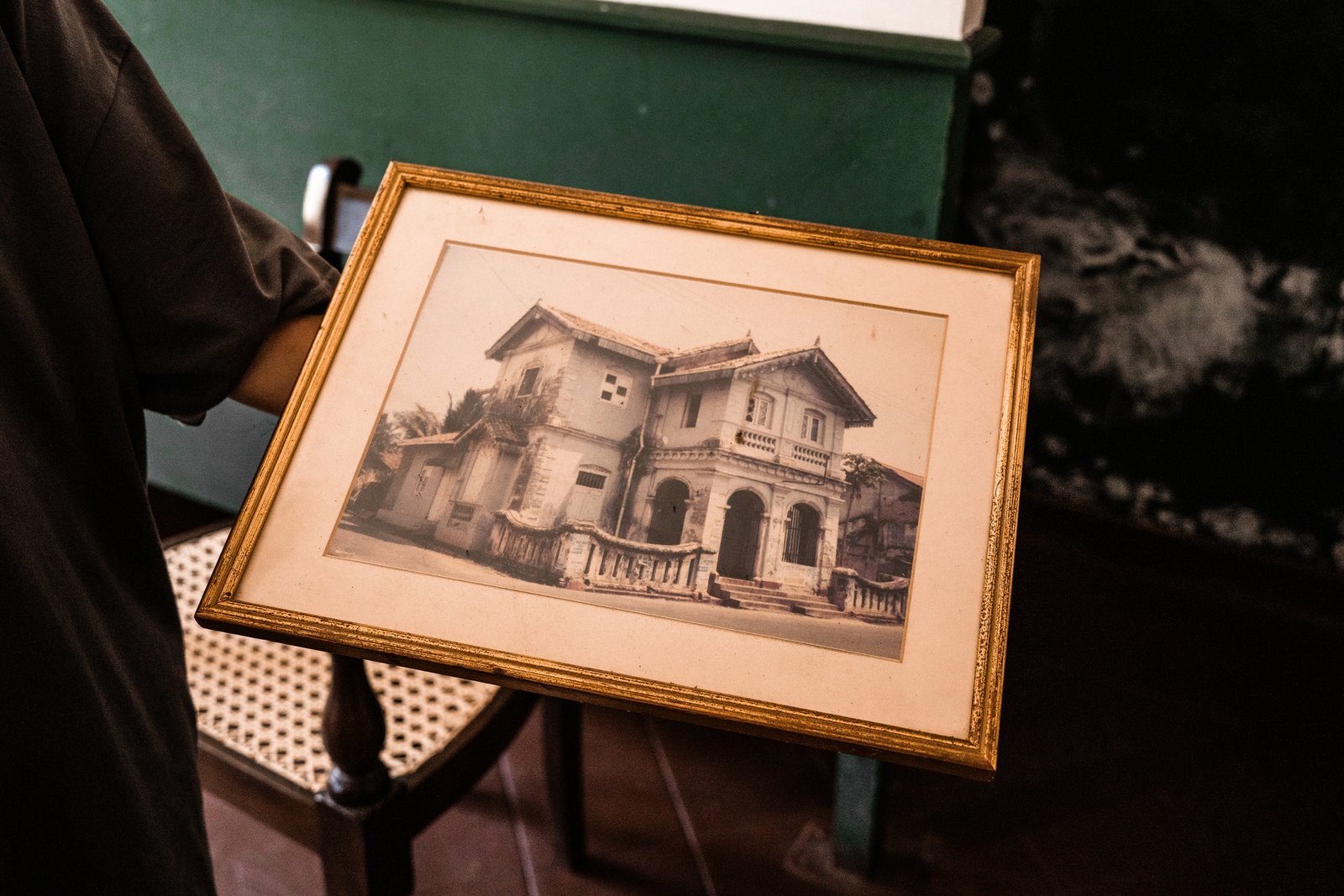
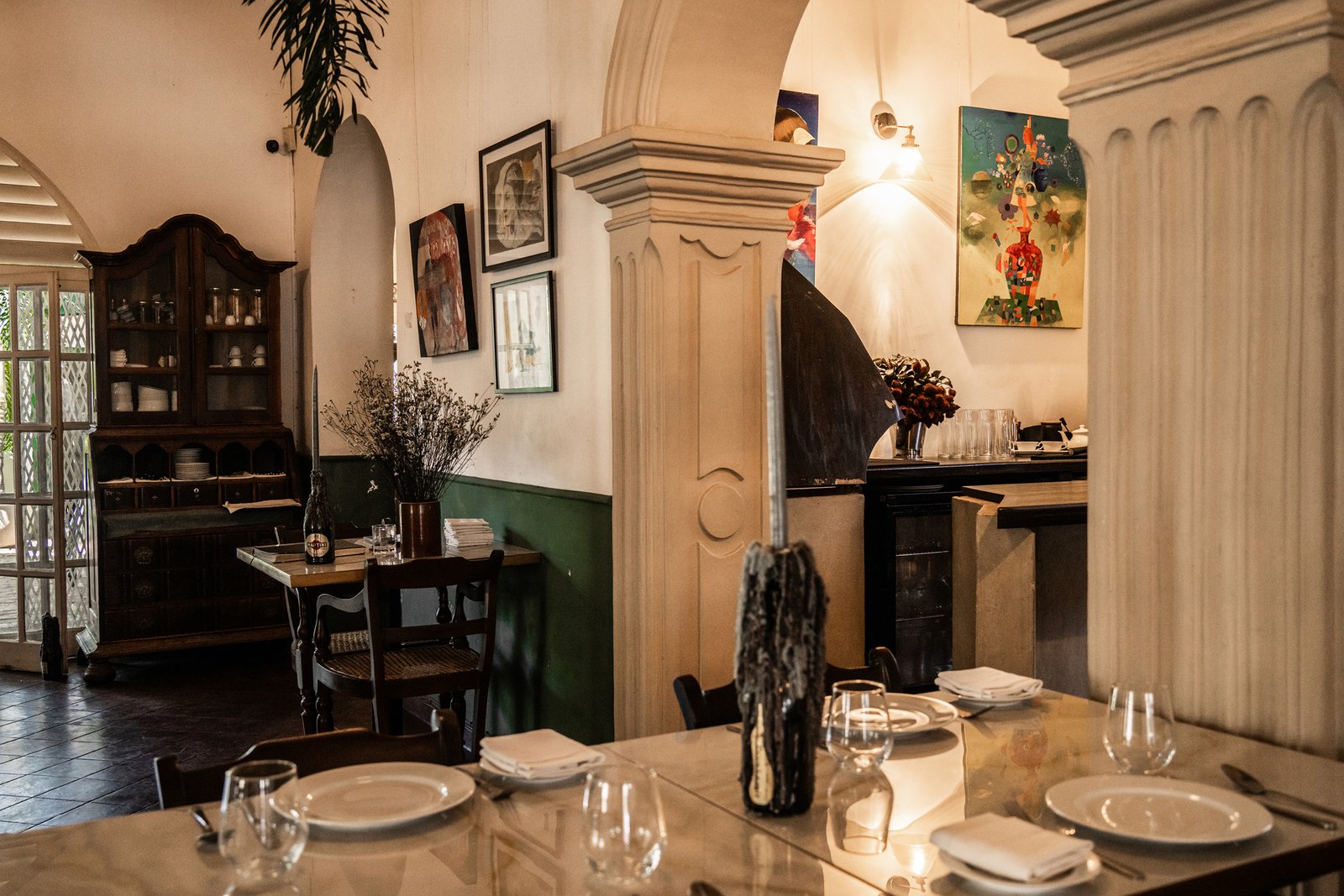
They say art thrives underground — in places where people can really practice their craft — and I think Club Ceylon is a perfect example of that. I didn’t plan it that way. We ended up here simply because it was all I could afford. The house was nearly derelict. My uncle and I stripped paint, replastered walls — everything we could do ourselves. We outsourced the plumbing and electricity, but during the Covid lockdown, we were sleeping on a mattress on a construction site, building this place by hand.
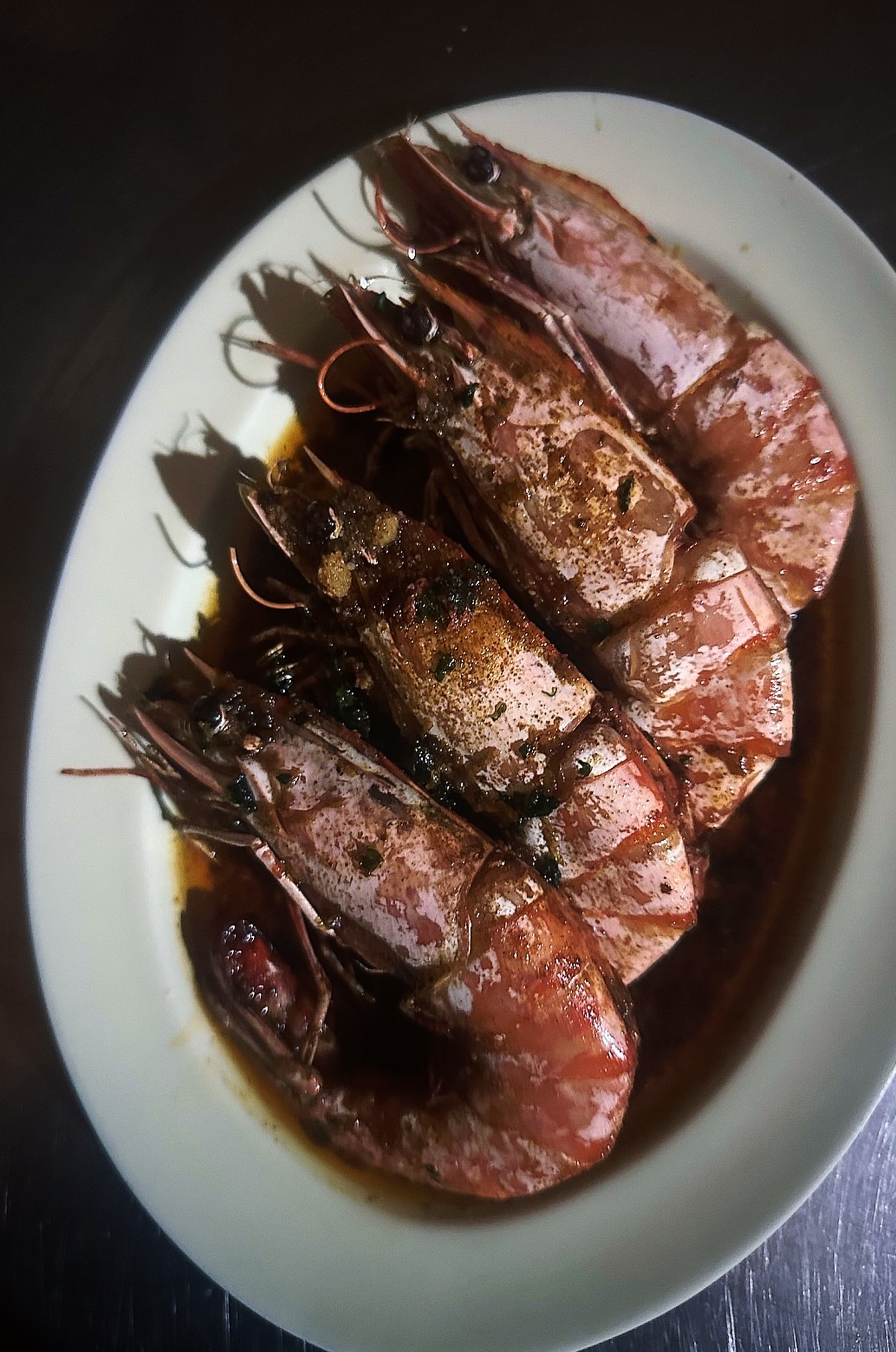
It was a risk, but also an adventure. Each morning we woke up motivated, full of ideas about what this place could become. Being here, close to the fish market, surrounded by the fishing community — it grounded everything. My prawn dealers are just down the road. This whole neighborhood is part of what makes the restaurant possible.
I signed the lease during Covid, when we thought it was ending — an enormous risk. But thank God for the local community, the people in Colombo, and the expats based here. Without them, the restaurant wouldn’t have survived. Our first year, 95% of our guests were Sri Lankan, and they carried us through.
We built something risky, but something people genuinely wanted — a restaurant tucked away from the noise, a little private, a little hidden. It’s the kind of place where you can sit in a corner with your best friend, talk for hours, and no one even knows you’re there.
Our location — just steps from the fish market — is what makes our sourcing standards possible. It allows us to maintain incredibly high quality while staying deeply connected to the fishermen and the wider fishing community. My business depends on those relationships. A huge part of my work isn’t simply buying seafood — it’s understanding where it comes from, who caught it, and how. That connection is what ensures that everything we serve meets our sustainability standards.
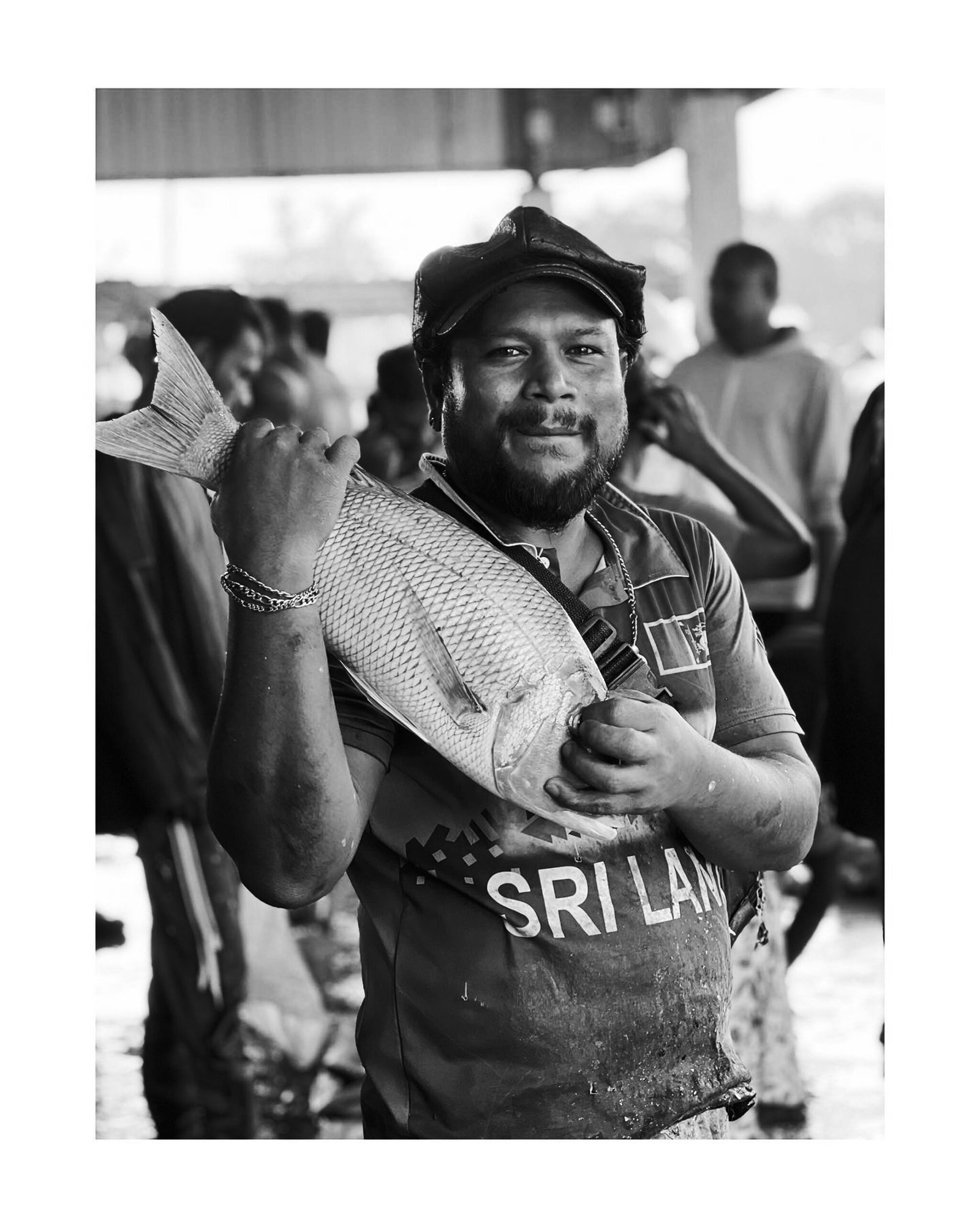
I spend time at the market, having breakfast with fishermen in the tiny coffee stalls across the street, sharing jokes, just being part of the rhythm there. At first, I think they found it strange to see me showing up, especially with my terrible Sinhalese — still terrible, to be honest — but we bonded over our shared love of seafood. I’d get so excited over their catch, and they’d find it hilarious. That common ground helped build genuine trust and long-term relationships, which in turn helped my business grow.
We buy mainly from dayboats — small motorboats that use long lines or small nets, catching just a couple of baskets a day. These are small-scale, low-impact methods that don’t harm the environment. The fishermen take what they need and go home. Buying this way gives me full visibility into the journey of each fish — from the hands that caught it to the methods used at sea. Much of what lands at the market is line-caught — it’s community-based, not industrial. These dayboats use sustainable methods, avoiding the huge trawlers and destructive nets that cause bycatch. It’s a way of sourcing that’s both personal and responsible.
Purchasing power also plays a role in sustainability. We refuse to buy fish of certain sizes or ages if they haven’t had a chance to reproduce — that’s key to keeping stocks healthy. We stopped buying rays entirely after I learned more about their species — their long gestation periods, slow maturity, and lack of local data make them extremely vulnerable. Until there’s better management and monitoring, I won’t buy them.
We see ourselves as premium buyers. We pay fairly for export-quality seafood and make it clear to fishermen why we won’t buy certain things. That kind of communication is important — but it shouldn’t just be us. We need other restaurants to do it too. The more awareness we build, the better.
Right now, I’m working with the Sri Lankan Environmental Fund to help educate others about sustainable seafood — not just restaurants, but everyday buyers and consumers. Real change happens when everyone along the chain starts caring — from the fisherman to the diner.
I hope our guests at Club Ceylon understand the value of what they’re eating — and that they start asking other restaurants the same questions: Where is this fish from? How was it caught? The more consumers care, the more the industry will evolve.
CLUB Ceylon recently collaborated with the Lanka Environment Fund to create a responsible-sourcing brochure—now a free, public resource for anyone purchasing in Sri Lanka.
We have incredible seas here. We want them to thrive, to keep producing beautiful seafood for generations. If more people are willing to pay a little extra for responsible practices, that impact will ripple outward — until sustainability becomes the standard, not the exception.
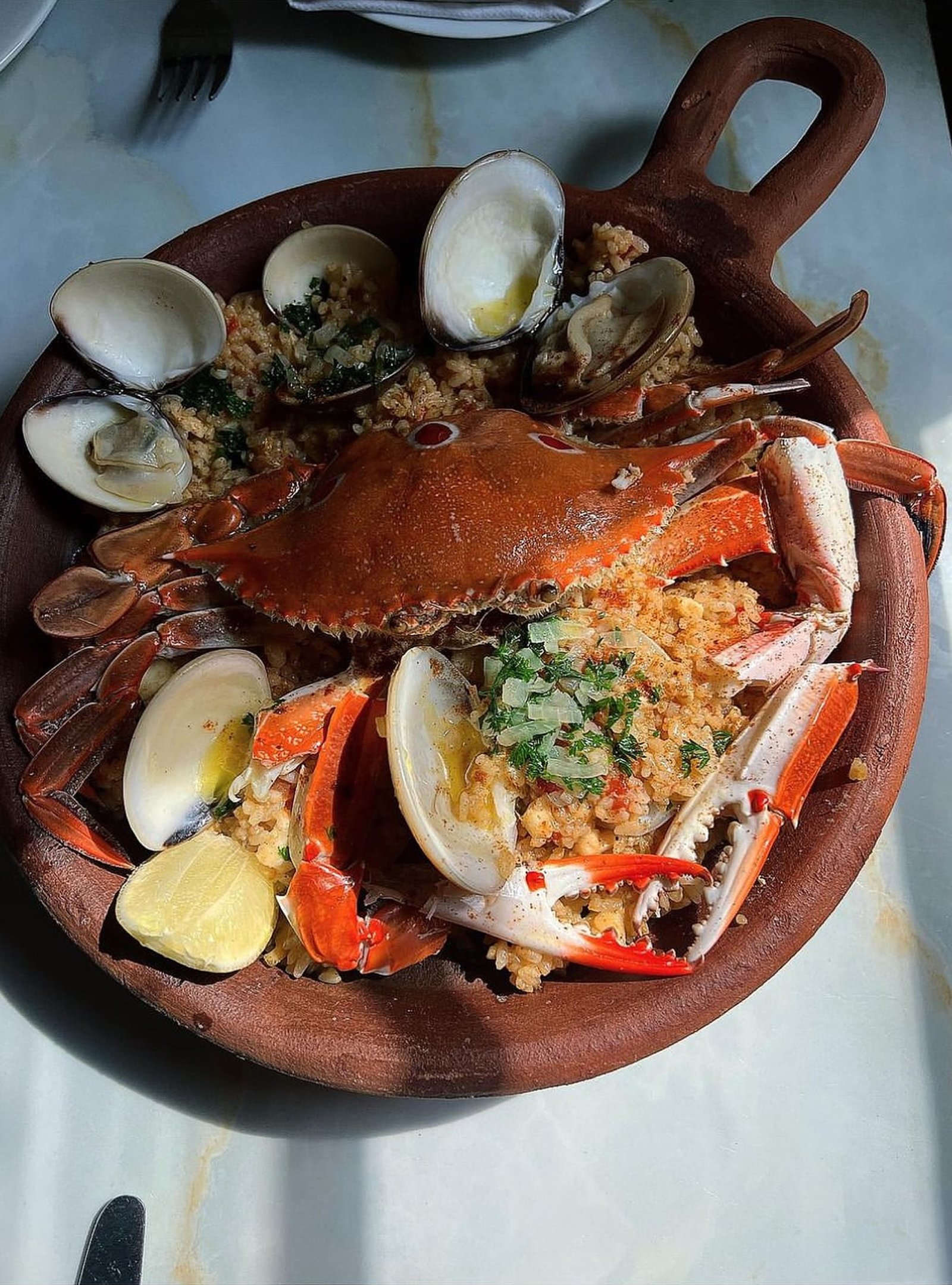
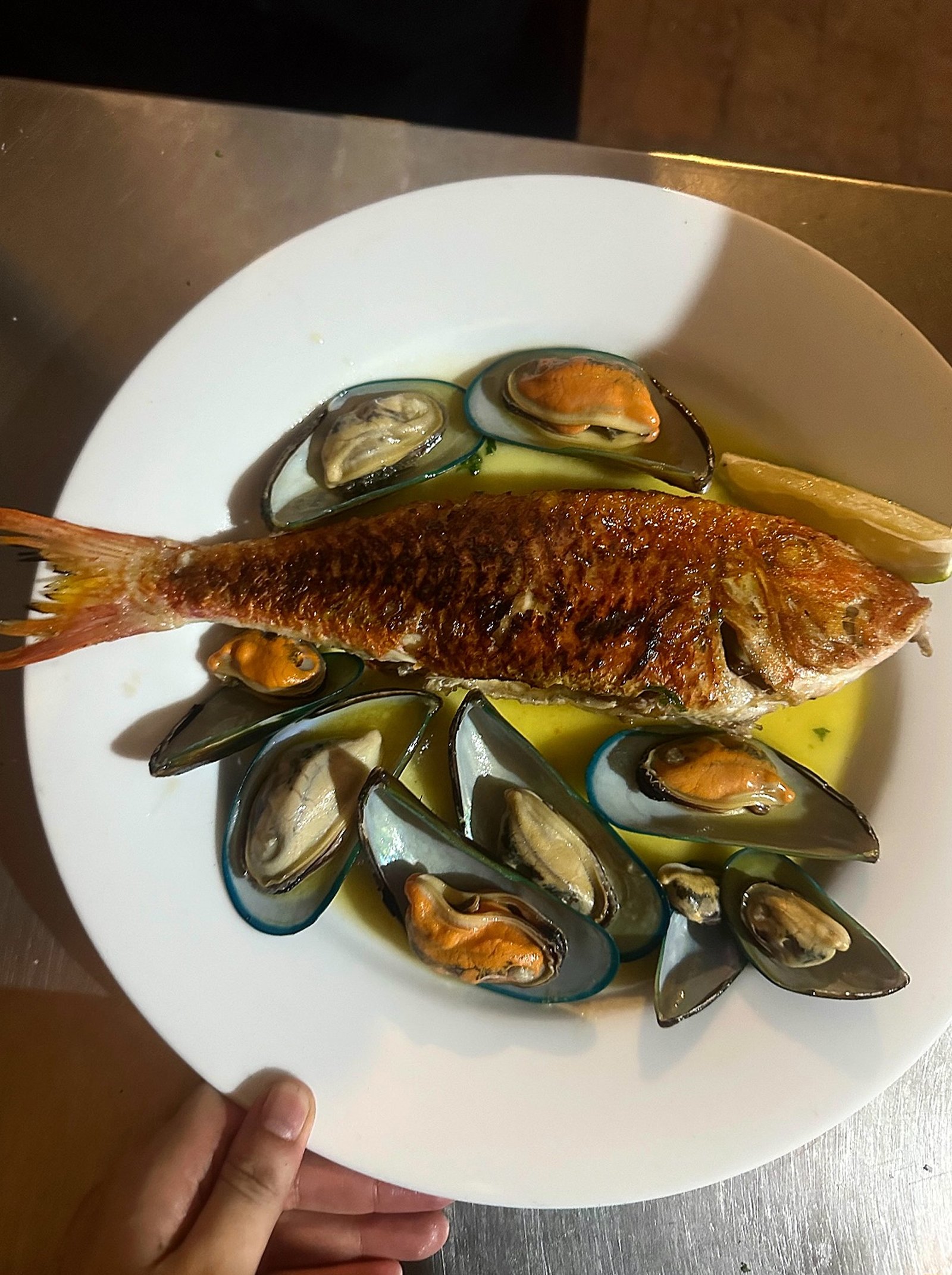
It’s been quite the challenge sourcing products from outside Sri Lanka, and it wasn’t in the initial plan to do so. Originally, the idea was to serve local Sri Lankan seafood with local ingredients — modern Sri Lankan cooking using European techniques. In its simplest form: beautifully cooked local fish, lightly seasoned, not covered in curry — grilled, pan-fried, and showcasing traditional flavors in a fresher style.
Those flavors came from my childhood, inspired by my grandparents and great-grandparents. But when we opened during Covid, there was zero tourism, and Negombo relies heavily on it. I had no local reputation, no qualifications from Sri Lanka — only experience from London — and I’d poured everything into this place. I realized no one was going to drive out here for “modern Sri Lankan” food when others were already doing it.
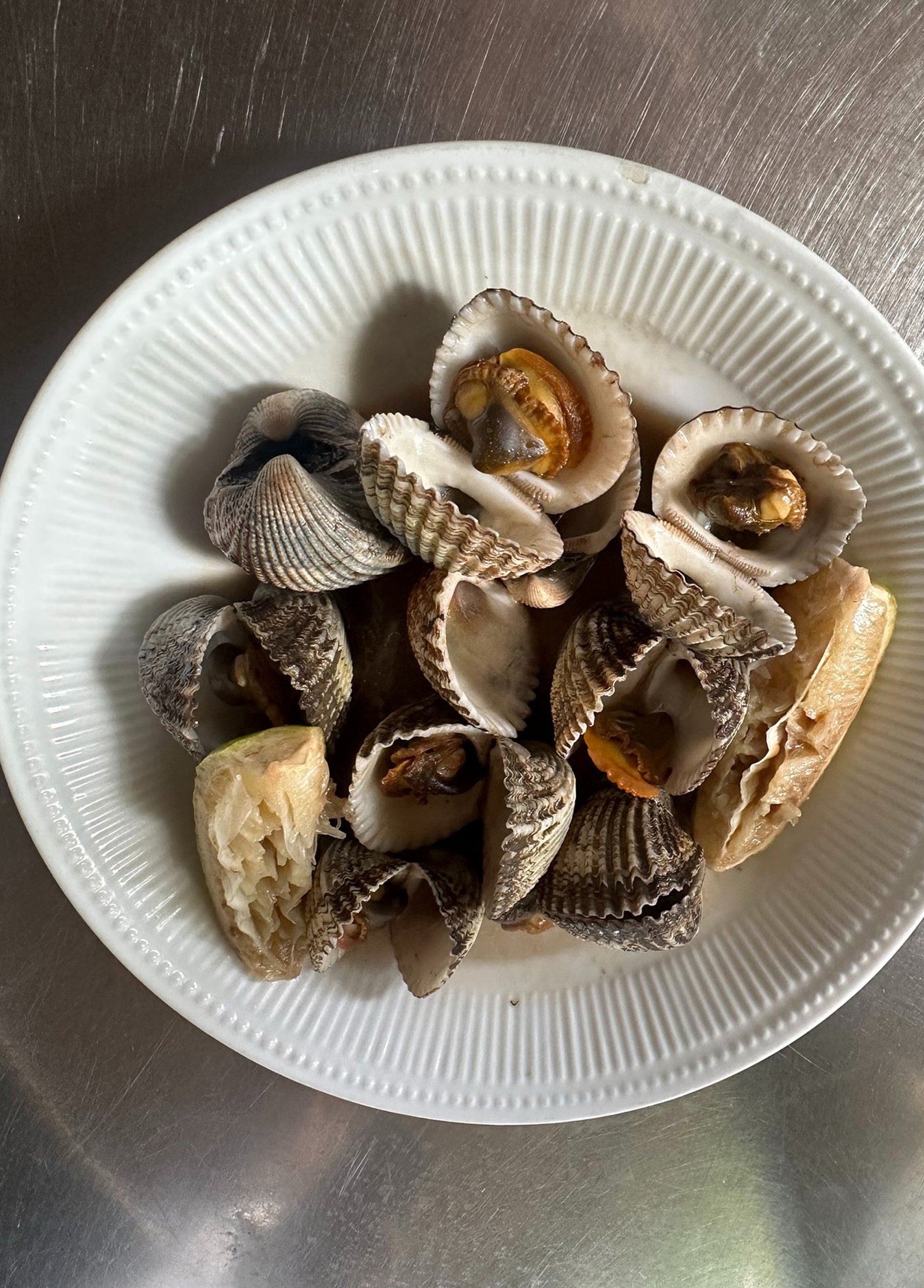
So I thought, let’s do what no one else is doing. There weren’t any European-style seafood restaurants here. Let’s cook like they do in Spain or on the Cornish coast — fresh, simple, honest food. The produce here is incredible; often all it needs is lemon, olive oil, and salt. So we focused on letting the ingredients speak for themselves — and it worked.
Of course, that came with challenges. Good olive oil is nearly impossible to find here — most are blends, not pure. After paying so much for high-quality seafood, it felt wrong to compromise on something so fundamental. Thankfully, a friend who owns Italian restaurants in London now helps us import authentic olive oil, and it’s made a huge difference. Guests constantly comment on it.
If people are going to take the time and spend the money to drive out here, we owe them the very best. All our seafood is sourced from Sri Lanka — if it isn’t, it’s clearly noted on the menu — and as many ingredients as possible are local. Only essentials like paprika and olive oil are imported.
My favorite dish to make at Club Ceylon is the ceviche, because there’s no recipe for it. No quantities, no measurements. You just have to taste it — and that’s real skill.
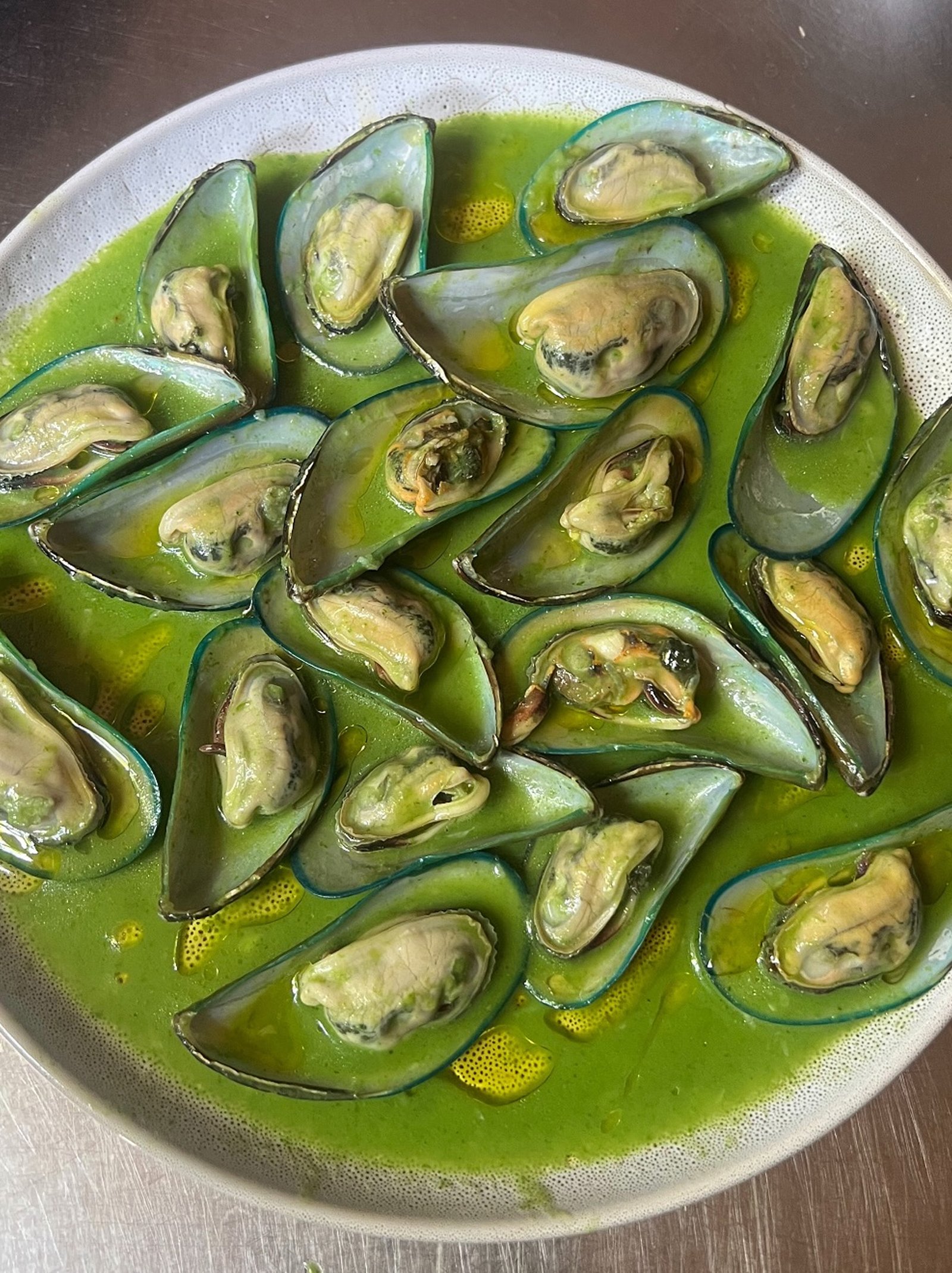
We use seasonal fruits, but most often it’s star fruit. It has this crisp, apple-like flavor — a little sweet, a little sour, a little tart — with a beautiful texture. We pair it with emperor fish, a local white fish called Meevetiya, along with cucumber and onion. Then we mix it with coconut milk that we squeeze ourselves — we grate fresh coconut, soak it in water, and press out the milk. Finally, there’s fish sauce, lime juice, and coriander.
From there, it’s all about adjusting — and then adjusting again. I tell my chefs, “Keep tasting until you reach the point where you want to drink it. That’s when it’s perfect.”
I love that dish because it demands intuition. I always tell the team on the cold section: once you can make that ceviche perfectly every single time, you’ve mastered the section. It’s all about taste.
The limes this week won’t taste like next week’s. The coconut milk might be creamier or thinner depending on who made it. That’s where art meets skill — when you can adapt to those changes and still deliver the same perfect flavor every time.
THE BIGGER PICTURE: RECOGNITION FOR SRI LANKA’S CULINARY SCENE
We don’t have any kind of restaurant award system here in Sri Lanka, and something like that would be incredibly impactful. It would give independent restaurants the recognition they deserve, while also creating a platform that includes everyone — from small eateries to hotel restaurants alike.
Something like that would also help strengthen the cheffing culture here — giving both new and seasoned chefs a better sense of where they’re applying, how established certain places are, and what they can aspire to. It would give them something to aim for, something to dream about. I’d love for young chefs to think, I want to work at one of the top 50 restaurants in Sri Lanka. That kind of recognition could really inspire them to stay and build their careers here.
Being able to say you’ve worked at an outstanding restaurant alongside international chefs — that’s powerful. Right now, many people go straight into hotel kitchens because it’s easy and secure. Those environments are great for learning the basics, especially in large teams, but there’s also a lot to be said for working in smaller, more challenging settings where you grow fast.
Having a national award system could support the whole industry. It would help aspiring chefs and waitstaff know where they’re applying and what to strive for, while also recognizing the people who are opening new restaurants and pushing boundaries.
From the government’s perspective, it could also support tourism goals. A national restaurant list would help visitors discover where to eat across the country — even in lesser-known areas like our small fishing village. People come to see the fish market, but they may not know our restaurant exists. We open for lunch and dinner — not during the busy 7 a.m. market hours. Marketing is expensive for small businesses like ours — even hiring someone to make social media videos can cost a fortune, and those costs inevitably get passed on to customers, which goes against our goal of keeping our food accessible to everyone.
A national restaurant award system would not only guide visitors toward great local food experiences, but also help us move away from depending solely on international accolades. It would shine a light on what’s happening here — and celebrate it from within.

Support our project by buying our merch!

86 HOTK Unisex t-shirt
$30.00
Anthony Bourdain T-Shirt
$35.00
Mise HOTK Unisex t-shirt
$30.00