Beyond the Illusion of the Chef
Looking past the glamour to the demanding reality of professional kitchens.

Nicola Zamperetti
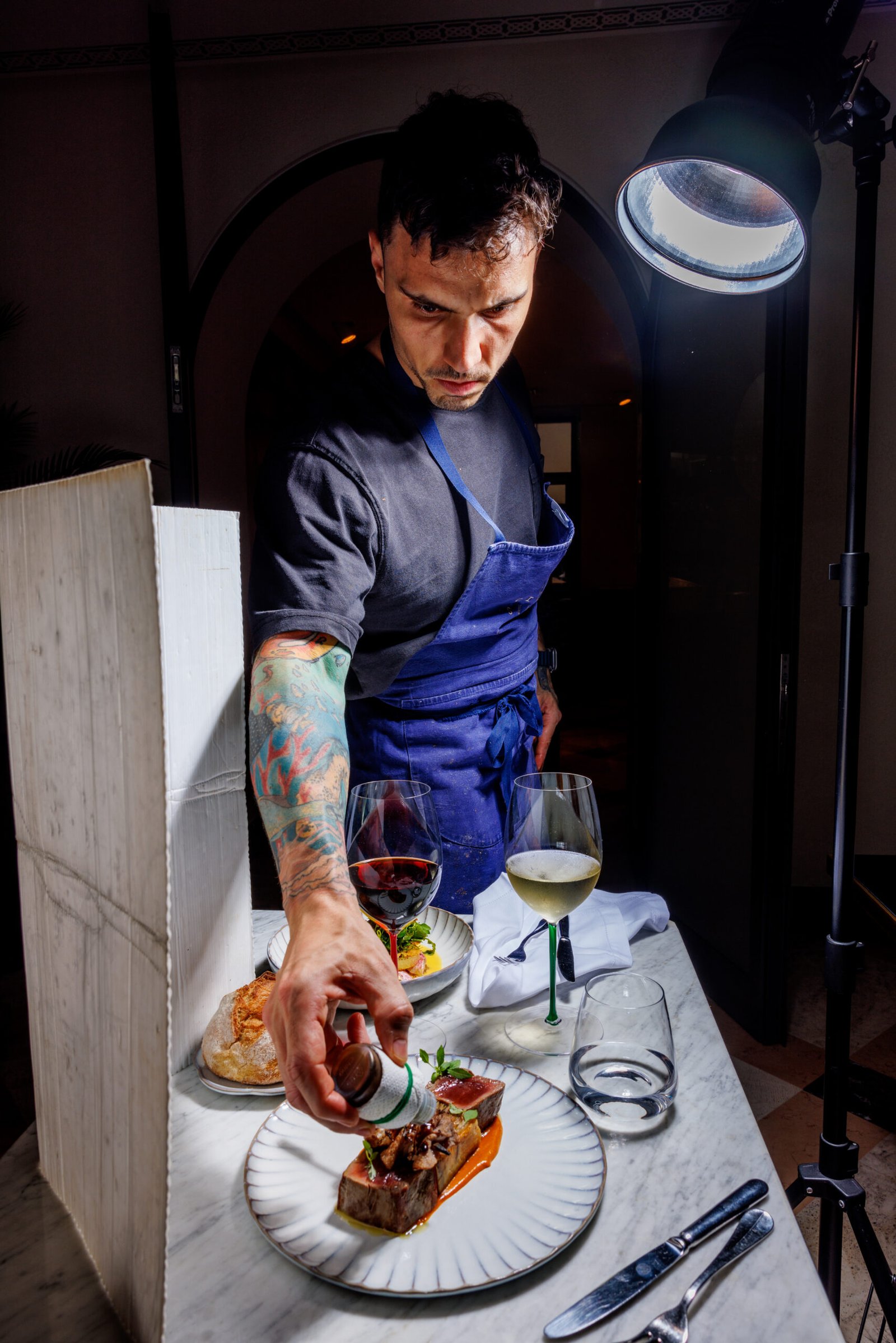
Looking back at my childhood, I don’t remember the exact moment when everything suddenly clicked, and I decided I wanted to cook. For me, it was quieter than that. A constant curiosity that followed me as I grew up. I watched food closely. I paid attention to the effort behind it, to the care it required, to the way dedication always showed in the final result. Cooking felt concrete. You put in the work, and something real came out of it. Something you could touch, taste, and share. That idea stayed with me long before I understood it as a passion.
I was born in Vicenza and grew up in a family rooted in construction. Before the kitchen, I studied to become a surveyor, following a path that made sense on paper and felt familiar at home. That education gave me structure and discipline, and I don’t regret it. But when I finished school at eighteen, it was clear that this wasn’t my future. Cooking had always been there in the background, quietly insisting. Choosing the kitchen meant stepping away from expectations and committing to something that felt honest. It was the first time I really trusted my instincts.
I didn’t go to culinary school. I learned by working. Day after day, inside professional kitchens. My education came from repetition, observation, mistakes, and responsibility. I learned because people were waiting to eat. Because service doesn’t pause for theory. That way of learning shaped me. It taught me respect for time, ingredients, hierarchy, and consistency. It made me pragmatic. Focused. Aware that growth comes from showing up every day and doing the work properly, even when no one is watching.
My first kitchen wasn’t inspiring or romantic. For six months straight, from morning to night, I peeled potatoes in a small restaurant near my home. That was my job. No creativity or recognition. Just repetition and long hours. It was exhausting, sometimes frustrating, but it was honest. That experience taught me early that cooking has nothing to do with ego. It’s about endurance, discipline, and respect for the craft. That beginning shaped how seriously I approach the kitchen to this day.
The hardest part at the start wasn’t just the work. It was the sacrifice. Working fifteen hours a day and still struggling financially was difficult to accept. The effort often felt disproportionate to the reward. On top of that, I had to give up another passion of mine — sport — simply because there was no time left. Learning to accept sacrifice, at least for a period of my life, was part of the price I paid to keep moving forward.
What kept me going was a simple belief: effort always leaves a mark. I believe deeply in work done properly, consistently, and with respect. During the toughest moments, when motivation was low and fatigue was high, I focused on progress instead of comfort. Discipline eventually turns into growth. That mindset has carried me through doubt, frustration, and exhaustion, and it still drives me today.
There wasn’t one defining moment that changed everything, but there was a realization that grew over time. When people around me started noticing that I could do something special, something that stood out, I began to see myself differently. I’m not particularly romantic, and I don’t easily express emotions, but cooking became my language. Through food, I could communicate care, attention, and identity without saying a word. That’s when I understood this wasn’t just a job. It was how I connect.
I’ve had the opportunity to work in kitchens that represent excellence in Italian dining, both nationally and internationally, including two- and three-Michelin-star restaurants. Fine dining taught me rigor, technique, and extreme attention to detail. Over time, though, I realized that my personal idea of cooking is deeply honest. It’s built around high-quality ingredients, respect for tradition, and techniques learned by working alongside great professionals, without excess. That philosophy guides both my cooking and my leadership.
One of the most formative periods of my life was the four years I spent in Sicily, working in a two-Michelin-star restaurant that was fully booked every day. Being far from my family and my sense of security forced me to grow up fast. The intensity of that kitchen became a school, professionally and personally. It taught me independence, resilience, and how to handle pressure.
At twenty-seven, becoming the executive chef of my first hotel was a major milestone. Today, at thirty-two, I’m leading my third hotel project and managing a team of more than forty people. What I’m proud of isn’t the title, but the trust behind it. Responsibility earned over time. Growth built on discipline. The ability to guide others using the same values that shaped me.
What I love about restaurant culture is its structure, discipline, and hierarchy. When done well, they create clarity, and clarity allows people to grow. What frustrates me is the illusion surrounding this profession. The media has turned chefs into celebrities and kitchens into something glamorous and effortless. The reality is demanding and repetitive, and it requires real sacrifice. I believe we need more honesty and less illusion, so people enter this profession consciously, understanding what it truly asks of them.
I like the direction high-level dining is taking today. Simpler and more authentic. Focused on substance instead of excess. That shift feels necessary. What I hope for in the future is better support from public authorities, especially in taxation and sustainability. A system that allows restaurants to invest more in people, quality, and long-term growth would strengthen the entire industry.
I describe myself simply: a cook by passion, a chef by profession, and a pessimist in life. A cook because, deep down, I’m still the kid who fell in love with the kitchen. A chef, because this work has shaped who I am. And a pessimist because being prepared for the worst pushes me to do better every day. When things go well, the satisfaction feels earned, and that makes it even better.
Photo credits to @andrea_dilorenzo
Secret Sauce
- What’s the most unexpected ingredient you’ve ever worked with, and how did it change your perspective on cooking?
One of the most unexpected ingredients I’ve worked with is tuna bottarga, made from Mediterranean bluefin tuna roe. Seeing the process, first in brine, then under salt, and finally left to dry until it becomes a true concentrate of the sea, completely changed the way I think about flavor. It taught me how time and restraint can transform something raw into something incredibly complex. I prefer to use it in its purest form, because covering it would mean losing the depth and intensity that come from such a careful and patient process.
- What’s your “guilty pleasure” meal?
Chocolate ice cream.
- A food trend that you hate and why?
Matcha.
- What’s the craziest shift you’ve ever worked in the kitchen?
It wasn’t a traditional kitchen shift, but it’s probably the craziest stretch I’ve ever worked. I drove from Sicily to Friuli for nineteen hours straight, then worked two back-to-back events. Right after that, I left again early in the morning and arrived back in Sicily at five a.m. Two hours later, at seven, I was back in the kitchen, fully operational, with the restaurant completely booked. Exhausting, irrational, and somehow memorable. I wouldn’t call it healthy, but it was definitely interesting.
5. What happened, and how did you manage to get through it?
Honestly, a lot of coffee.
- What tips would you give to other cooks and chefs to help them navigate their culinary careers and find peace amid the chaos of the kitchen?
Do it with passion, and surround yourself with people who share that same drive. Wake up every morning with the desire to make a difference, even in small things. Stay focused on your own path and don’t waste energy looking at what others are doing, especially those who judge you without really knowing you. The kitchen is already demanding enough; clarity, determination, and staying true to yourself are what will carry you through the chaos.
- What’s an underrated ingredient and why?
Onion, in my opinion, is one of the most underrated ingredients. It can be as strong as a punch, yet as gentle as a kiss on the cheek. It’s a solid foundation for almost any sauce, but it can also stand alone as the perfect side dish. Often not the protagonist, it’s the ingredient that gives meaning and balance to everything else. That versatility is what makes it essential in honest cooking.
8. What’s a must-try dish from your kitchen or the one you’re proudest to have prepared?
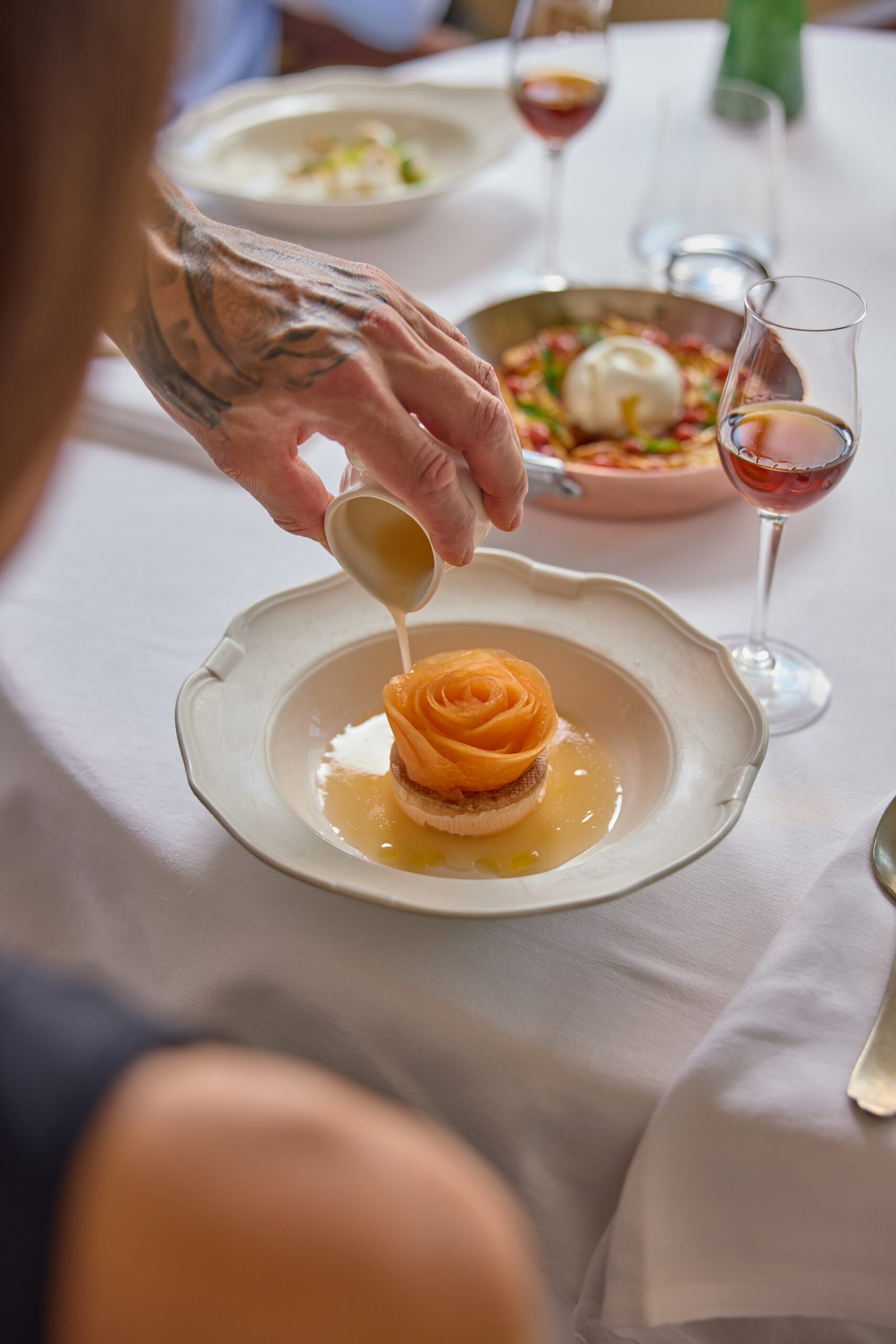
One of the dishes I’m proudest of is Rombo alla Mugnaia, which brings together experiences, ingredients, and collaborations from different moments of my career. The turbot is cooked over charcoal, giving it depth and structure, and paired with lemon-infused whipped potatoes. A butter-and-caper sauce adds richness, finished with chives and caper leaves. It’s a dish rooted in tradition, but shaped by technique and restraint, simple on the surface, but built on years of work and influence.
About Your City!
Rome, Italy
- If Anthony Bourdain or a chef came to your city, what would be the perfect tour itinerary from breakfast to dinner?
For many reasons, I feel deeply connected to Rome, and my perfect day there would be simple and honest. I’d start with breakfast at Faro, for one of the best coffees in the city, precise, serious, no compromises.
Lunch would be at Osteria La Quercia, sitting down for their amatriciana and a good glass of red wine, the kind of place where tradition speaks for itself. In the afternoon, I’d stop for a gelato at Come il Latte, just to slow things down. Aperitivo at Freni e Frizioni feels right for the energy and the crowd.
Dinner would be at Trattoria da Tullio, classic and reassuring. And if the night still has something to give, I’d end with a cocktail at Drink Kong, modern, sharp, and perfectly out of place in the best way.

Support our project by buying our merch!

86 HOTK Unisex t-shirt
$30.00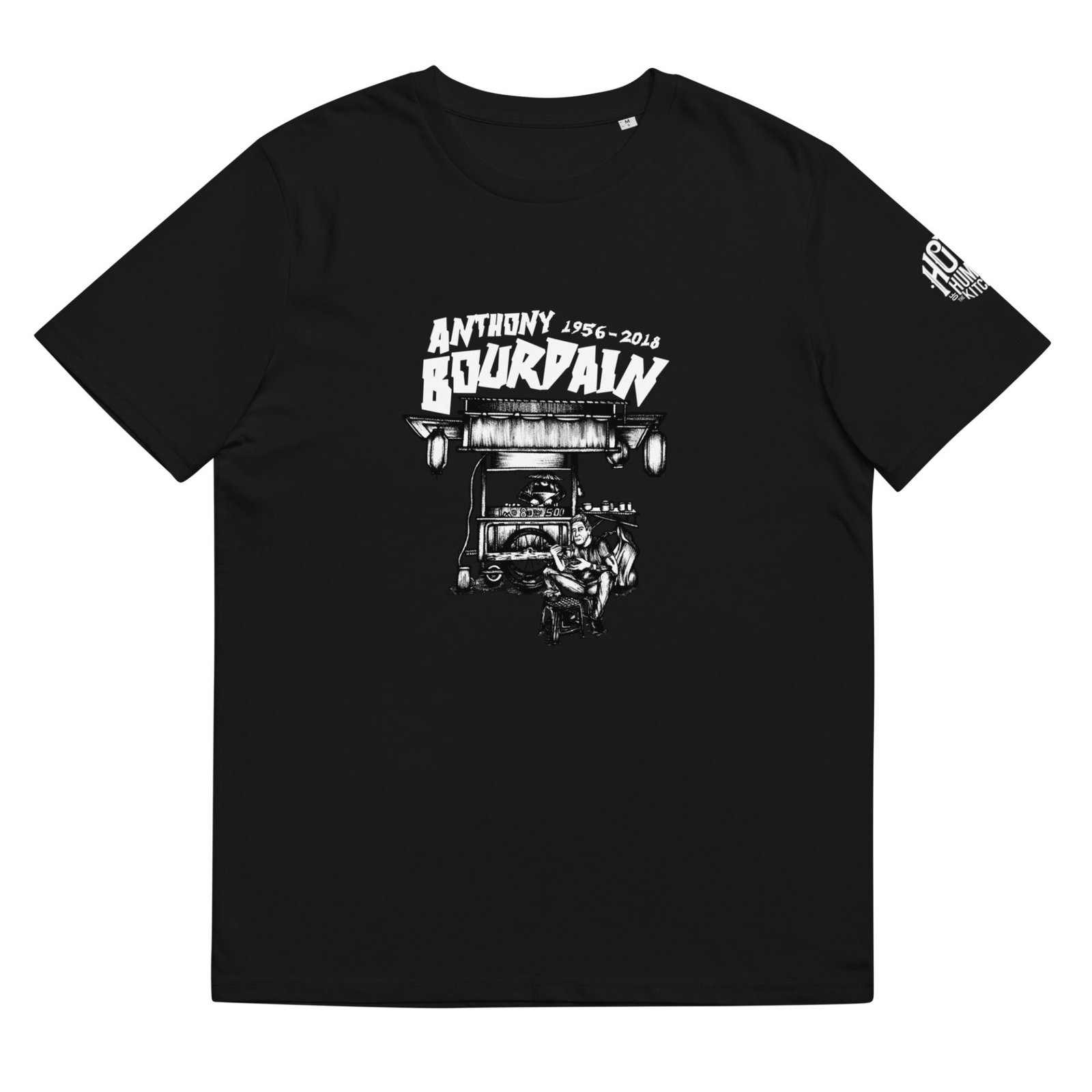
Anthony Bourdain T-Shirt
$35.00
Mise HOTK Unisex t-shirt
$30.00