PETER SMIT
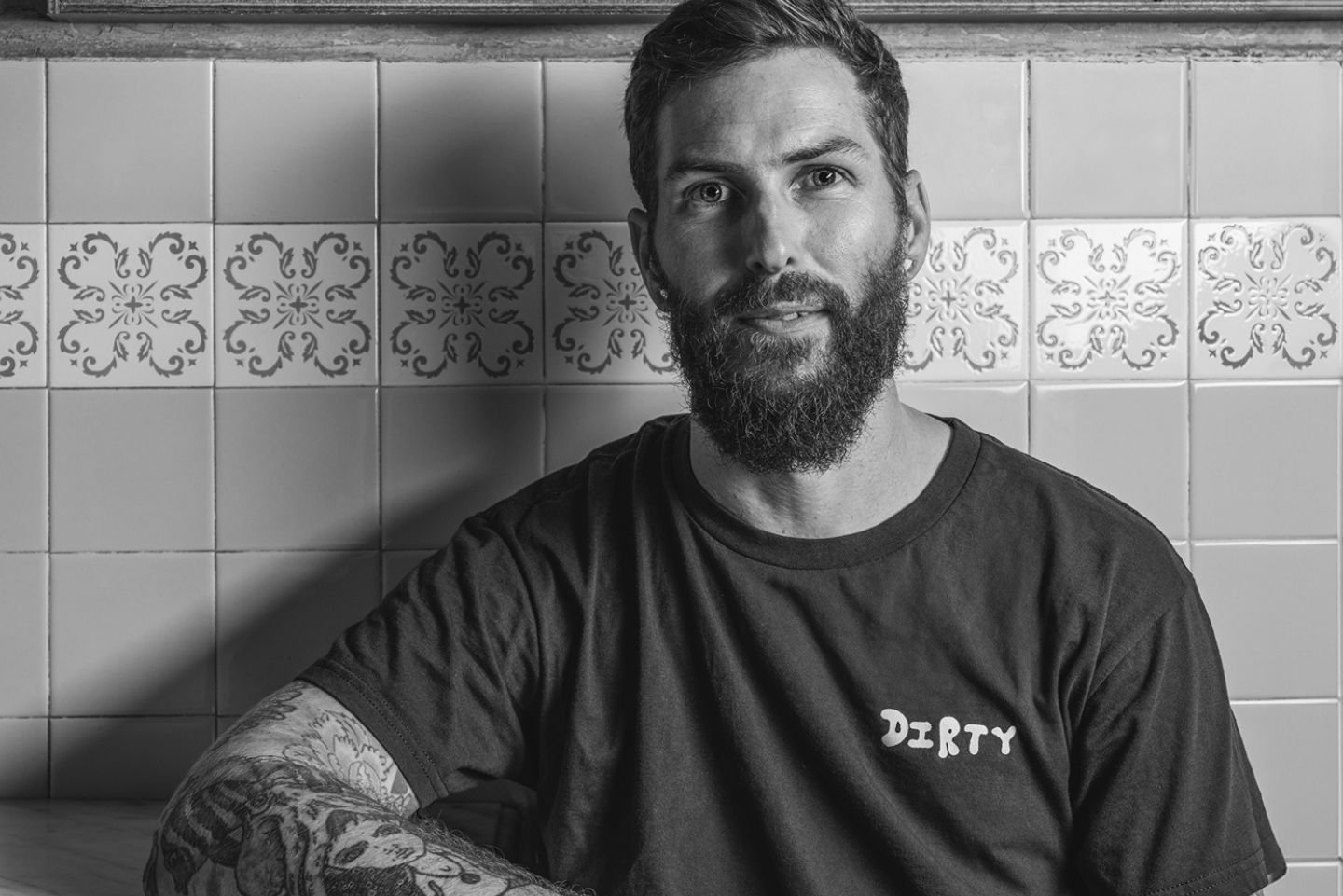
Interview by Marla Tomorug
Explore more of her work on Instagram @marlatomorug
Photo credits to: Peter Smit, Rachel Tan, Tan Lu San and Dirty Supper.
THE BEGINNINGS
I’m originally from Toowoomba, in Queensland, Australia. It’s a small country town—there’s really nothing there. I’m currently living in Singapore and have been here the past 7 years.
My intro into cooking wasn’t an expected one. My first intentional experience with cooking was to impress a girl. I was a 17 year old trying to get laid (with my then partner). I never cared about cooking—couldn’t care less about it, and food was just a means to stay alive. If you had asked me when I was 17, if I wanted to be a chef, I would have told you you’re an idiot.
I ended up cooking for a day and weirdly, I actually liked it. And then the next week I quit my job and started in a local fish and chip shop.
It’s actually taken me a long time to admit that I started in a fish and chip shop. I thought it was a little bit embarrassing — I thought people would say, “You didn’t start from where you’re supposed to start.” Looking back now, the shop taught me all the fundamentals of cooking. We made everything fresh. It wasn’t just your standard beachside chippy, where everything is brought in frozen. Everything was made daily.
After about 6 months of working in the fish and chip shop, I began an apprenticeship at what was probably the best restaurant in my town. It wasn’t anything fancy, a pub occupied 1 half and there was a bistro-style eatery in the other, which was a more upscale version of the pub. The chef was from Brisbane and he had the old school-style chef approach—some might say that of an asshole. While I still talk to him to this day, and still have a lot of respect for him, within my first two weeks, he told me I should just find another career because I’ll never be a chef. It’s a very different mentality and it’s a very different world to what we live in now — you could never say that now. But back then, for me, that worked as a motivator. I worked for him for a few years and then he helped me get into a really good restaurant in Brisbane, which changed my mentality.
I’ve been really lucky to have worked and experienced the places that I have. I’ve also been lucky enough to work with some amazing chefs that have opened my eyes to what it means to be a chef. In 2008, I helped open a luxury lodge on Kangaroo Island in South Australia. I got the job there by pure luck—just a chance encounter with someone who, a month later, called me and asked if I wanted to come down.
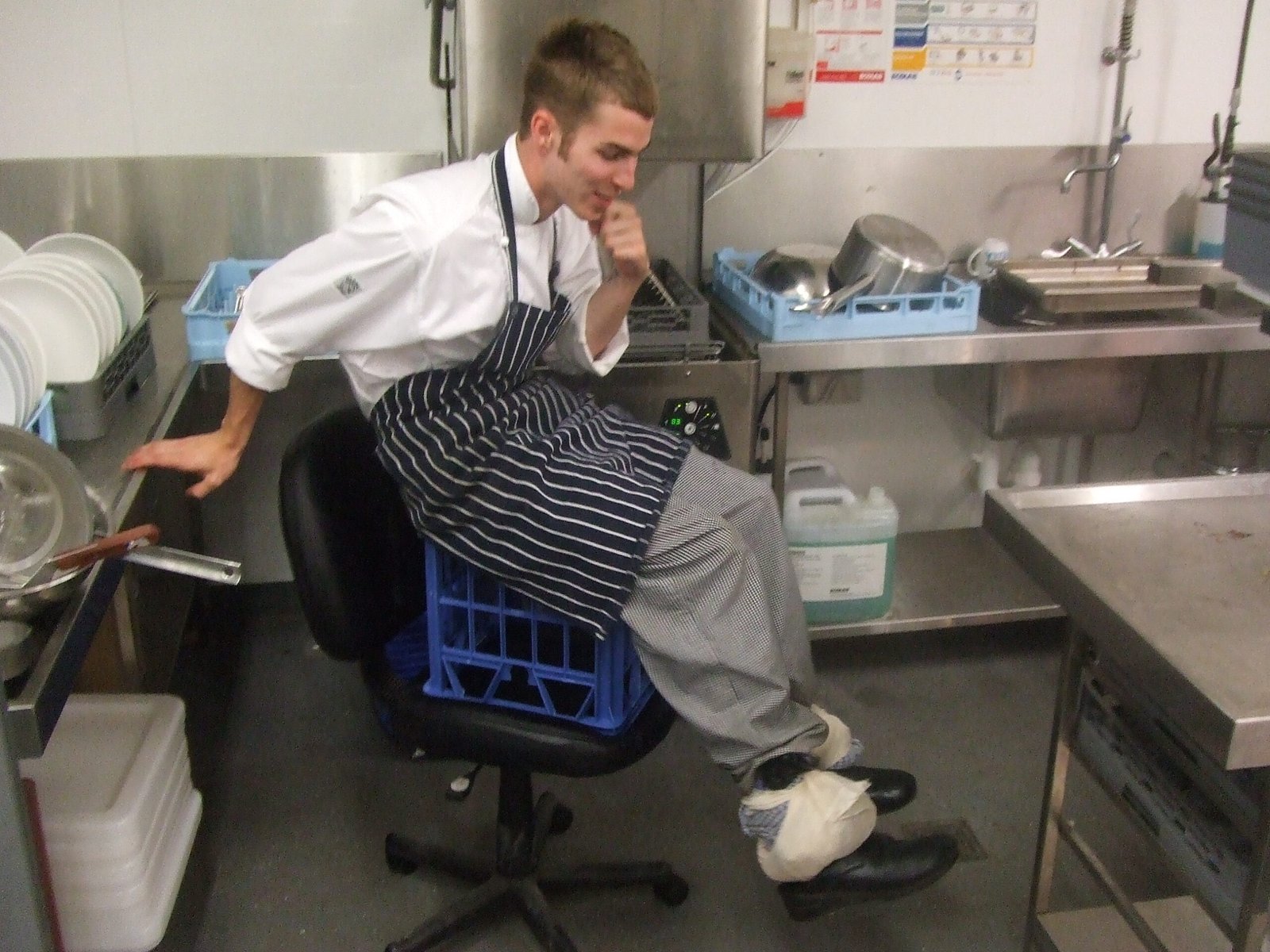
The day before I was to fly down from Brisbane, I fractured both of my ankles—not the best timing. Something inside me told me that I still needed to go, and just make it work. The next day, I forced myself to walk on my tip toes, caught a couple flights and arrived at the lodge. I began working with a chef named Tim Bourke. He was ex-Ledbury in London back in the day and, again, had that old-school mentality. We opened a 21-room luxury lodge with just a small team of three. Seven days a week, we served breakfast, lunch and dinner, and the guests were not allowed to have the same food twice (except for breakfast). It was mental— I remember working thirty days straight, starting at 4:30am finishing at 11pm.
There was no stewarding, so we did everything and I got my ass kicked everyday. Because Tim was very old-school, things were hard and, while no physical abuse ever happened, Tim’s leadership was mentally very challenging at times. To be honest, it fully broke me—but then something happened. When I felt like I’d broke, I told myself, “Fuck this—I can’t quit,” and I forced myself to be able to keep up with Tim and the Sous chef (I was just a Commis). When I decided this is, it felt like my “ah ha” moment. This was no longer just a job—it was what I knew I wanted to commit my life to. After that, everything started to fall into place. It’s Tim that deserves the credit for me being here now, still a chef. He allowed me to see what can happen if you really love what you do. It’s been a ride.
In Australia, it’s a little bit different where you can do an apprenticeship and you don’t have to go to university. I was terrible at school — I think my final year of school, I was there for 10 days out of the last semester. I moved out of home when I was 16.
So if I’d had to go to school to be a chef, I don’t think it would have worked for me. Luckily, I got to learn on the job.
I came up in a different generation of chefs. The generation now is less rugged—a bit more cookie cutter. I came up in the generation where there was bullying, screaming, swearing and, while I don’t agree that that is good leadership, I personally think it shaped me into who I am and what I’ve decided to do. It’s kind of like a double-edged sword. When I was told I’d never make it as a chef, I told myself, “I’m going to prove him wrong.” I come from a tough love family, so that type of training worked for me.
FINDING IDENTITY
One of the big challenges that I came across in these early stages was trying to find my identity as a chef. I think this is the hardest thing. Honestly, I only found my identity as a chef about 10 years ago, when I was in London—the only place in the world that feels like home to me.
On a recent London trip, I met up with the old GM of the restaurant that I ran there—I haven’t seen him since I left, about 10 years ago. He told me he’d been following my current restaurant, Dirty Supper. And said he can clearly see my identity in the execution and experience. This felt like a milestone to me.
As a young chef the hardest thing to navigate is not having an identity. You’re trying to do a million different things at once, and also trying to please the person that you’re working for and sometimes trying to become a copy of them. But instead of copying someone else, I think we need more chefs with agency—more of them doing their own thing.
And for me, finding my identity was just luck. It was a few moments building up to meeting certain people and seeing certain places and realizing,“Oh, fuck, like this is what I really like.”
Another part of what has helped me on my path is that I don’t like being comfortable or plateauing. It’s easy to find yourself in a situation where you do the same thing over and over again every day. I wish I was the kind of person that enjoyed that, but I’m not. Something kicks in that says, “I’m comfortable now. It’s time to get uncomfortable.”
I believe that all the experiences—good and bad—are beneficial, and they help build up to your thing, whatever that might be.”
THE PROCESS
Nose to tail is being able to use every part of a whole animal, whether it’s the head, the hoofs, the innards, the blood—all of that.
I recently ate one of the best meals that I’ve ever had at Camille restaurant, in London — Camille is proper nose to tail. That place blew my mind. It was super simple. I had tempura cow’s brain and cow’s udder schnitzel, just to name a few great dishes. This is by far my favorite restaurant in the world—I’m so obsessed.
But I think the term nose to tail is really overused, and not used appropriately. You can’t be a nose to tail place and only use a lamb rack, for example, six months of the year—where’s the rest of the lamb?
What we do at Dirty Supper— don’t consider us as nose-to-tail. For us, in Singapore we just do the best that we can, and we do what I call “whole animal butchery”.
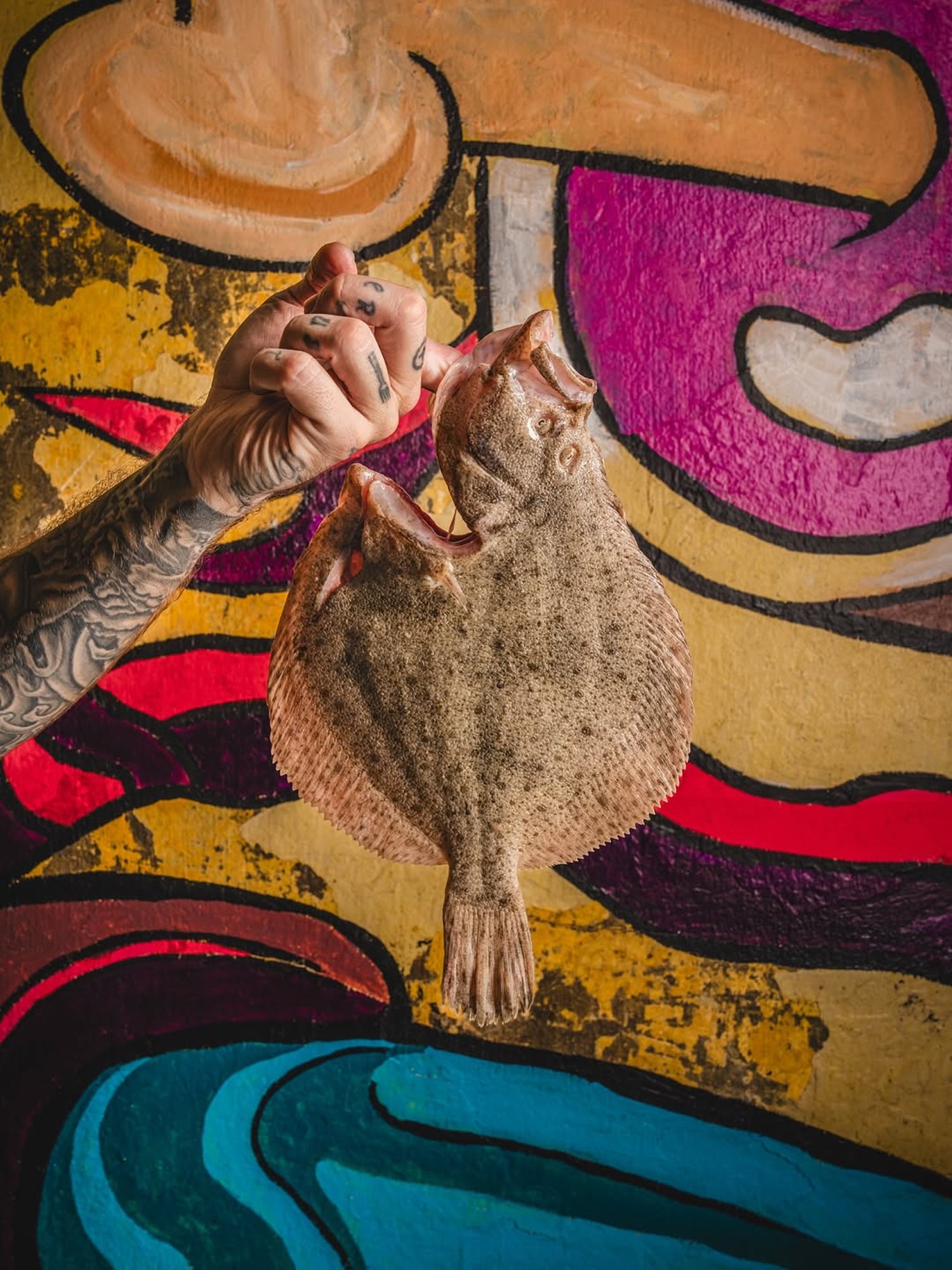
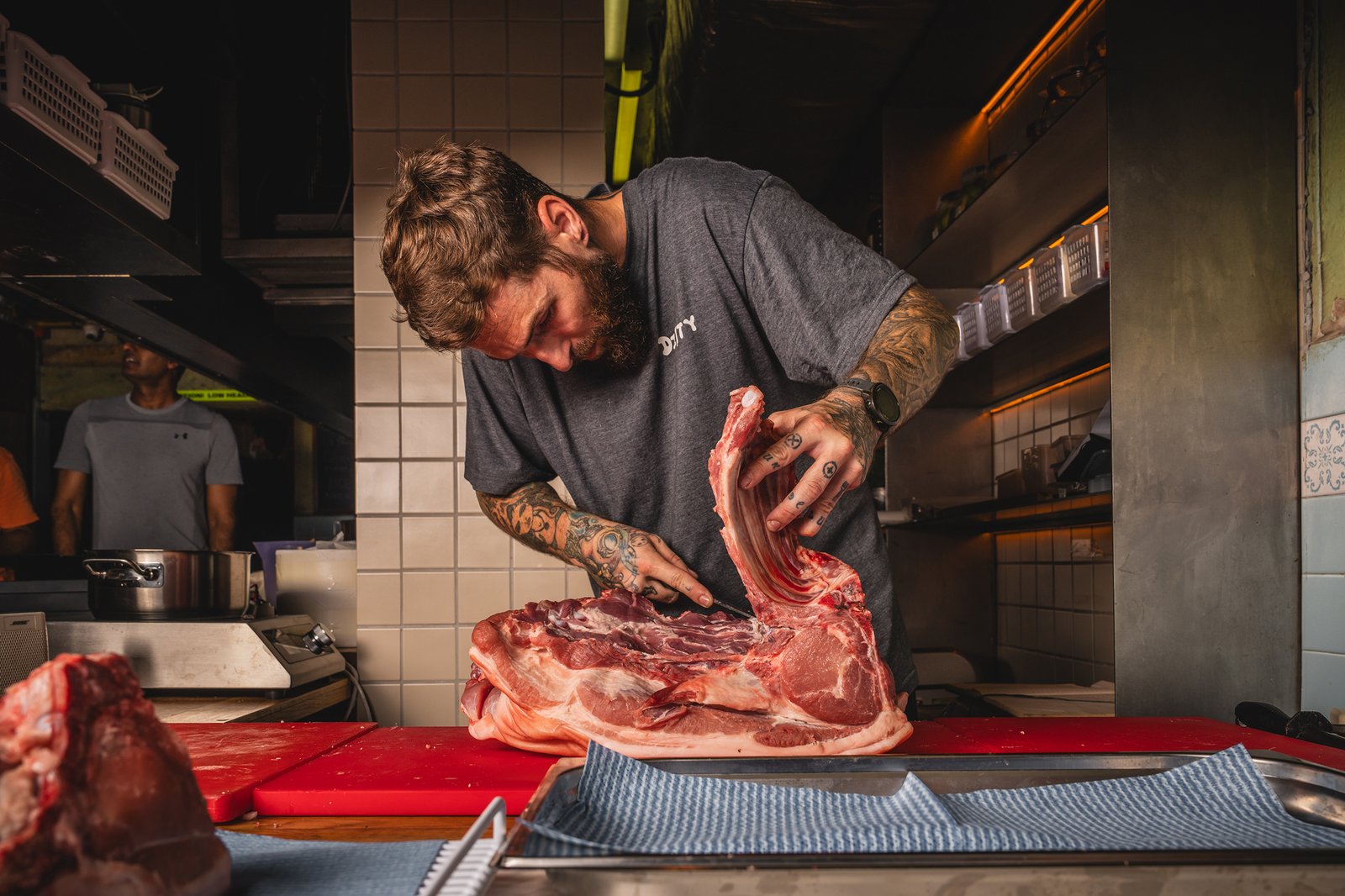
We only buy whole animals, but because of certain regulations in Singapore, we aren’t able to get things like the offal or blood. So we break what we can get into different parts—out of a lamb, we get about 20 different cuts.
The reason Dirty Supper, my concept now, is alive is because 1: Someone told me in a random conversation that I can’t do a restaurant the way that I wanted to do it in Singapore and 2: I am stubborn as hell, so if you tell me it’s not possible, I’m going to try and prove you wrong. And then we opened it. And here we are 2 years later and still going.
I also think that butchery is a dying art and it’s a bit of a shame that not everyone knows how to butcher down an animal, because I feel like we should be able to. You shouldn’t just be able to buy a packet of meat and go, “Oh, this comes from here,” and not actually understand like the rest of it. Whole animal butchery is an opportunity to educate people a little more about their food.
Sometimes it’s not so cost-effective, but it’s definitely more fun. It’s so much more interesting to get a whole pig and figure out how to make it work where the goal is to have no waste, but you have all this trim, and you get to figure out how to do something with it.
THE DISCOVERY
My journey into nose-to-tail started in London, with a chef named Tom Adams—the chef who I really learned the most from. I was originally in London because I wanted to work in Michelin restaurants—that was my goal—think tasting menus and fine dining.
But instead, I ended up working in this weird spot and ended up meeting someone, a colleague named Oscar, who took me to a small basement restaurant in Soho. And it blew my mind. It was a 30-seat restaurant that shouldn’t have had 30 seats in it. You walk in the kitchen and you couldn’t fit more than four guys in there. All they had a wood fire grill that had two big smokers. And the food was insanely simple, but I could never stop thinking about that meal.
A few days later, I went to work, went down to Oscar, and resigned. I told him that I didn’t move to London to work in the kind of place where we were, and he said he fully understood. The restaurant we were working at was doing brunch and I knew I didn’t move to London to work in a place like that. I didn’t have a plan of what I wanted to do. I just quit. And told myself, “I’m just going to figure it out.”
When I told him that I was quitting, he said he’d actually resigned as well, but he hadn’t told anyone where he’s going. He had a new opportunity, and while he couldn’t talk about it just yet, he’d asked if I’d be interested in joining him—he just needed to make a call to see if I could go too.
Then, one or two hours later, Oscar found me in the cold room and said, “Okay, I got you a job. Do you want to come?”
I accepted immediately. Didn’t know what position I was taking. Didn’t know the restaurant. Didn’t know what we were cooking.
All he said was, “You’ll like it.”
A few weeks passed and we were sitting down and I said, “Hey man, I need to know—what’s my position? What’s my salary?” We hadn’t talked about any of that prior.
Oscar said, “Okay, I can finally tell you where we’re going—remember that small basement restaurant that I took you to? Pitt Cue? We’re opening a bigger one. And you’re coming as my guy.”
I said, “Okay, cool—so what position am I starting at? Commis?”
“No no—you’re coming in as my Sous.”
And within a month, we were down in Cornwall meeting all the farmers that Tom (the owner) had connections to.
We went to the farm where we reared the pigs, and we met everyone else who worked at the butchery. And from then on, I was hooked—it was like a drug.
The way Tom thinks is amazing, and it took a long time for me to earn his trust enough for him to teach me. I was hardly even on the line when we opened—only Tom’s long-time, trusted crew was allowed, because they knew exactly how he wanted things done. The prep for that place was nuts—simple food is often the hardest, because you can’t hide behind the bullshit. Everyday everyone was in the shit. During lunch service, I would do the prep for the rest of the team while they did service. I felt like a bit of a prep monkey somedays, but after about a month or so of this, Tom came out, saw I had finished everyone’s prep, and was surprised. He said, “Tomorrow, you’re in the butchery with me, and on the pass for service. You’re not doing their prep anymore.” From then on, I continued to build his trust and he began to show me his ways. I ran with it. And every day I was with him, learning. Then, within about 3 months of opening, I was promoted to Head Chef.
That first meal in the Pitt Cue basement restaurant had sparked something in me. And it wasn’t just the food—I think it was a mix of everything. It was this little basement, where we were so crammed we were shoulder to shoulder. If someone wanted to go to the bathroom, we had to get up and get out of everyone’s way. And then the food came out and I just remember it was one of the best steaks I’d ever eaten. But it was just steak on a wooden board with some sauce and a garnish, and then that was it. I thought to myself, “How is this so fucking good?”
When you’re a young chef, you often try to add things to make something better. This was as stripped back and raw as it could possibly be. There was nothing to hide behind.
INSPIRATION IN THE SHIT
I never wanted to leave the UK—it’s the only place that felt and still feels like home. I wanted to stay, but for that, I needed to get sponsored. I could have had sponsorship through employment at Pitt Cue, but I was worried about being locked into Pitt Cue’s very specific style—and was worried that if I stayed there, I would plateau. I loved Pitt Cue—it was my home and made me who I am now. But I was ready to try new things.
In another conversation with Oscar, I told him I needed to push myself, and that I needed to be sponsored. He had previously worked for Simon Rogan in London, and knew that they needed a Head chef at one of their restaurants in the Lake District. He connected me to them, I cooked for Simon and his Operations Manager, and I got the job. That was the start of my role as Head Chef working for Simon Rogan at Rogan and Co.
I put myself in the shit again. Rogan and Co. was far from the same concept as Pitt Cue, and it was also more “restaurant-y”. Simon had a massive farm a few miles up the road from Cartmel (where the restaurant is) and, because of that, I was able to play with ingredients a bit more. Because of the farm, the restaurant had more seasonality, and I could work with fresh vegetables and actually pick what I wanted to use.
I had personal relationships with all the farmers that I was purchasing our animals from and, in my breaks between service, would go to our farm and pick whatever we needed for dinner service and lunch service the next day. The guys at the farm would show me what was about to be in season and what needed to be used—we adjusted our menu all the time to suit what was available. I also knew a cheese maker down the road who reared sheep. We would buy whole baby lambs and I’d butcher them down. It wasn’t nose-to-tail like we had been doing at Pitt Cue, but we were still doing a lot of whole-animal butchery.
In my ideal world, I would have a farm attached to my restaurant, where I could pick all the fresh ingredients, and would also be able to buy whole animals and write a new menu every day, with everything we have available.
WHEN IT’S GONE, IT’S GONE
At Dirty Supper, our menus are designed to run out. We don’t have a menu that’s designed to feed 100 people.
We have one, more consistent, menu which is printed and kind of designed to not run out. But if we run out, we run out. I’m more than happy to say, “No, I don’t have it,” instead of just buying extra and keeping it there just in case.
Then we have our chalkboard menu, which is bigger than our printed menu—it can have up to 60 items at times.
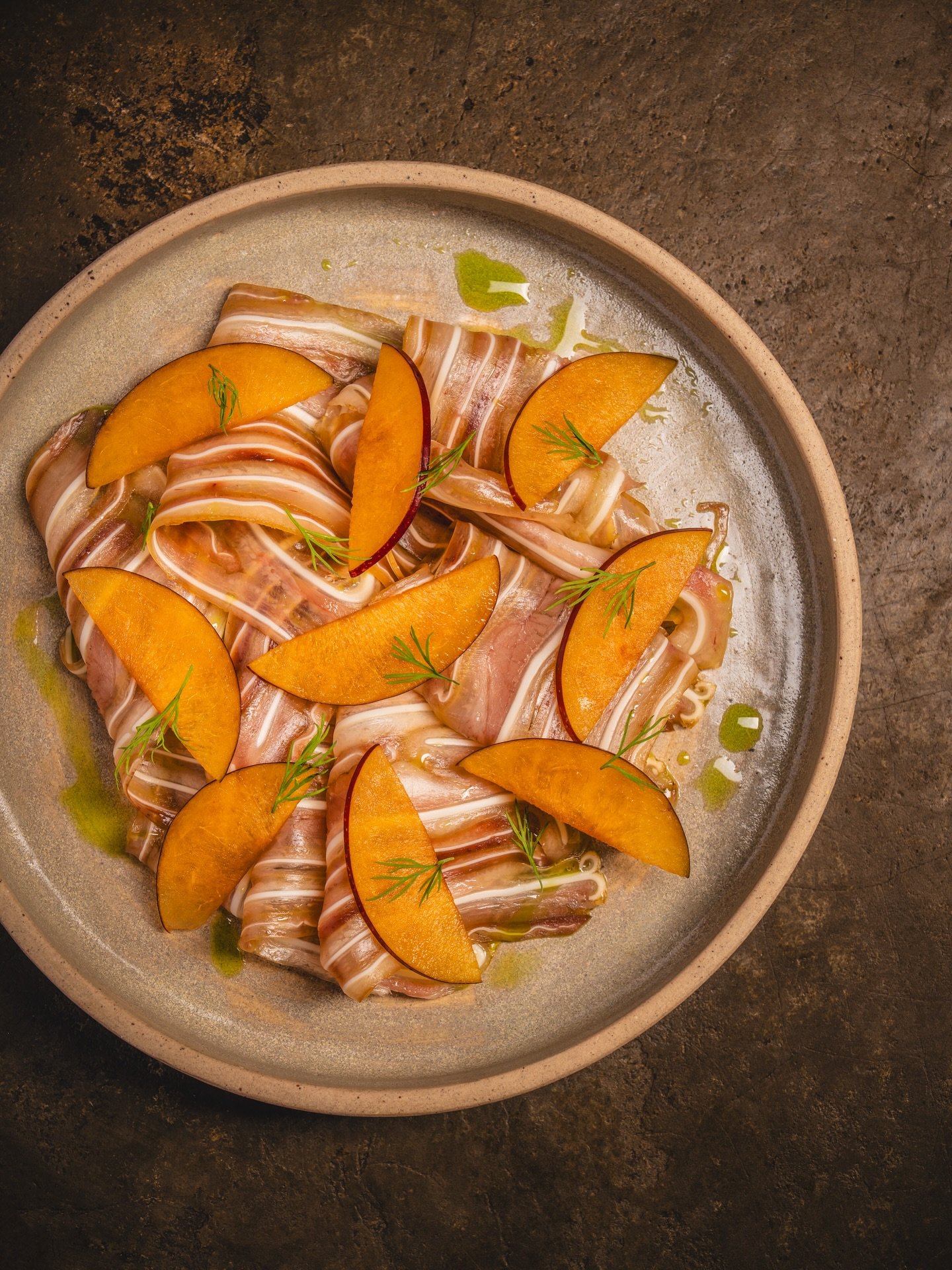
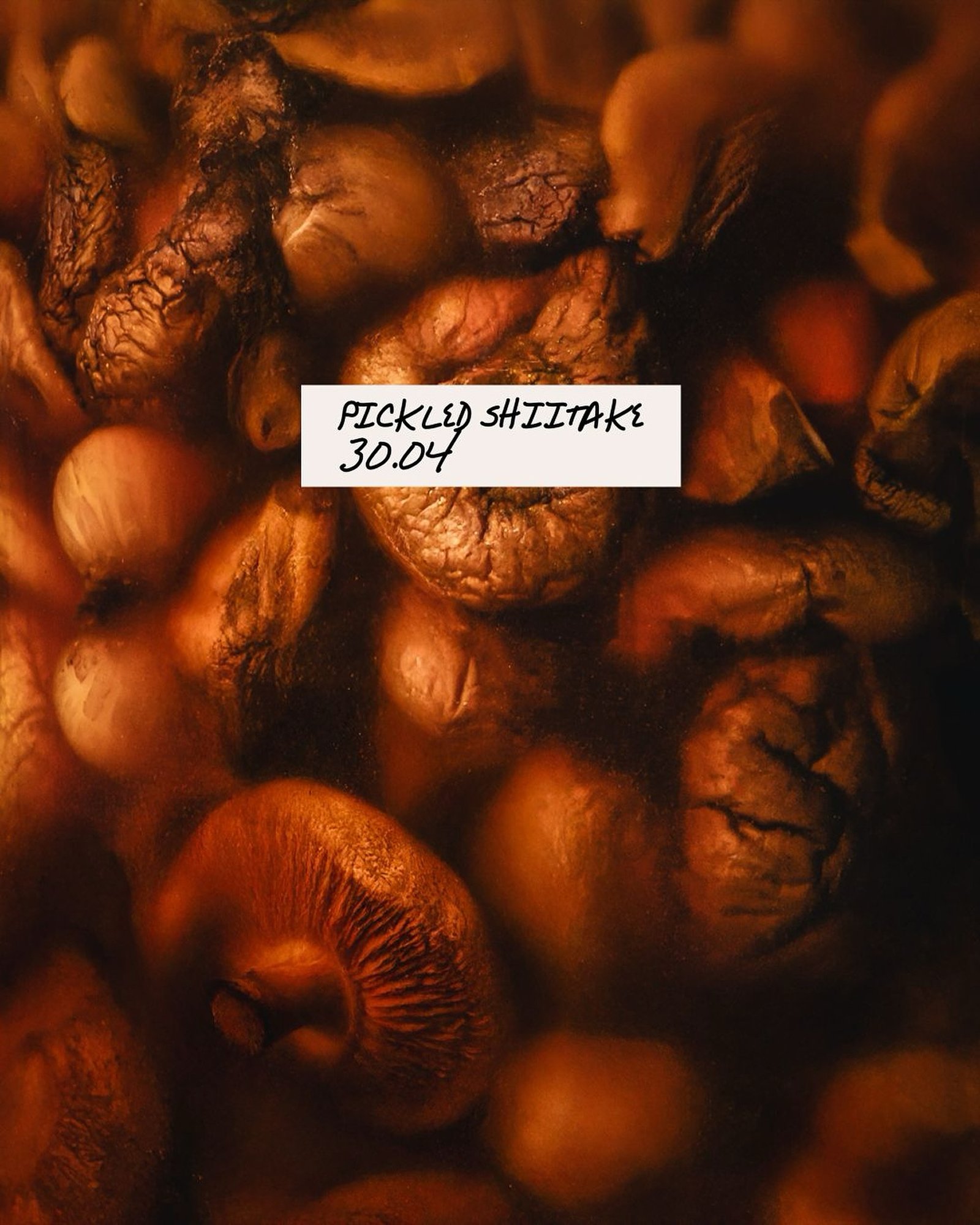
Examples of what would be on our chalkboard menu are the different cuts we get from the pig heads. We order four pig heads a week for our pig head nuggets that are on the printed menu. When they come in, we cut off the snouts and the ears, and make separate dishes out of those. We braise the snouts overnight in pig head stock (the rendered fat and juices that come from roasting the whole heads overnight) and dried shiitake. We braise the ears, and then we either press them together to make a pig ear terrine, or we do a crumbed pig ear schnitzel. We only get four snouts a week, so they go on the chalkboard menu. Once they’re gone, they’re gone and we won’t have them again until the next week.
Because of the unique cuts we get from the animals we purchase, we can have upward of 100 unique dishes every night.
UNEXPECTED FUN
I think, as soon as the fun is out of it, then there’s no point. People come out for dinner to have fun. So if you’re the one creating, and you’re not having fun with it anymore, then how are the people coming to your restaurant going to have fun?
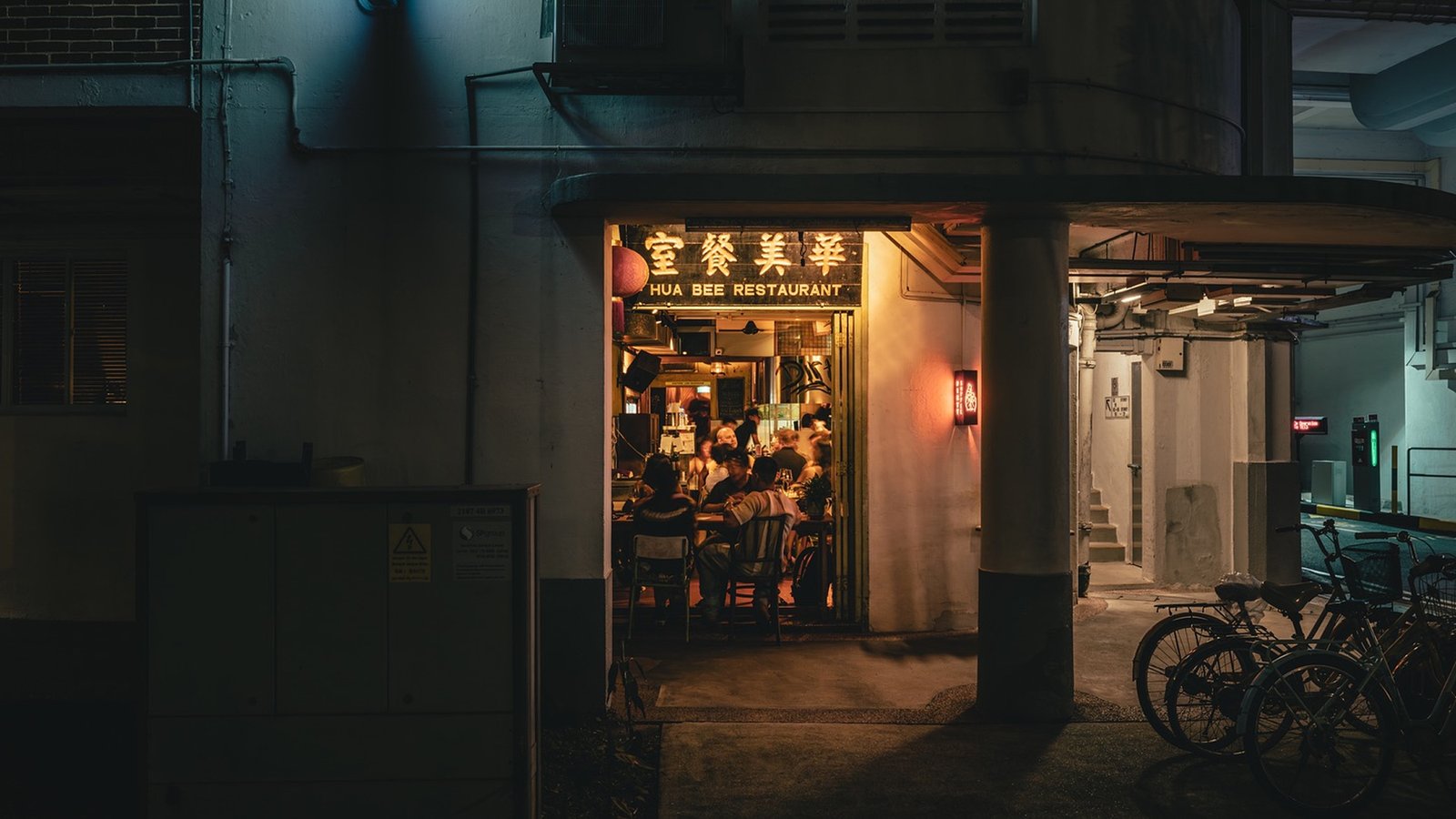
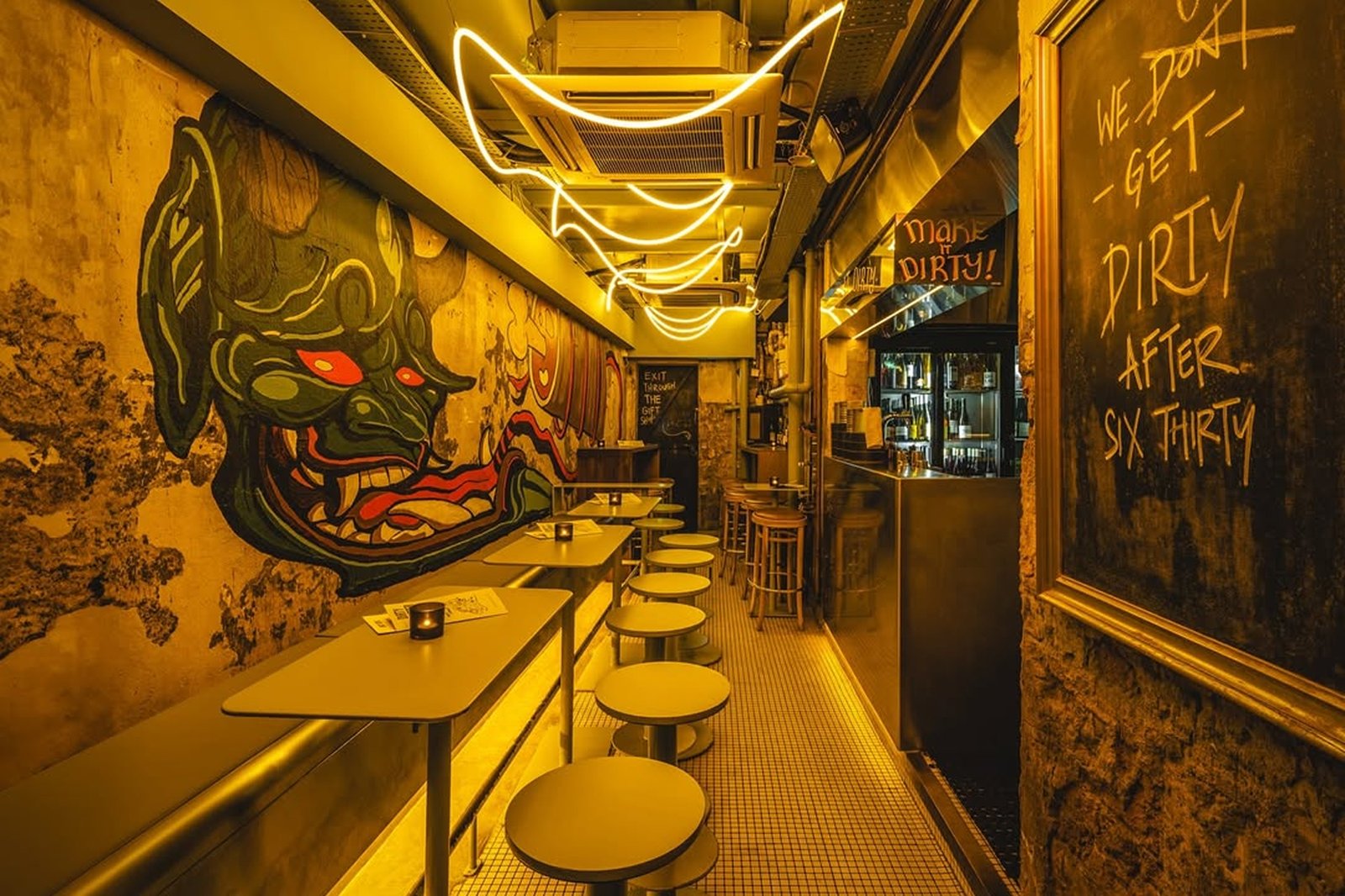
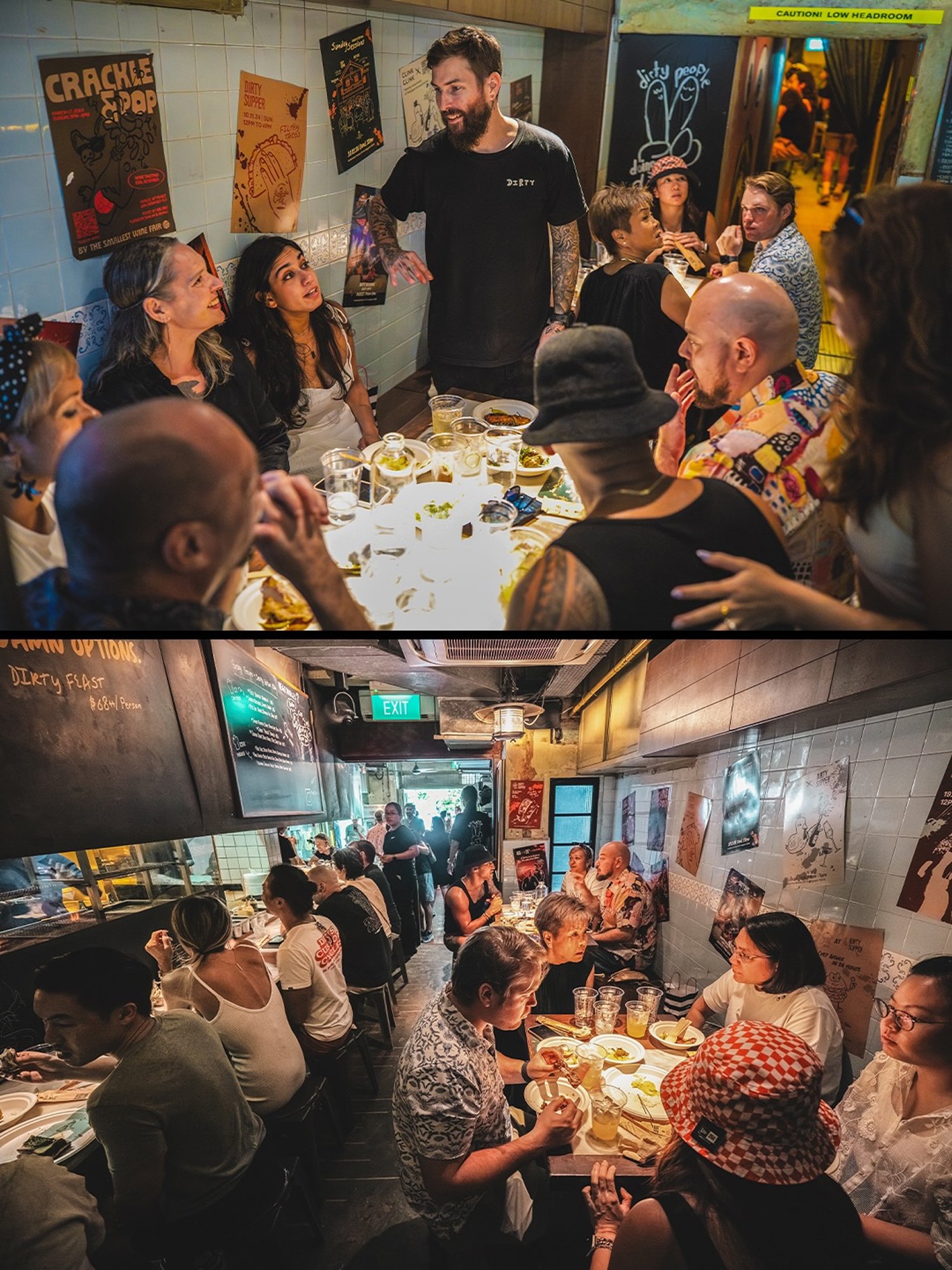
Dirty Supper is very much an extension of me. So I want people to come in, I want them to feel like they’re at my house, and it’s relaxed. We’re not a fancy restaurant, we don’t have white table cloths, we use old plastic chairs, and we share the space with the noodle shop in the morning. I want it to be a place you can just walk into and it’s unexpectedly fun.
I think the beauty about Dirty Supper is that when you walk up to it, it looks terrible. Like it looks old and run down as shit. And then you sit down and you hear the music, which is a little bit more upbeat—it’s more hip hop and old school vibes. My favorite part is when you see people nodding their head to the music or moving to the beat.
And then when they get the menu, then they’re like, “Okay, this looks interesting.” And then when they get the food, they’re like, “Oh, fuck, this is like very interesting.”
I like the space to be a unique kind of fun that almost builds throughout the experience.
DESIGNING THE SPACE
I never wanted to open my own restaurant. And it took me a long time to want to do that. When I finally did get the opportunity to open something, I wanted it to reflect my identity and taste, because if I’m there for 14 to 16 hours a day for seven days a week, I have to enjoy being there. I don’t want to come into a place where it doesn’t feel comfortable. So I always label it as a very selfish space. And maybe that’s the wrong way to look at it, but I’m there all day, every day. So even the music—it’s what I want to listen to during service.
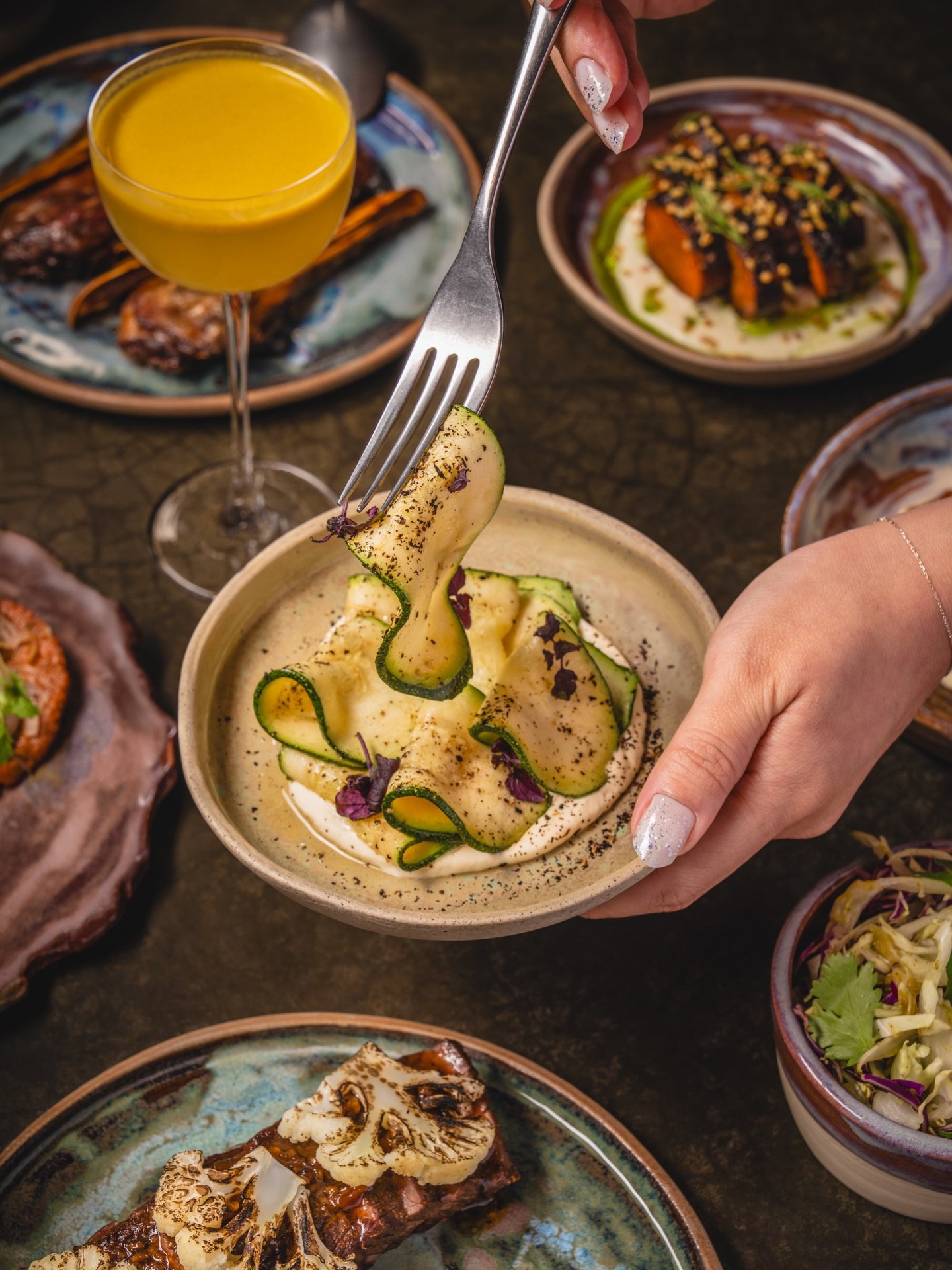
When I was opening the place, I was looking at plateware and everything was so boring and generic, I ended up making all my own plates. And it wasn’t even to make a point of trying to stand out, it was just to have something more fun. Our plates are very bright colored—they’re all bright blues and purples and pinks and greens. They aren’t plates that you’d normally see in a restaurant, because everyone typically wants plateware to be a little bit more neutral so that their food pops. But for me, I feel like our food pops more with these crazy colors. Some of our plates are starting to chip, but I don’t want to replace them because it adds to their uniqueness.
My partner at the time had a ceramics business and her studio was in our house. I’d just sit in the corner on a wheel with a beer and my headphones in and I’d make all of the plates. None of our plates are symmetrical and everything is different.
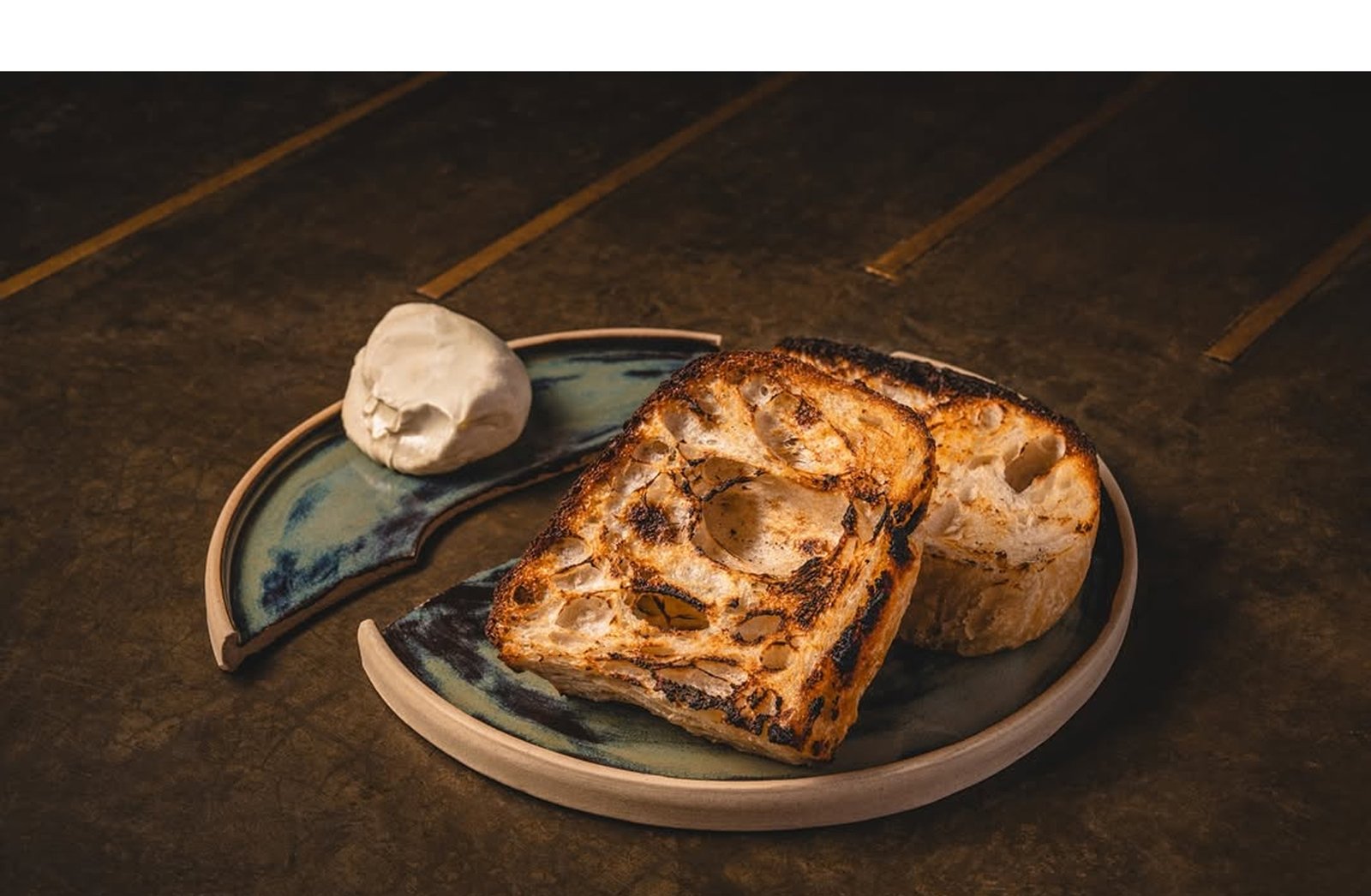
It takes two weeks to make one plate. You have to fire them twice and, in the process, you might get a hairline crack. When that happened, I was told I should throw them out and start again. But I thought, “No, I can use this.” So I started breaking them and seeing how they broke—the ones that broke nicely are now our bread plates for the restaurant.
The steak knives are custom as well. I was going around Singapore and trying to find something different. Everyone just had the same generic crap. So I found a knife maker in Bali, gave him a design and had my steak knives handmade in Bali.
A MINDSET SHIFT
My hope for the food and restaurant industry is focused more on the customer than the structure of the industry itself.
A big challenge is that people don’t really understand what we’re trying to do with whole animal butchery. I’ve actually been surprised that we haven’t had more complaints about things running out, because Singapore as a culture, is used to being able to have whatever you want, whenever you want. You can get asparagus 365 days of the year, because we don’t operate on seasons and everything is imported. People don’t really like being told that you’ve run out of something.
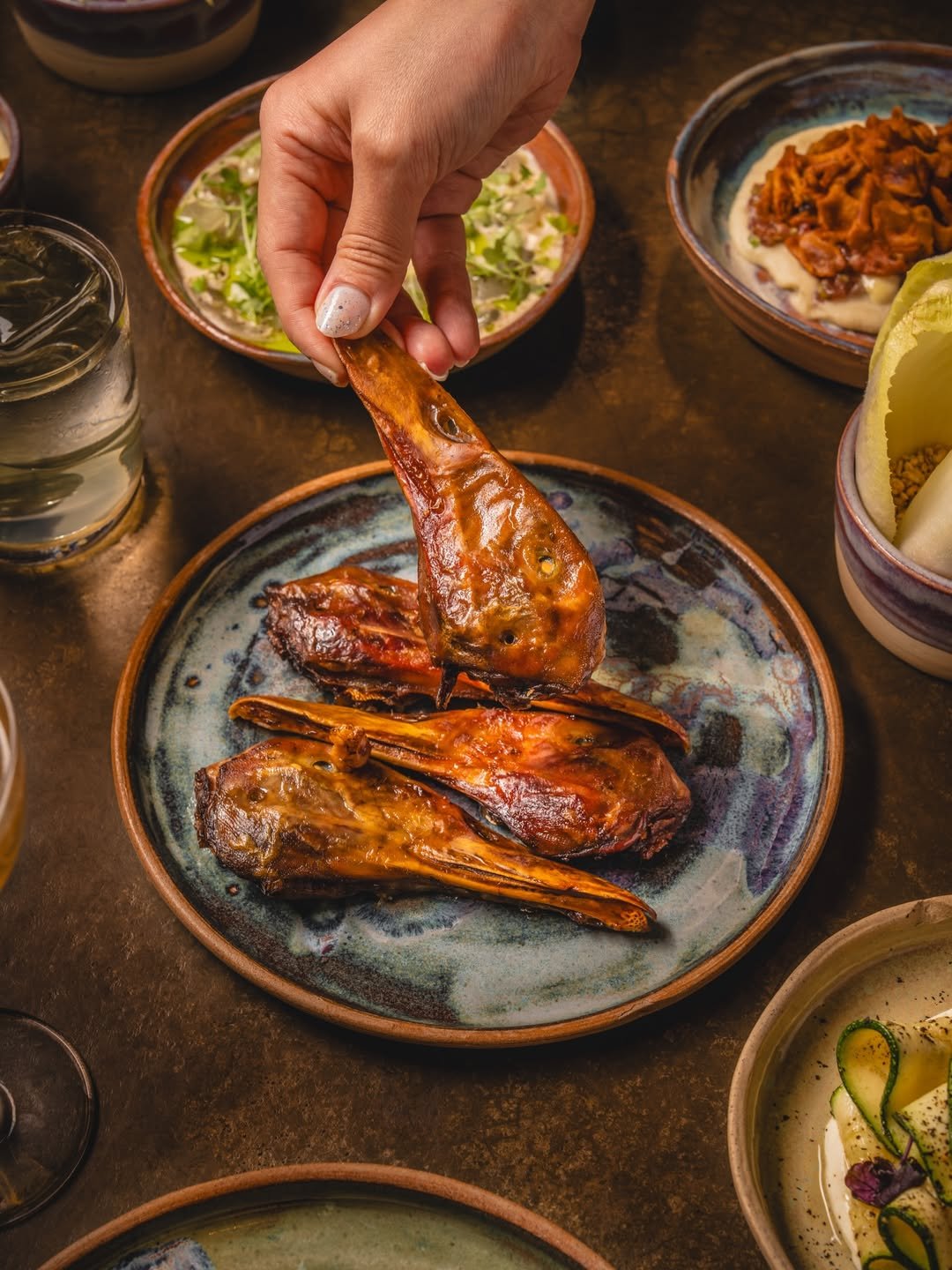
And yet another challenge is people labeling what we do as weird. We serve things like duck head and duck feet, which is normal at a Chinese restaurant in Singapore and actually the reason why things like our duck head skewers are on the menu now—I’ve had it at a Chinese restaurant and I loved it. But people seem to see it differently because they’re coming into a Western-style restaurant with a white boy cooking their food. But it’s not that weird. We’re doing what other people do. It’s just in a different format.
I think our biggest challenge is cost, because it’s so expensive to do what we do. On paper, it doesn’t make sense to do it—for example, it’s actually cheaper for me to buy cuts rather than a whole animal.
I hope that people are able to become more educated with what they are purchasing. I’d love for the general public to understand how the hospitality industry works, and how prices are created. People always complain about the prices of dishes, but it’s not just about the food that they get on the plate. If you’re going out to eat, you’re paying for the experience and the work behind the food. One recent comment we had was that we are serving “not fancy cuts for fancy prices,” because we serve duck heads for $8 and people see that as expensive, but it’s the work that goes into that experience that they are also paying for.
This is one of the only industries where people expect things for free. For example, someone eats half of a meal and then all of a sudden says, “Oh, I don’t like it,” and expects the cost off of their bill. And that’s a cost for the restaurant. Or, for example, if you go into a restaurant and request a lemon in your water, it might seem like a small thing. And if you’re charged a dollar for that slice of lemon, you might be upset, because it is just a slice of lemon. But if a hundred people a day want that lemon, that’s a hundred dollars. If you do that over the whole month, it all adds up. We have to buy those ingredients—how can you get it for free if I need to buy it? You wouldn’t expect that from a car dealership, or a clothing store, so why from a restaurant?
DIRTY SIPS
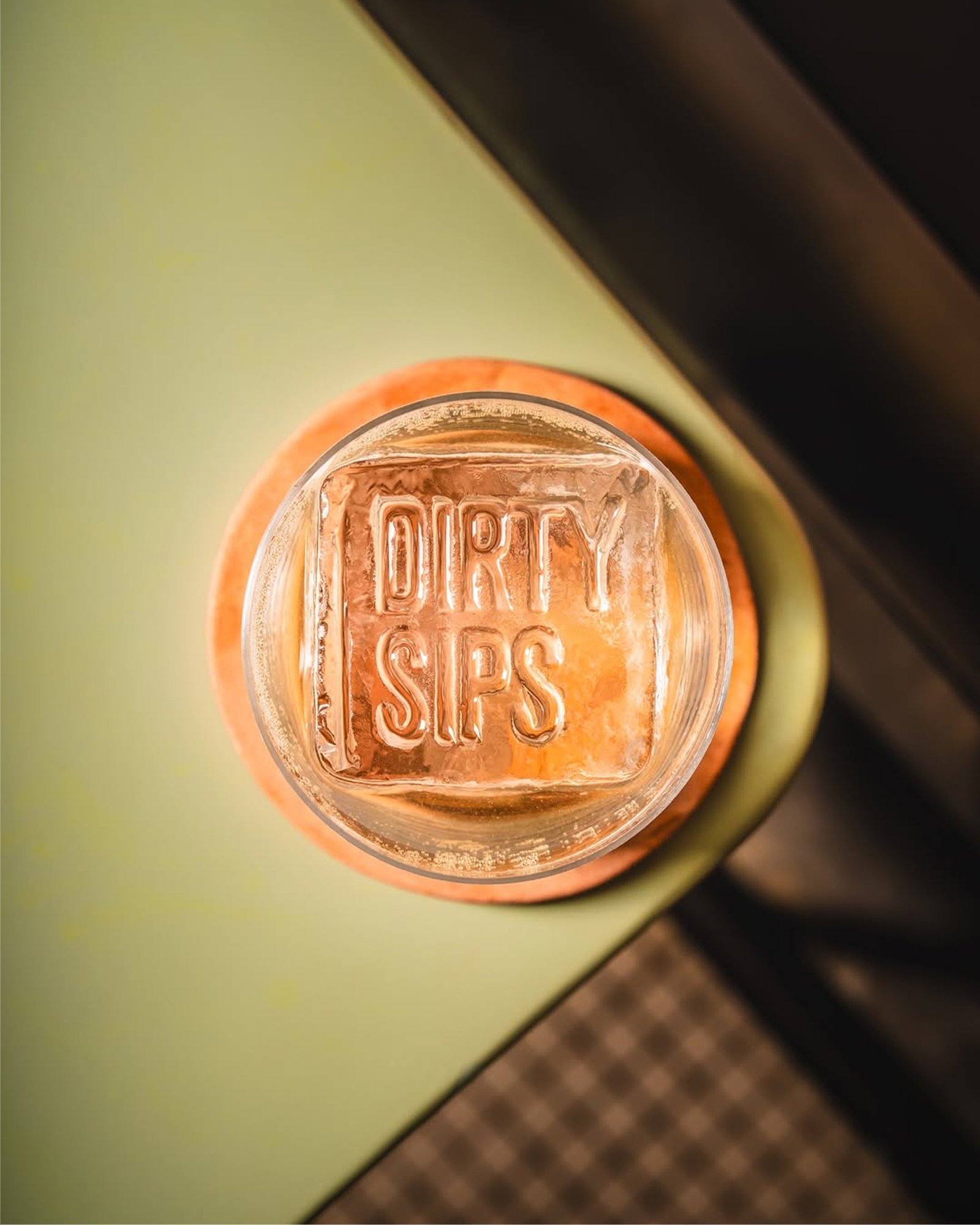
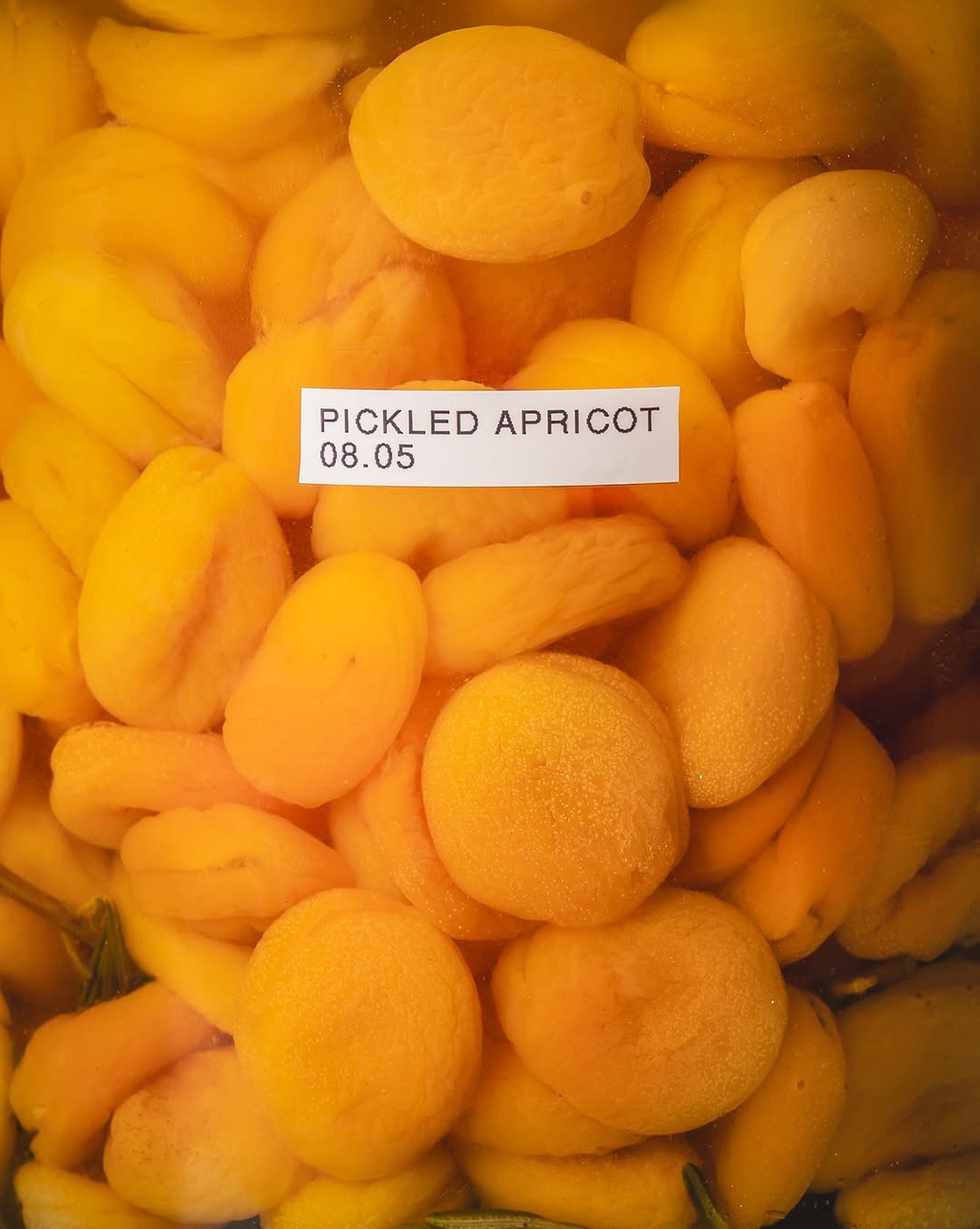
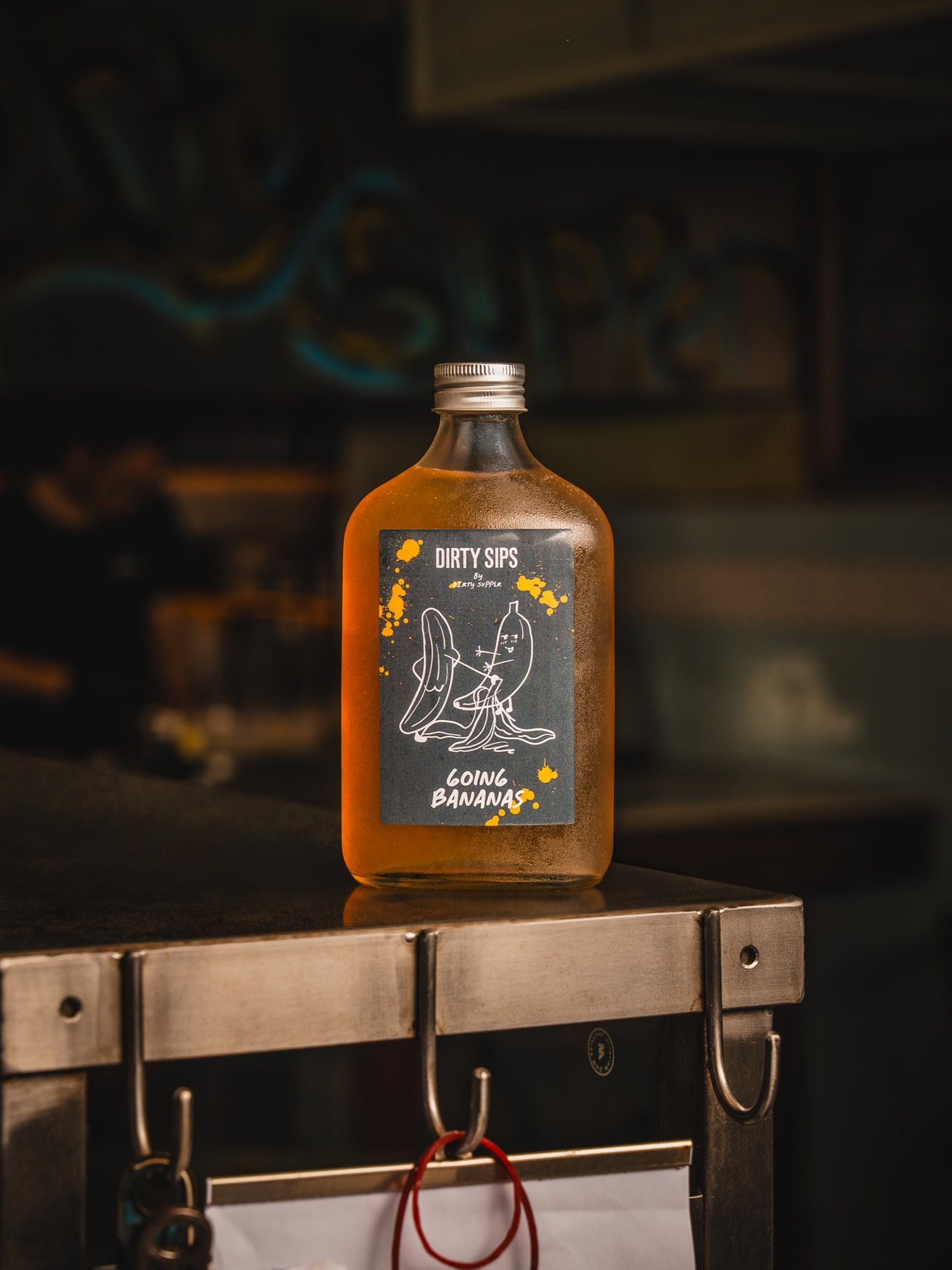
We have a cocktail bar called Dirty Sips. It’s my belief that if you want to have a cocktail with dinner, it needs to make sense. We don’t use sugar syrup and we don’t use a lot of citrus. We use things like the pickle or ferment brines from the kitchen.
We have a few drinks on the menu, which are pretty unique.
One of them is a black garlic sour—so black garlic and whiskey sour. Garlic in a cocktail doesn’t sound good whatsoever, but it’s a drink that evolves as you sip it. So the first sip you have, you don’t really get the garlic. You get more sweetness from the honey. You get the sour. You get a little bit of a note of black garlic, and you think, “I know this flavor, but I don’t know quite what it is.” And then as you drink it, the garlic becomes a little bit more prominent.
We have a raw prawn dish on the menu. The best pairing drink for that dish is a pickled lemon martini. A martini is boozy as fuck and prawns are really delicate. So on paper, it doesn’t work. But when you have it together, they complement each other.
I realized we could purposely under season or leave out a component in the food, but include the component in the cocktail pairing. So when you had the drink and the food together, everything was balanced. It’s been fun to play with that element.
The first time I hit that “aha” moment around this concept was with a fish dish. We had a really slow-grilled fish with a fennel puree, and it needed salinity and a burst of citrus. I kept it really boring and neutral in the food. But in the cocktail, we did a burnt kombu and pickled something to balance what was missing in the dish.
When we delivered the food to the table, we would tell the guests to take a bite of the food first and then have a sip of the cocktail. And then the next bite, take a sip of the cocktail and then have a bite of the food. And then you could see like their brains changing. When they would have the first bite, they’d say, “Oh, like something’s missing.” And then they’d sip the cocktail and they’d say, “Okay, this is kind of is making sense.” And then when they went the opposite way, then they’d think, “Oh, shit—this really works!”
I think the hardest thing now is the balancing act because obviously not everyone that comes into the cocktail bar has food. So it needs to be a balancing act of making sure it still makes sense to have it by itself without having food.
I never R&D anything. I just think and go. I have a very, very good bartender that puts up with my crazy ideas and he takes what I’m thinking and he makes it something good. He worked in hotel bars for so long, where the environment lacked creative freedom—it took six months to change one drink. Whereas when I say I want to change something, I say, “Let’s change it tomorrow.”
And I’ve been very lucky with my whole team—they’re all ex-Michelin and ex-fine dining, and they sought out this experience because they were bored and they wanted to learn. It’s my goal to teach them everything I can teach them. I’m very lucky to have them.
I’m grateful that I have these amazing people as the foundation of Dirty Supper, and am lucky they are open to the “let’s like run with this crazy idea and let’s have it on as soon as we can” mindset.
I’m like the madman in the background saying, “I want to put this with this.” And they might think it’s like the dumbest idea, but they never say no. They might give me the look, but they never say no.
KING OF THE FLAVOR COMBOS
I’ve been asked the inspiration question a lot, and I honestly don’t have a good answer.
Inspiration for me is so random. I’ll be walking down the street and I’ll be thinking about something and then think, “Oh, fuck, this sounds really fun.” And then we just implement it.
I love the weird combos. My brain is just not normal—it bounces everywhere. I’ll get hyper-focused on one ingredient for some reason, out of no reason at all. And then I’ll just think, “Okay, we can do this, this and this.” For example, one of our desserts is a yellow bell pepper parfait. It makes no sense whatsoever on paper, and kind of sounds terrible. I don’t even like yellow bell pepper—it’s not a flavor that I’m going to seek out. But for some reason, I just had this idea that it would be fun and it would work. And then we just played and now we’ve had it as a dessert for the last year and people love it. And we’ve just made a cocktail out of the byproducts of the same flavors, but it tastes different.
Another interesting combo is our baked rice pudding. We make the rice pudding with whey, so it’s a little bit more creamy and a little bit more sour. It’s not sweet. Then we make a black banana ice cream with bananas that we cook for a month at 60 degrees. And we add parsley with that. We finish it with a dehydrated parsley powder—again, on paper, it doesn’t make sense.
We also do this chicken fat financier. Financier is usually a cake made with brown butter. When I explain this to the guests, I tell them, “It’s like I got stoned in a park, got the munchies and put everything that I thought was fun on a plate.”
Because none of it makes sense. We bake the cake, then we dry the cake and it’s more like a biscuit. It has lemon zest creme pat, pickled purple grapes, a passion fruit skin jam (where we take the white part of the passion fruit skin and blend it with like the bottom third of coriander stalk), and then we add in fried chicken skin. And we finish it with coriander. The coriander is the binding agent of the whole dessert, which it shouldn’t be, because it sounds really messed up and weird.
When we are first creating a new dish, I have all my chefs try a dish before me. I would rather get everyone else’s input before I try it. And then if everyone says the same thing, like, “Oh, it’s salty,” or, “It’s too sour,” or something, then I’ll try it. And I’ll figure out how to fix it.
With the chicken fat financier, we agreed something was missing.
I asked my chef to try coriander, and he looked at me like I was an idiot. And that was it. That was the missing piece. It’s been on the menu now for a long, long time.
We have something we call Dirty Scoops, which is ice cream on our dessert menu.
We’ll make three pints of one flavor, and once it’s done, we’ll never repeat it.
And the only rule is it cannot be a normal flavor—so it can’t be vanilla, chocolate, pistachio, or anything else like that. It has to be something that you would never normally be able to find.
And this just stemmed out of me trying to see how fucking weird I can get with ice cream. It actually sells well and people like it. And from there, we can turn those flavors into another dessert on the menu.
We also recently made a dish with roasted cabbage wrapped in crépinette, which is the lining of a pig stomach, and then baked it really hot over the fire and served it with whipped roe—that was really tasty.
A DIRTY LEGACY
I hope that everyone who comes to work with me is able to take it further than I have.
They’ve had a lot of different experiences compared to me and know so many different things compared to me, so I want them to be able to take this space and just make it better. That’s it. Like, just do better than what I can do.
And I think that everyone can, whether you’re confident or not, but I think that everyone has Dirty Supper is built on my experiences from the last 23 years. So someone can take that and combine it with their experience and then make it even better than has been. That’s the only thing I want. I just want them to be better than I am and take it to the next level.
WHAT A WASTE
The waste in the industry is definitely something that I wish was different. There is so much waste. In this industry, there is so much focus on portions and pieces being the perfect size, and everything typically has to be exactly the same. If I eat at a restaurant like that, I don’t enjoy it. Because I can see they aren’t using the rest of it—the whole ingredient. A carrot, for example — if you’re cutting a carrot to a certain size for one dish, but then there’s no carrot anywhere else on the menu, what are you doing with the rest of it?
Working with farms for the last few years, everywhere except for Singapore, you can see how hard people are working to grow and provide that produce. I don’t think everything has to look perfect—no one gives a shit. Honestly, if a carrot is bent in a different way, no one fucking cares, it still tastes the same. As long as it tastes like it’s supposed to taste like, it’s fine.
The plastic used in kitchens is another thing that bothers me. Commercial kitchens use a lot of plastic, and we are no exception. We store a lot of stuff in vac-packs to store them more efficiently, because our kitchen is so small and we don’t have a cool room. I don’t know if the restaurant industry will ever get to the point of not using plastic—it would be nice if you could, but I just think the industry is too reliant on it.
Even if there were viable alternatives, they tend to be more expensive, and we run on such tight margins. When ingredients or supplies are more expensive, you have to pass that cost onto the customer and the customer doesn’t like it, so the customer stops coming.
KEEPING IT INTERESTING
I kind of went through a stage recently where I was not as inspired because the dishes started feeling monotonous—I felt like I was plateauing, essentially.
Everything that we had been making, I just started hating. But I have a good outlet, because when I get to that degree of being uninspired with the food, I can go into the bar and then I can start playing with the drinks and coming up with new things there. I can kind of bounce in between.
In those moments, I can feel myself getting very antsy. Going to the market and buying the same produce every day—almost on autopilot—it becomes a bit draining. So when I get to that point, I make myself buy something odd, or make myself try to do some obscure preparation and just figure it out.
One thing I’ve learned about myself is that I can usually fix a dish. If you give me a weird flavor combination, then I can go, okay, I can make that work. I’d say 95% of the time, my wild ideas work, and then the other 5% of the time—we don’t talk about those.
There was one time we were making a pork liver sausage—I think it was for our first year anniversary. I was trying to rush it and being a fucking idiot, and I forgot something in it. So I did the entire process, and got to the end and realized I made a mistake.
One of my chefs said, “Is this one of the 5% that we don’t talk about?”
Determined to salvage it, I responded, “No, I’m going to make it work.”
We ended up doing a pork liver pate, instead of a sausage. So it didn’t become one of the 5% that day.
I’ve had a lot of fuck ups—a whole lot. But even if something is wrong, usually, there’s a way that you can fix it. That’s why I say it’s only 5% that don’t work out, but of course, it’s really more.
LOOKING AHEAD
In terms of aspirations for the future, it would be great to collaborate with Tom Adams from Pitt Cue—I would love to create something now with the people who have shaped me. That would be really epic.
And my dream is to bring Dirty Supper to London and have everything in one spot—my bar, my supper club, my restaurant and a little mini butchery. A place where you can see everything. You can see the animals hanging and can pick your steak—that’s where I want the next evolution to go.

Support our project by buying our merch!

86 HOTK Unisex t-shirt
$30.00
Anthony Bourdain T-Shirt
$35.00
Mise HOTK Unisex t-shirt
$30.00